KUKA industrial robots sit at the center of many modern production lines because they combine repeatable precision with rugged mechanical design and a control ecosystem that scales from a single cell to an entire factory. When manufacturers talk about improving throughput, stabilizing quality, and removing ergonomic risks, they are often describing the practical outcomes of deploying articulated robot arms for welding, handling, assembly, and machining support. The appeal is not only raw speed; it is the consistency that comes from servo-driven motion, calibrated kinematics, and tightly controlled process timing. In facilities that run multiple shifts, the ability to maintain a predictable cycle time and a stable path—whether tracing a weld seam or placing a component into a fixture—becomes a competitive advantage. KUKA industrial robots are frequently selected when the application mix is diverse, because the portfolio covers small payload units with compact footprints as well as high-payload systems capable of manipulating large parts. Beyond the arm itself, the system-level value comes from integration with sensors, safety devices, conveyors, and plant data systems, so the robot is not a standalone machine but a coordinated actor in a broader automated workflow.
Table of Contents
- My Personal Experience
- Understanding KUKA Industrial Robots in Modern Automation
- Key Components: Robot Arm, Controller, and Software Ecosystem
- Common Applications Across Industries
- Payload, Reach, and Repeatability: Selecting the Right Model
- Integration with End-of-Arm Tooling, Vision, and Sensors
- Safety, Standards, and Collaborative Workspaces
- Programming, Commissioning, and Offline Simulation
- Expert Insight
- Maintenance, Reliability, and Total Cost of Ownership
- Use Cases: Welding, Palletizing, Machine Tending, and Assembly
- Connectivity, Industry 4.0, and Data-Driven Optimization
- Implementation Strategy: From Concept to Production Ramp-Up
- Future Trends: Flexibility, AI Assistance, and Sustainable Automation
- Practical Takeaways for Buyers, Engineers, and Plant Leaders
- Frequently Asked Questions
My Personal Experience
The first time I worked with a KUKA industrial robot was on a small palletizing cell we were trying to stabilize after a line upgrade. I remember being surprised by how “physical” the job felt—half programming on the pendant, half crawling around the fence with a tape measure to verify pick points and clearances. We kept getting a slight twist in the boxes at higher speeds, and it turned out our vacuum gripper was flexing just enough to throw off the placement. After tightening the tooling and tweaking the approach path and acceleration limits, the robot ran smoothly for an entire shift without a single misplace. What stuck with me most was how sensitive the system was to tiny mechanical details—once you respect that, KUKA robots are incredibly consistent. If you’re looking for kuka industrial robots, this is your best choice.
Understanding KUKA Industrial Robots in Modern Automation
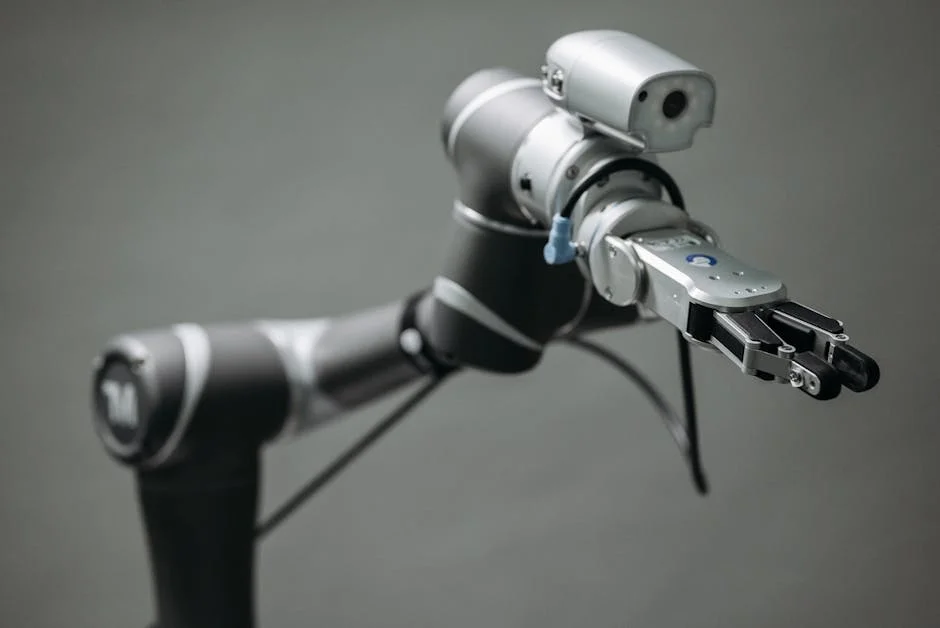
KUKA industrial robots sit at the center of many modern production lines because they combine repeatable precision with rugged mechanical design and a control ecosystem that scales from a single cell to an entire factory. When manufacturers talk about improving throughput, stabilizing quality, and removing ergonomic risks, they are often describing the practical outcomes of deploying articulated robot arms for welding, handling, assembly, and machining support. The appeal is not only raw speed; it is the consistency that comes from servo-driven motion, calibrated kinematics, and tightly controlled process timing. In facilities that run multiple shifts, the ability to maintain a predictable cycle time and a stable path—whether tracing a weld seam or placing a component into a fixture—becomes a competitive advantage. KUKA industrial robots are frequently selected when the application mix is diverse, because the portfolio covers small payload units with compact footprints as well as high-payload systems capable of manipulating large parts. Beyond the arm itself, the system-level value comes from integration with sensors, safety devices, conveyors, and plant data systems, so the robot is not a standalone machine but a coordinated actor in a broader automated workflow.
Adoption decisions usually start with a clear business case: reducing scrap, preventing rework, improving takt time, or enabling production that would otherwise be constrained by labor availability. Yet the deeper reasons for successful use are technical and organizational. The robot needs a stable base, accurate tooling, and disciplined maintenance; the process needs a robust recipe that tolerates variation in parts and environmental conditions. Many plants also need flexibility—shorter product lifecycles, higher mix, and frequent changeovers. That is where programmable automation earns its keep, because the same cell can be retaught or reconfigured for new SKUs without rebuilding the entire line. KUKA industrial robots are commonly paired with end-of-arm tooling that can be swapped quickly, and with vision systems that help locate parts in bins or correct for fixture drift. When implemented thoughtfully, the result is a production environment where quality is measurable, downtime is manageable, and the robot becomes a platform for continuous improvement rather than a one-time capital purchase.
Key Components: Robot Arm, Controller, and Software Ecosystem
A robot system is more than an arm bolted to the floor; it is a coordinated set of mechanical, electrical, and software components that must work together under real-world production constraints. With KUKA industrial robots, the mechanical structure is designed to deliver stiffness and repeatability across a rated payload and reach, while the internal cabling and drive trains support continuous motion without excessive wear. The axes, typically six in an articulated configuration, provide the dexterity needed to approach a workpiece from multiple angles. This matters for welding torches that must maintain a specific lead angle, for adhesive dispensing that requires consistent standoff distance, and for machine tending where the gripper must enter and exit a machine envelope without collisions. The robot’s wrist design and the available mounting configurations—floor, wall, ceiling—allow integrators to optimize for footprint and access. Payload ratings should be interpreted with attention to the tooling weight and the center of gravity, because aggressive acceleration with a long tool can stress the mechanics and reduce accuracy. A well-sized robot is not just one that can lift the part; it is one that can do so at the desired speed and duty cycle.
The controller and software layer are where motion planning, safety interlocks, communication protocols, and diagnostics converge. KUKA industrial robots typically operate with a dedicated controller that manages servo loops, path interpolation, and I/O processing at high frequency. From an automation engineering perspective, the ability to integrate with PLCs, safety controllers, and plant networks is essential, because the robot must coordinate with upstream and downstream equipment. When a conveyor index is late, when a fixture clamp fails to confirm, or when a vision system reports a missing feature, the robot program needs to respond deterministically. Modern software environments also influence commissioning time: offline programming, digital twins, and simulation can reduce on-site debugging by validating reach, cycle time, and collision risk in advance. Diagnostics and logging help maintenance teams correlate faults with root causes—overcurrent events, axis temperature, encoder issues, or external interlock drops. When the software ecosystem supports structured programming, reusable subroutines, and clear HMI messaging, it becomes easier to scale automation across multiple cells without reinventing the wheel for every project.
Common Applications Across Industries
The versatility of KUKA industrial robots is most visible when looking across sectors that have very different production realities. In automotive and tier supplier environments, robots are deeply associated with arc welding, spot welding, and high-speed handling, because cycle time and repeatability are tightly managed and the parts are often produced in high volume. In these settings, robot arms may carry welding guns, seam tracking sensors, or grippers that move stamped parts between stations. In metal fabrication outside automotive, the same platform can be applied to plasma cutting, laser cutting assistance, deburring, grinding, and polishing—tasks where consistency and worker safety are important. In electronics and consumer goods, smaller payload robots can perform pick-and-place, screwdriving, adhesive dispensing, and inspection, often integrated with vision for alignment and verification. Food and beverage operations may use robots for end-of-line case packing and palletizing, where the key metrics are throughput, gentle handling, and predictable stacking patterns.
In heavy industry, KUKA industrial robots can be used for foundry handling, forging support, and large part manipulation, especially where heat, dust, and repetitive lifting create risk for human operators. In plastics, robots may tend injection molding machines, removing parts, trimming gates, and placing components into downstream fixtures. In medical device manufacturing, robots can support assembly and packaging where traceability and process validation are essential, though the surrounding environment may require careful material choices and cleaning protocols. Logistics and warehousing have also expanded the role of robot arms for depalletizing, mixed-case picking, and conveyor sorting, particularly when paired with 3D vision and advanced grippers. Across all these applications, the pattern is consistent: the robot is the motion platform, while tooling and sensors tailor it to the job. The most successful deployments treat the application as a system—parts presentation, fixturing, process control, and data collection—so the robot’s repeatability translates into measurable business gains.
Payload, Reach, and Repeatability: Selecting the Right Model
Choosing among KUKA industrial robots begins with a clear definition of the task envelope and the performance targets. Payload is often the first number people look at, but it is not the only constraint. The effective load includes the gripper or tool, cabling, dress packs, and any dynamic forces from acceleration. A robot near its payload limit may still lift the part, but it could struggle to meet cycle time without triggering torque limits or generating excessive wear. Reach is equally important; it determines whether the robot can access all required points without contorting into singularities or awkward wrist angles that reduce accuracy. In a machine tending cell, for example, reach must include safe approach paths into the machine, clearance around doors, and the ability to place parts into fixtures. In palletizing, reach affects stack height and pallet access, while payload and inertia determine whether the robot can maintain the desired cases-per-minute rate. Repeatability—often specified as a small millimeter value—describes how consistently the robot returns to a taught point, but real process accuracy also depends on calibration, tool definition, fixture stability, and part variation.
Practical selection also considers mounting orientation, environmental conditions, and future changes. If the robot will be ceiling-mounted to free floor space, the chosen model must support that configuration and the dress pack must be compatible with gravity and motion. If the cell operates in a harsh environment, sealing, temperature tolerance, and protective covers may be necessary. Many factories benefit from standardizing on a few robot sizes to simplify spares and training, but over-standardization can lead to inefficiency if robots are consistently oversized. KUKA industrial robots are often evaluated with cycle time studies and simulation to confirm that the arm can reach all points, maintain speed, and avoid collisions with fixtures and safety fencing. The best approach is to define the “worst case” part and tool configuration, include a margin for future tooling upgrades, and then validate through offline simulation and, when possible, a physical proof-of-concept. This reduces commissioning surprises and helps ensure the robot remains productive as product designs evolve.
Integration with End-of-Arm Tooling, Vision, and Sensors
The performance of KUKA industrial robots depends heavily on what is attached to the wrist and how the robot perceives its environment. End-of-arm tooling (EOAT) can range from simple pneumatic grippers to complex servo-driven multi-finger hands, welding torches, dispensing heads, sanding spindles, or vacuum arrays for cartons and bags. Tool design influences cycle time, because a lighter, well-balanced tool allows faster acceleration and reduced energy consumption. It also influences quality; a rigid tool maintains consistent geometry, while compliance mechanisms can accommodate small part variations and protect the robot from impact forces. Tool changers add flexibility by enabling one robot to perform multiple tasks, such as moving a part, then switching to a deburring tool, then switching to a gauge or camera. However, tool changing adds complexity in air lines, electrical connections, and change station design, so it should be justified by utilization and changeover needs.
Vision and sensing turn a robot from a pre-programmed mover into an adaptive system. 2D cameras help locate features for pick-and-place, while 3D vision supports bin picking and depalletizing where part orientation varies. Force-torque sensors enable compliant insertion, polishing with controlled pressure, and sensitive assembly operations. Laser seam tracking improves welding robustness when parts have variation or when fixtures experience wear. For KUKA industrial robots, the integration challenge is not only reading sensor data but using it in real time within the motion program. Latency, coordinate transforms, and calibration all matter. A camera must be calibrated to the robot base or tool frame, and the lighting must remain stable across shifts. The most reliable cells include sensor health checks and fallback logic: if the camera cannot find a part, the robot can attempt a different viewpoint, alert an operator, or switch to a safe idle state. When EOAT and sensors are engineered as part of a cohesive system, the robot becomes a robust production asset rather than a delicate demonstration.
Safety, Standards, and Collaborative Workspaces
Industrial robot safety is a discipline of its own, combining risk assessment, mechanical safeguarding, electrical design, and procedural controls. KUKA industrial robots are typically deployed behind fencing with interlocked gates, light curtains, scanners, and safety-rated monitored stops, because traditional high-speed robots can generate significant kinetic energy. A proper risk assessment evaluates hazards from robot motion, tooling, part handling, pinch points, sharp edges, and process-specific risks like welding arcs or hot parts. Safety functions may include safe torque off, safe speed monitoring, safe position limits, and safe zones, configured so that the robot can slow down or stop when a person enters a defined area. The goal is not to eliminate productivity but to create predictable behavior under all foreseeable conditions, including faults. Good safety design also improves uptime, because nuisance trips are reduced when safety devices are selected and placed correctly.
Collaborative applications require special attention, even when using standard industrial arms. In many factories, collaboration means humans and robots share adjacent tasks with a controlled interface rather than unrestricted contact. Speed and separation monitoring using safety scanners can allow a robot to run faster when the area is clear and slow down when a person approaches. Hand-guiding modes can help operators teach points or reposition fixtures. Even in collaborative layouts, tooling often remains the highest risk factor; a sharp gripper or a rotating spindle may not be appropriate for close human interaction. With KUKA industrial robots, the practical path to safer human-robot coexistence is to design the process so that people do not need to enter the robot’s active zone frequently, and when they do, the robot transitions to a safe state that is clearly indicated via stack lights and HMI messages. Training is part of safety: operators and maintenance staff must understand lockout/tagout, safe recovery procedures, and the difference between automatic mode and manual reduced-speed modes. A safe cell is one that remains safe during troubleshooting and recovery, not only during normal production.
Programming, Commissioning, and Offline Simulation
Programming quality has a direct impact on uptime and maintainability. For KUKA industrial robots, robust programs are structured, documented, and designed for recovery after faults. That means using consistent naming conventions, modular subroutines, and clear separation between motion routines and process logic. It also means building in checks: verifying gripper sensors before moving away from a pick, validating clamp confirmations before entering a station, and managing timeouts so the robot does not wait indefinitely on a missing signal. Commissioning often reveals the difference between a program that “works once” and one that runs for months with minimal intervention. Motion tuning—blending, speed profiles, approach distances—can reduce cycle time while protecting tooling and fixtures. In welding, parameters like weave patterns, travel speed, and arc start/stop sequences are tuned alongside the motion path. In dispensing, bead continuity depends on synchronized motion and flow control. All of these require careful testing under production conditions, including temperature variation, part lot variation, and shift-to-shift differences.
| Model/Series | Best for | Key strengths |
|---|---|---|
| KUKA KR QUANTEC | High-payload handling, spot welding, heavy-duty automation | Wide payload range, robust design, high repeatability, flexible reach options |
| KUKA KR AGILUS | Fast small-part assembly, pick-and-place, machine tending | High speed and precision, compact footprint, short cycle times, cleanroom variants available |
| KUKA LBR iiwa | Collaborative tasks alongside people, sensitive assembly, lab/medical automation | Force/torque sensing on all axes, safe human-robot collaboration, gentle handling, easy redeployment |
Expert Insight
Before selecting a KUKA industrial robot, map your process requirements to payload, reach, and cycle-time targets, then validate with a simple end-of-arm tooling mockup to confirm clearance, cable routing, and repeatability under real loads. If you’re looking for kuka industrial robots, this is your best choice.
Reduce downtime by standardizing spare parts (dress packs, reducers, and common sensors) and implementing a preventive maintenance checklist tied to operating hours—include backlash checks, lubrication intervals, and safety circuit verification after any tooling change. If you’re looking for kuka industrial robots, this is your best choice.
Offline simulation and virtual commissioning reduce risk by allowing engineers to validate reach, cycle time, and collision envelopes before hardware arrives. Digital models of KUKA industrial robots can be placed into a 3D cell layout with conveyors, fixtures, and safety fencing to test access and interference. This is especially useful for multi-robot cells, where coordination and zone control must prevent robot-to-robot collisions. Simulation also helps estimate throughput and identify bottlenecks, such as a robot waiting on a clamp or a conveyor index. Virtual commissioning can extend to PLC logic, allowing I/O sequences and handshake signals to be tested in a simulated environment. While simulation is not a replacement for physical testing, it shortens the debugging window and improves the quality of the first on-site run. The most practical approach combines offline work with a disciplined on-site checklist: verify mastering and calibration, validate tool and base frames, confirm safety functions, test dry cycles without parts, then introduce parts and ramp up speed gradually while monitoring torque, temperatures, and process quality.
Maintenance, Reliability, and Total Cost of Ownership
Long-term value depends on how well the robot is maintained and how predictable its failures are. KUKA industrial robots are engineered for industrial duty, but they still require scheduled inspections, lubrication where applicable, and attention to wear components like cables, dress packs, and seals. Preventive maintenance plans typically include checking axis backlash, monitoring unusual noises, verifying brake function, inspecting connectors for contamination, and ensuring that cooling and ventilation around the controller are unobstructed. In welding cells, spatter and fumes can degrade cable jackets and sensor lenses; in machining environments, coolant mist can invade connectors; in dusty plants, filters and enclosures matter. Reliability is also influenced by how the robot is used. Aggressive accelerations, frequent hard stops, and collisions—often caused by poor fixturing or inconsistent parts—can shorten component life. The best plants track minor faults and near-misses because they often signal a developing problem, such as a gripper losing force or a fixture pin wearing down.
Total cost of ownership (TCO) includes more than purchase price. It includes integration engineering, tooling, safety equipment, training, spare parts, downtime cost, and energy use. KUKA industrial robots can be highly cost-effective when they are utilized well and supported with the right spares strategy. Keeping critical spares—such as certain cables, sensors, and EOAT wear parts—reduces mean time to repair. Standardizing electrical schematics, labeling, and documentation helps maintenance troubleshoot quickly. Software backups and version control for robot programs prevent extended outages after a controller replacement or memory issue. Many facilities also invest in condition monitoring and data logging to correlate faults with production events. TCO improves when the cell is designed for maintainability: accessible grease points, clear cable routing, quick-change tooling, and a safe maintenance position where technicians can work without awkward access. Over years of operation, these details often matter more than small differences in initial pricing, because the true cost driver is usually downtime and lost throughput, not the robot arm itself.
Use Cases: Welding, Palletizing, Machine Tending, and Assembly
Arc welding showcases how a robot’s path accuracy and process synchronization translate into consistent product quality. With KUKA industrial robots, welding cells are designed around stable fixturing, repeatable torch geometry, and coordinated control of wire feed, shielding gas, and travel speed. The robot must approach the joint with the correct angle, maintain a consistent stick-out, and manage starts and stops to avoid craters or spatter. Seam tracking can correct for part variation, while through-arc sensing can adjust the path based on arc behavior. In palletizing, the priorities shift: acceleration and deceleration profiles, payload inertia, and stacking patterns dominate. A palletizing cell must handle box variability, maintain stable stacks, and integrate with conveyors and pallet dispensers. Gripper design—vacuum, clamp, or hybrid—determines how reliably cases are picked without crushing. For both welding and palletizing, cycle time is a headline metric, but reliability and recovery logic are what keep the cell productive during real operations.
Machine tending and assembly often deliver some of the fastest returns because they replace repetitive loading tasks and stabilize machine utilization. A robot can load and unload CNC machines, presses, or injection molding machines with consistent timing, reducing idle spindle time and improving overall equipment effectiveness. With KUKA industrial robots, a typical machine tending cell includes part presentation (trays, conveyors, or bins), in-process inspection (gauging or vision), and a strategy for handling rejects. Assembly tasks may involve inserting bearings, placing gaskets, tightening screws, or applying adhesives. These tasks depend on compliance and sensing; force feedback can detect misalignment during insertion, while vision verifies component presence and orientation. The business value often comes from enabling lights-out or reduced-staff operation during off shifts, but success depends on robust part feeding and error handling. A robot that stops frequently due to minor part variation can negate the benefits, so the cell must be engineered to tolerate realistic variability, not idealized lab conditions. When done well, these use cases demonstrate why KUKA industrial robots are treated as flexible production platforms rather than single-purpose machines.
Connectivity, Industry 4.0, and Data-Driven Optimization
Connectivity has become a core requirement because production managers want visibility into cycle time, downtime reasons, quality metrics, and energy usage. KUKA industrial robots can be integrated into plant networks so that key signals—program state, fault codes, counters, and process measurements—are available to MES and SCADA systems. This allows automated reporting and faster response when a cell drifts out of spec. Data collection is especially valuable for high-mix environments, where subtle differences between part variants can cause different fault patterns. By correlating robot alarms with specific SKUs, tooling setups, or operator shifts, engineers can prioritize improvements that deliver measurable gains. Connectivity also supports remote support models, where specialists can review logs and program states without traveling, assuming cybersecurity policies and network segmentation are properly implemented.
Data-driven optimization is not only about dashboards; it is about using information to improve process stability. For example, monitoring motor currents and temperatures over time can indicate increasing friction or a developing mechanical issue. Tracking gripper vacuum levels can reveal leaks before they cause dropped parts. In welding, logging arc stability metrics can identify consumable wear or shielding gas issues. With KUKA industrial robots, these improvements are most effective when the data is tied to actionable workflows: maintenance work orders, spare parts replenishment, and controlled program updates. Industry 4.0 initiatives also encourage standard interfaces and consistent naming so that multiple cells can be compared. A plant with ten robot cells gains more value when all cells report downtime reasons in the same taxonomy, rather than each integrator using different labels. While advanced analytics and AI can add value, many factories achieve significant gains simply by improving basic data quality, ensuring timestamps are accurate, and training teams to respond quickly to early warning signals. The robot becomes part of a continuous improvement loop where small optimizations compound into substantial throughput and quality improvements.
Implementation Strategy: From Concept to Production Ramp-Up
Successful automation projects begin with a clear process definition and a realistic understanding of part variability. Before selecting KUKA industrial robots, teams benefit from mapping the current process, identifying constraints, and defining what “good” looks like in measurable terms: target cycle time, acceptable defect rate, allowable changeover time, and required traceability. Concept development should include part presentation and fixturing, because many robot problems are actually feeding problems. If parts arrive randomly oriented, the cell needs vision and a gripper designed for uncertainty. If parts are delicate, the tooling must control contact forces and support surfaces. A concept that looks elegant in CAD can fail on the floor if operators cannot load the cell safely or if maintenance access is blocked. Early involvement from operations and maintenance reduces these risks, because they can flag practical issues like forklift access, cleaning requirements, and typical failure modes in the existing process.
During build and commissioning, disciplined project management keeps the timeline intact. Factory acceptance testing should verify not only that the robot moves, but that it meets performance metrics with representative parts and realistic tolerances. Site acceptance testing should validate integration with utilities, networks, and upstream/downstream equipment. For KUKA industrial robots, ramp-up plans should include training for operators, maintenance technicians, and engineers, plus a structured support period where the integrator or internal automation team addresses issues quickly. A common pitfall is pushing to full speed before the cell’s error handling is mature; a better approach is to run at a conservative rate while collecting data on faults, then eliminate root causes and gradually increase speed. Documentation matters: electrical schematics, pneumatic diagrams, robot backups, spare parts lists, and a clear recovery guide that explains what to do after common faults. When implementation is treated as an operational change, not just an engineering deliverable, the robot cell transitions from a project to a stable production asset that delivers consistent value.
Future Trends: Flexibility, AI Assistance, and Sustainable Automation
The future of industrial robotics is being shaped by demands for flexibility and faster changeovers. Product lifecycles are shorter, and customers expect customization, which pushes factories toward reconfigurable cells that can adapt quickly. KUKA industrial robots are likely to remain relevant in this shift because a programmable arm paired with modular tooling can cover multiple tasks without major mechanical redesign. Flexible automation also depends on better perception and simpler programming. Improvements in 3D vision, grasp planning, and intuitive teach interfaces reduce the time required to deploy a new part. Instead of painstakingly teaching dozens of points, engineers can define higher-level goals—pick from this region, place into that fixture—and let the system compute feasible motions. While fully autonomous robotics is not universal on factory floors, incremental advances in assisted programming and error recovery can significantly reduce downtime and engineering workload.
Sustainability is also influencing automation decisions. Energy efficiency, reduced scrap, and better material utilization are practical sustainability levers that robots can support. A stable robotic process reduces rework and rejects, which saves energy and materials across the value chain. Predictive maintenance reduces wasted downtime and extends component life, while optimized motion profiles can reduce peak power draw. As factories modernize, KUKA industrial robots can be part of a broader strategy that includes data-driven quality control, right-sized equipment, and safer workplaces that reduce injuries and turnover. The most durable trend is the shift toward systems thinking: robots, tooling, sensors, safety, and data platforms designed together. Companies that treat robotics as a long-term capability—building internal standards, training programs, and continuous improvement routines—tend to extract more value than those that buy isolated cells. Over time, the competitive edge comes from how quickly a factory can deploy, adapt, and maintain automation, not only from the specifications of any single robot model.
Practical Takeaways for Buyers, Engineers, and Plant Leaders
Decision-makers get the best results when they align technical choices with operational realities. Start with the process: clarify the part flow, define success metrics, and identify where variability enters the system. Then evaluate KUKA industrial robots not only by payload and reach, but by how well the overall solution can be integrated, maintained, and expanded. A slightly more expensive tooling package that improves reliability can outperform a cheaper design that causes frequent stoppages. Similarly, investing in simulation, disciplined programming standards, and operator training often pays back faster than attempting to minimize upfront engineering costs. For plants with limited internal automation resources, selecting an experienced integrator and insisting on clear documentation and a robust handover plan can prevent long-term dependency and reduce downtime. For plants with strong internal teams, standardizing cell architectures—common safety layouts, common I/O handshakes, common spares—helps scale automation across lines and sites.
Long-term performance depends on treating the robot cell as a living system. Track downtime reasons, measure cycle time drift, inspect tooling wear, and keep software backups current. When new product variants arrive, test them under realistic conditions and update programs with version control. Encourage operators to report small issues early, because minor mispicks and intermittent sensor faults often precede major failures. With a disciplined approach to design, commissioning, and continuous improvement, KUKA industrial robots can deliver stable throughput, consistent quality, and safer work environments while remaining adaptable to new product demands and evolving production strategies.
Summary
In summary, “kuka industrial robots” is a crucial topic that deserves thoughtful consideration. We hope this article has provided you with a comprehensive understanding to help you make better decisions.
Frequently Asked Questions
What are KUKA industrial robots used for?
They automate tasks like welding, palletizing, machine tending, assembly, painting, and material handling in manufacturing and logistics.
How do I choose the right KUKA robot model?
Match payload, reach, speed, accuracy, mounting, and environment (cleanroom, washdown, heat) to your process and required cycle time.
What controller and programming options do KUKA robots support?
Common controllers include KRC series, with programming via KRL and supported interfaces for PLC integration and industrial communication protocols.
What maintenance do KUKA robots typically require?
Routine checks include lubrication, gearbox and motor health, cable/connector inspection, brake tests, and periodic calibration per the service schedule.
How is safety handled with KUKA industrial robots?
Safety uses risk assessment plus measures like safety-rated monitoring, guarding, light curtains, interlocks, emergency stops, and safe-speed/zone functions.
Can KUKA robots be integrated with vision systems and external axes?
Absolutely—they can be seamlessly integrated with 2D/3D vision systems, force/torque sensors, and positioners or linear tracks to expand their working range while improving guidance, precision, and overall quality. This flexibility is a key reason **kuka industrial robots** perform so well in demanding automation applications.
? Looking for more info about kuka industrial robots? Follow Our Site for updates and tips!