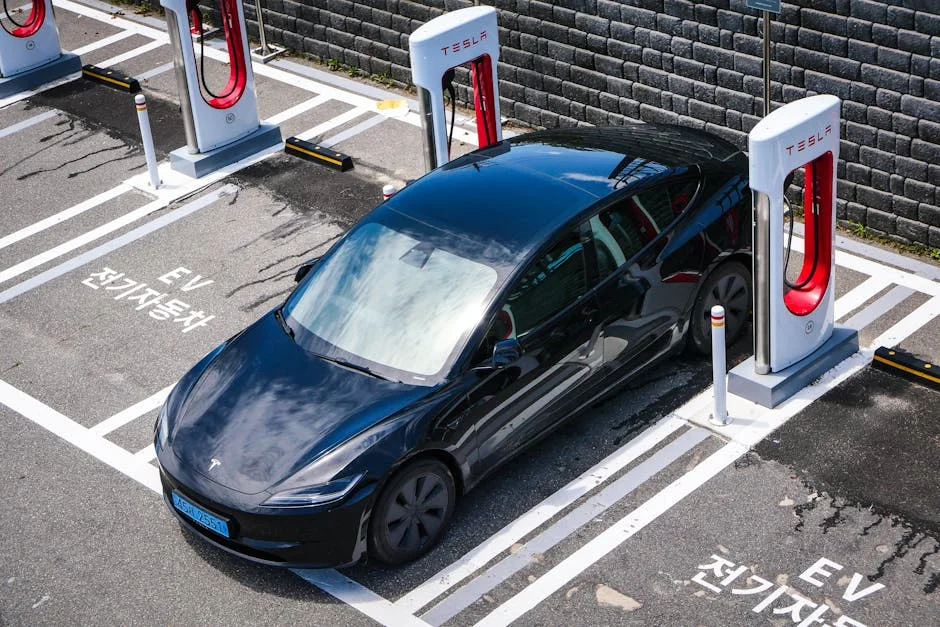
The phrase carbon footprint electric car vs gasoline car has moved from a niche environmental debate into a mainstream shopping consideration because transportation emissions sit at the center of climate policy, household budgets, and urban air quality. When people compare a battery-electric vehicle (EV) with a gasoline car, they often start with tailpipe emissions, but a full carbon footprint requires a broader view that includes manufacturing, fuel or electricity production, maintenance, and end-of-life handling. A gasoline car releases carbon dioxide directly from the exhaust every time it burns fuel, while an EV shifts most emissions upstream to the power plant and the supply chain that builds its battery and components. That difference changes how and where emissions occur, but it does not remove the need to measure them. For a buyer trying to make a responsible decision, the most useful approach is life-cycle analysis: counting greenhouse gases from “cradle to grave” and translating them into comparable units such as grams of CO2-equivalent per mile or per kilometer. This is also why the same EV can look cleaner in one region and less impressive in another, depending on the electricity mix, temperatures, driving speeds, and charging habits.
Table of Contents
- My Personal Experience
- Why the carbon footprint electric car vs gasoline car comparison matters
- How carbon footprint is measured across a vehicle’s life cycle
- Manufacturing emissions: battery production vs engine and fuel system complexity
- Operational emissions: tailpipe versus power plant and the role of efficiency
- Well-to-wheel versus cradle-to-grave: why the answer changes with scope
- Regional electricity grids: coal, gas, renewables, and the emissions intensity of charging
- Battery longevity, degradation, and recycling: how end-of-life affects total footprint
- Vehicle size, driving style, and climate: practical factors that swing emissions
- Expert Insight
- Maintenance, consumables, and non-exhaust emissions: the overlooked parts of the footprint
- Cost signals, incentives, and behavior: how economics shapes real-world emissions
- Side-by-side comparison table: typical attributes affecting carbon footprint
- Realistic break-even thinking: when an EV becomes lower carbon over time
- Choosing the lower-carbon option for different lifestyles and constraints
- Putting it all together: a balanced conclusion on emissions and ownership impact
- Watch the demonstration video
- Frequently Asked Questions
- Trusted External Sources
My Personal Experience
When I switched from my old gasoline sedan to a used electric car last year, I expected the carbon footprint to drop automatically, but it felt more complicated in real life. My commute is mostly city driving, and I noticed right away that I wasn’t burning fuel in traffic anymore, which made the change feel tangible. I started tracking my charging in an app and realized most of my charging happens overnight on the regular grid, so I looked up my utility’s energy mix—some months it’s cleaner than others. Even so, my “fuel” costs and emissions estimates were consistently lower than what I used to get with gas, especially in winter when my old car idled a lot to warm up. The biggest surprise was how much my driving habits mattered: smoother acceleration and fewer unnecessary trips made a bigger difference than I expected, regardless of which car I drove. If you’re looking for carbon footprint electric car vs gasoline car, this is your best choice.
Why the carbon footprint electric car vs gasoline car comparison matters
The phrase carbon footprint electric car vs gasoline car has moved from a niche environmental debate into a mainstream shopping consideration because transportation emissions sit at the center of climate policy, household budgets, and urban air quality. When people compare a battery-electric vehicle (EV) with a gasoline car, they often start with tailpipe emissions, but a full carbon footprint requires a broader view that includes manufacturing, fuel or electricity production, maintenance, and end-of-life handling. A gasoline car releases carbon dioxide directly from the exhaust every time it burns fuel, while an EV shifts most emissions upstream to the power plant and the supply chain that builds its battery and components. That difference changes how and where emissions occur, but it does not remove the need to measure them. For a buyer trying to make a responsible decision, the most useful approach is life-cycle analysis: counting greenhouse gases from “cradle to grave” and translating them into comparable units such as grams of CO2-equivalent per mile or per kilometer. This is also why the same EV can look cleaner in one region and less impressive in another, depending on the electricity mix, temperatures, driving speeds, and charging habits.
Another reason the carbon footprint electric car vs gasoline car comparison matters is that it highlights trade-offs that are easy to miss when focusing on a single metric. A gasoline car tends to have a lower manufacturing footprint than an EV because it lacks a large traction battery, but it usually carries a higher operational footprint year after year due to fuel combustion. An EV typically starts with a “carbon debt” from battery production, then pays it down over time through lower per-mile emissions—especially where the grid is cleaner or where renewable charging is available. This payback concept is practical: it connects carbon footprint to real driving behavior and vehicle lifespan. It also helps explain why some small, efficient gasoline cars can outperform inefficient, oversized vehicles of any powertrain, and why energy efficiency remains critical regardless of fuel type. Looking closely at the full carbon footprint can guide consumers toward choices that reduce emissions without sacrificing usability, while also informing policymakers about where incentives and infrastructure investments deliver the largest reductions.
How carbon footprint is measured across a vehicle’s life cycle
Understanding carbon footprint requires clarity about what gets counted. A typical life-cycle approach includes raw material extraction, component manufacturing, vehicle assembly, distribution, use-phase energy, maintenance, and end-of-life recycling or disposal. For the carbon footprint electric car vs gasoline car comparison, the two biggest buckets are manufacturing and use-phase. Manufacturing covers steel, aluminum, plastics, electronics, and for EVs, the battery pack (cells, cathode/anode materials, electrolyte, housing, and thermal management). Use-phase includes gasoline refining and distribution for internal combustion vehicles, and electricity generation and transmission losses for EVs. Analysts often report results as grams of CO2-equivalent per mile (gCO2e/mi), incorporating carbon dioxide plus other greenhouse gases (methane, nitrous oxide) weighted by global warming potential. The exact number varies by study assumptions, but the structure is consistent: add manufacturing emissions and spread them across expected lifetime miles, then add per-mile operational emissions.
System boundaries can change results in meaningful ways. If a study counts only tailpipe emissions, an EV appears to have zero operational emissions, which is not accurate from a grid perspective. If a study counts well-to-wheel or well-to-tank, it adds upstream fuel production. If it counts full life-cycle, it includes manufacturing and end-of-life. Electricity mix assumptions are also crucial: coal-heavy grids increase EV operational emissions; renewable-heavy grids reduce them dramatically. Temperature and driving patterns matter because cold weather reduces battery efficiency and increases cabin heating loads, while high-speed driving increases aerodynamic losses for both vehicle types. Charging losses—energy lost as heat in charging equipment and the battery—also affect per-mile electricity. A robust carbon footprint electric car vs gasoline car comparison therefore states assumptions: vehicle class, efficiency, battery size, lifetime miles, grid intensity, and whether recycling credits are included. Without those details, two “answers” can sound contradictory even if both are technically correct within their chosen boundaries.
Manufacturing emissions: battery production vs engine and fuel system complexity
Manufacturing is where the carbon footprint electric car vs gasoline car comparison often becomes nuanced. EVs commonly have higher manufacturing emissions mainly because of the battery pack, which requires energy-intensive processes and materials. Battery production involves mining and refining lithium, nickel, cobalt, manganese, graphite, copper, and aluminum, then producing cathode and anode materials, assembling cells in dry rooms, forming and testing cells, and integrating them into modules and packs. The emissions intensity of that chain depends heavily on the electricity used in manufacturing regions and the efficiency of factories. Modern battery plants that run on cleaner electricity and optimized processes can significantly reduce emissions per kilowatt-hour of battery capacity compared with older or more carbon-intensive facilities. Battery chemistry also matters: lithium iron phosphate (LFP) can reduce reliance on nickel and cobalt, while high-nickel chemistries can increase energy density but may have different upstream impacts.
Gasoline cars are not “low-carbon” to build, but their manufacturing footprint is usually lower because the powertrain relies on a smaller battery (if any), and the materials are more conventional. However, internal combustion powertrains have their own complexities—engine blocks, transmissions, exhaust after-treatment systems (catalytic converters), fuel tanks, and high-pressure fuel systems—each with associated emissions. In addition, gasoline vehicles require ongoing production of consumables such as engine oil and various filters, which can add small but persistent emissions over time. For a fair carbon footprint electric car vs gasoline car comparison, it helps to consider vehicle size. A compact EV with a modest battery may have only a moderate manufacturing premium over a compact gasoline car, whereas a large EV with a very large battery can carry a substantial manufacturing footprint that takes longer to offset. This is one reason right-sizing—choosing a vehicle no larger than necessary—can reduce emissions regardless of drivetrain.
Operational emissions: tailpipe versus power plant and the role of efficiency
Operational emissions are the most visible difference in the carbon footprint electric car vs gasoline car comparison. A gasoline car emits CO2 directly from burning fuel, and those emissions scale with fuel consumption. Burning one gallon of gasoline produces roughly 8.9 kg of CO2 at the tailpipe, not counting upstream emissions from extracting, transporting, and refining crude oil. A more efficient gasoline car reduces emissions, but it cannot eliminate them because combustion inherently releases carbon. EVs have no tailpipe and can be far more energy-efficient at turning stored energy into motion because electric motors and power electronics waste less energy as heat than internal combustion engines. This efficiency advantage often means an EV uses fewer kilowatt-hours to travel a given distance than the energy content of gasoline required by a comparable gasoline car.
EV operational emissions depend on the grid’s carbon intensity and on charging behavior. If electricity comes from coal-heavy generation, EV emissions increase; if it comes from renewables, nuclear, or efficient gas generation, EV emissions can be dramatically lower. Transmission and distribution losses, plus charging losses, mean the grid must generate more electricity than the battery ultimately delivers to the wheels. Still, in many regions, even after accounting for these losses, EVs tend to have lower operational emissions per mile than gasoline cars. Time-of-use charging can also influence emissions: charging when renewable output is high or when the grid is less carbon-intensive can reduce the effective footprint. Home solar charging can reduce it further, though the solar system’s own manufacturing footprint should be considered in a full household carbon accounting. The operational side of the carbon footprint electric car vs gasoline car comparison therefore rewards both vehicle efficiency and clean electricity, making EVs a technology whose benefits grow as grids decarbonize over time.
Well-to-wheel versus cradle-to-grave: why the answer changes with scope
Many disagreements about carbon footprint electric car vs gasoline car stem from mixing scopes. Well-to-wheel focuses on the energy pathway used during driving: for gasoline cars, it includes oil extraction, refining, distribution, and combustion; for EVs, it includes power generation, transmission, and battery charging. This is a useful scope for policy because it isolates operational energy and can be updated annually as the grid changes. Under well-to-wheel accounting, EVs often show lower emissions per mile than gasoline cars in regions with moderate or low grid carbon intensity. In contrast, cradle-to-grave includes manufacturing and end-of-life. That broader view can temporarily narrow the gap, especially for EVs with large batteries or in regions with very carbon-intensive electricity. Yet cradle-to-grave is more representative of the total climate impact of owning a vehicle over its life.
Lifetime mileage assumptions can strongly influence cradle-to-grave comparisons. If a vehicle is driven only a small number of miles, manufacturing emissions dominate, and the EV’s initial manufacturing premium may not be repaid. If the vehicle is driven a typical lifetime—often modeled as 150,000 to 200,000 miles—the EV has more time to offset manufacturing emissions through lower operational emissions. Driving patterns also matter: short trips in cold weather can be inefficient for gasoline cars due to warm-up losses, while EVs can be less efficient in winter because cabin heat requires energy. Meanwhile, regenerative braking helps EVs in stop-and-go traffic by recapturing energy that gasoline cars waste as heat. A careful carbon footprint electric car vs gasoline car comparison states whether it is well-to-wheel or cradle-to-grave and clarifies the assumed lifetime miles, because those parameters can shift the crossover point where an EV becomes the lower-carbon option.
Regional electricity grids: coal, gas, renewables, and the emissions intensity of charging
The grid is the hinge point for the carbon footprint electric car vs gasoline car comparison. Electricity is not a single fuel; it is a blend that varies by region and by hour. Coal-heavy grids can have high emissions per kilowatt-hour, while grids with significant wind, solar, hydro, nuclear, or geothermal generation can be much cleaner. Natural gas sits in between, and its climate impact depends not just on CO2 from combustion but also on methane leakage in the supply chain. As a result, the same EV model can have very different operational emissions depending on where it is charged. This is why broad statements like “EVs are always cleaner” or “EVs are worse than gasoline” fail to capture reality. A better framing is conditional: EVs tend to reduce emissions in most grids and improve further as the grid decarbonizes, but the magnitude of advantage depends on electricity carbon intensity and the EV’s efficiency.
Charging timing can also matter. Some regions have high solar production midday and higher fossil generation in the evening. Others have nighttime wind. If a driver can shift charging to lower-carbon hours—using smart charging, time-of-use rates, or workplace charging—the operational footprint can drop without changing the vehicle. Public fast charging can introduce additional losses and may draw from a grid mix that differs from home charging, but it is typically a smaller share of total charging for most owners. For apartment dwellers, the availability of reliable charging is part of the practical decision, and it can also influence emissions if it forces reliance on certain charging networks or times. The grid factor makes the carbon footprint electric car vs gasoline car comparison dynamic: EVs often become cleaner over their lifetime as the grid improves, while gasoline cars stay tied to the carbon content of fuel. This asymmetry is important for long-term planning and for buyers who keep vehicles for many years.
Battery longevity, degradation, and recycling: how end-of-life affects total footprint
Battery life is a critical variable in the carbon footprint electric car vs gasoline car comparison because it influences whether the initial manufacturing footprint is spread across a long service life or shortened by early replacement. Real-world data increasingly shows that many EV batteries retain substantial capacity over long mileages, especially with modern thermal management and conservative buffer strategies. Degradation is affected by heat, frequent high state-of-charge storage, repeated fast charging, and deep cycling. Good battery health practices—avoiding prolonged 100% storage when not needed, using moderate charging limits for daily driving, and minimizing extreme heat exposure—can extend usable life. If a battery lasts the life of the vehicle, the manufacturing emissions are amortized over many miles and the EV’s life-cycle footprint improves. If a battery requires replacement, the footprint increases, though replacement batteries can be produced in cleaner factories as manufacturing decarbonizes.
End-of-life pathways can further shift results. Recycling can recover valuable materials such as nickel, cobalt, copper, and aluminum, reducing the need for new mining and refining. Recycling processes vary—pyrometallurgical, hydrometallurgical, and direct recycling approaches each have different energy needs and recovery rates. Policy and industry are moving toward higher recovery and closed-loop supply chains, which could lower the effective carbon footprint of future batteries. Second-life applications, such as using retired EV packs for stationary storage, can extend the utility of the battery and potentially displace more carbon-intensive grid balancing solutions, though accounting methods differ on how to allocate benefits. Gasoline cars also have recycling streams, but the most climate-relevant factor remains fuel combustion during use. Incorporating battery recycling and second-life scenarios into the carbon footprint electric car vs gasoline car comparison often strengthens the EV advantage over time, especially as recycling infrastructure matures and as cleaner energy powers recycling plants.
Vehicle size, driving style, and climate: practical factors that swing emissions
Vehicle class can dominate the carbon footprint electric car vs gasoline car comparison. A heavy SUV—electric or gasoline—requires more energy to move than a compact car, particularly at highway speeds where aerodynamic drag rises quickly. For EVs, larger vehicles often carry larger battery packs, which increases manufacturing emissions and can lengthen the time needed to break even versus a smaller gasoline car. For gasoline vehicles, larger engines and higher curb weights increase fuel consumption, locking in higher operational emissions for the life of the vehicle. Driving style compounds this: aggressive acceleration, high cruising speeds, and frequent high-speed braking increase energy use. EVs can recapture some braking energy through regeneration, but they still pay an energy penalty for higher speeds and rapid acceleration. Tire choice and tire pressure matter too, because rolling resistance affects both powertrains.
| Aspect | Electric Car (EV) | Gasoline Car |
|---|---|---|
| Manufacturing emissions | Typically higher upfront (battery production adds CO₂) | Typically lower upfront (no large battery) |
| Use-phase emissions (driving) | Low to near-zero tailpipe; depends on electricity mix | Higher tailpipe CO₂ from burning gasoline |
| Lifetime carbon footprint | Often lower overall, especially with cleaner grids and high mileage | Often higher overall due to sustained fuel emissions |
Expert Insight
If you’re comparing carbon footprints, focus on the full lifecycle: electric cars typically start with higher manufacturing emissions (especially the battery) but can pull ahead quickly on cleaner grids. To reduce your EV’s footprint fast, charge during off-peak hours when your utility uses more low-carbon power, and enroll in a renewable electricity plan (or add home solar) so your miles are powered by cleaner energy. If you’re looking for carbon footprint electric car vs gasoline car, this is your best choice.
For gasoline cars, the biggest carbon driver is fuel burned over time, so prioritize cutting consumption. Choose the most efficient model you can realistically use (or downsize if possible), keep tires properly inflated and maintenance up to date, and combine trips to avoid cold starts—these steps reduce fuel use immediately and narrow the gap while you plan your next vehicle upgrade. If you’re looking for carbon footprint electric car vs gasoline car, this is your best choice.
Climate and terrain also influence emissions. Cold weather reduces EV range because batteries are less efficient when cold and because cabin heating can draw significant power, especially if the vehicle lacks a heat pump. However, gasoline cars also become less efficient in winter due to richer fuel mixtures during warm-up and because short trips keep engines from reaching optimal temperature. Hot climates increase air conditioning loads for both, though EVs may manage cabin cooling efficiently while parked without idling. Hilly terrain can favor EVs because regenerative braking can recover energy on descents, whereas gasoline cars dissipate that energy as heat. The best way to apply the carbon footprint electric car vs gasoline car comparison is to match the vehicle to real usage: choosing an efficient model, avoiding oversizing, and adopting smoother driving habits. These choices can sometimes reduce emissions as much as switching drivetrains, and they improve results regardless of whether a driver chooses electricity or gasoline.
Maintenance, consumables, and non-exhaust emissions: the overlooked parts of the footprint
When people evaluate carbon footprint electric car vs gasoline car, they often focus on fuel or electricity and overlook maintenance and non-exhaust emissions. EVs typically require less routine maintenance because they have fewer moving parts, no oil changes, and less brake wear due to regenerative braking. That can reduce the environmental impact associated with producing and disposing of engine oil, filters, and some replacement parts. Gasoline vehicles require periodic oil changes, spark plugs, and more complex drivetrain servicing over time. These maintenance emissions are usually smaller than fuel-related emissions, but across millions of vehicles they become meaningful. EV maintenance can include coolant for thermal management systems, cabin air filters, tires, and occasional brake servicing, but the overall maintenance profile is often simpler.
Non-exhaust emissions—especially tire and brake particulate matter—are important for air quality and have indirect climate implications. Heavier vehicles can produce more tire wear particles, and many EVs are heavier than comparable gasoline cars due to battery weight. However, regenerative braking can reduce brake dust substantially. Tire wear depends on weight, torque, tire compound, and driving style; high-torque acceleration can increase wear if driven aggressively. From a pure greenhouse gas perspective, tire and brake particulates are not typically the largest factor, but they matter for local pollution and health. Additionally, manufacturing replacement tires and parts has a carbon cost. A balanced carbon footprint electric car vs gasoline car comparison recognizes that while EVs generally reduce greenhouse gases, they are not impact-free, and improvements in tire technology, vehicle lightweighting, and urban design can reduce emissions and pollution for both powertrains.
Cost signals, incentives, and behavior: how economics shapes real-world emissions
Economic factors influence carbon footprint electric car vs gasoline car outcomes because they shape what people buy and how they drive. If electricity is cheap relative to gasoline, drivers may travel more miles, partially offsetting emissions savings through increased activity, a phenomenon sometimes called rebound effect. Conversely, high gasoline prices can push drivers toward smaller, more efficient cars or reduced driving, lowering emissions. Incentives for EV purchases, home chargers, and renewable energy can accelerate adoption and improve charging convenience, but the climate benefit depends on the vehicles displaced and the electricity used. Replacing an older, inefficient gasoline vehicle typically yields a larger emissions reduction than replacing a newer, efficient hybrid, all else equal. Similarly, electrifying high-mileage drivers—commuters, rideshare operators, fleet vehicles—often delivers larger total reductions because the EV’s lower per-mile emissions accumulate quickly.
Behavioral choices can amplify benefits. Charging from a cleaner source, enrolling in a renewable electricity plan, or pairing EV ownership with rooftop solar can reduce operational emissions. Planning trips to avoid unnecessary fast charging, maintaining tires properly, and driving smoothly can lower energy use. For gasoline vehicles, choosing higher fuel economy, maintaining engines, and avoiding excessive idling reduces emissions. The carbon footprint electric car vs gasoline car comparison therefore cannot be separated from human behavior and policy context. A driver who buys an efficient EV and charges mostly on a low-carbon grid will likely achieve substantial reductions. A driver who buys a very large EV with a huge battery, drives aggressively, and charges on a carbon-intensive grid may still reduce emissions relative to a comparable gasoline SUV, but the margin shrinks. Economics and incentives are not just about affordability; they influence the actual carbon outcomes on the road.
Side-by-side comparison table: typical attributes affecting carbon footprint
Because the carbon footprint electric car vs gasoline car debate often becomes abstract, it helps to anchor the comparison in practical attributes that influence emissions and ownership experience. The table below uses generalized categories rather than specific models, since real-world numbers vary by vehicle class, region, and driving patterns. “Ratings” are contextual indicators (not lab-certified scores) reflecting how each option typically performs on life-cycle emissions potential when driven for a normal vehicle lifespan in an average grid region. “Price” is presented as a typical relative range because purchase costs vary widely by brand, incentives, and trim level. The goal is to connect the emissions discussion to the features buyers actually weigh: efficiency, manufacturing intensity, fueling or charging infrastructure, and ongoing maintenance.
Interpreting the table requires remembering that no single row tells the whole story. A small, efficient gasoline hybrid can be a strong option in regions with a very carbon-intensive grid or for drivers without home charging, while a mid-size EV can deliver large emissions reductions where the grid is cleaner or where renewable charging is available. Plug-in hybrids can reduce emissions if they are charged consistently, but if they are driven mostly on gasoline, their added battery manufacturing footprint may not pay off. Battery size also matters: larger packs enable longer range but increase manufacturing emissions. For many households, the best emissions outcome comes from matching range and size to real needs rather than maximizing specifications. Used vehicles also change the accounting: buying a used gasoline car may avoid new manufacturing emissions but locks in higher operational emissions; buying a used EV can provide low operational emissions with a manufacturing footprint already “sunk” by the first owner. If you’re looking for carbon footprint electric car vs gasoline car, this is your best choice.
| Name | Features | Ratings (life-cycle emissions potential) | Price (typical relative range) |
|---|---|---|---|
| Battery Electric Car (Compact) | Small-to-midsize battery, high efficiency, regenerative braking, best results on cleaner grids | 4.5/5 | $$$ |
| Battery Electric Car (Large SUV/Truck) | Large battery, higher manufacturing footprint, strong towing/space, benefits depend on grid and mileage | 3.5/5 | $$$$ |
| Gasoline Car (Efficient Compact) | Lower manufacturing emissions than EV, good fuel economy, tailpipe emissions every mile | 2.5/5 | $$ |
| Gasoline Car (Large SUV/Truck) | High fuel consumption, high operational emissions, often lower upfront cost than large EV | 1.5/5 | $$$ |
| Hybrid (Non-plug-in) | Improved fuel economy, modest battery, no charging needed, still burns gasoline | 3/5 | $$$ |
| Plug-in Hybrid (PHEV) | Short electric range, gasoline backup, emissions depend heavily on charging frequency | 3/5 | $$$ |
Realistic break-even thinking: when an EV becomes lower carbon over time
A useful way to interpret carbon footprint electric car vs gasoline car is to think in terms of a break-even point: the mileage (or time) at which the EV’s higher manufacturing emissions are outweighed by its lower operational emissions. The break-even point is not a single universal number because it depends on battery size, vehicle efficiency, grid carbon intensity, and the gasoline car’s fuel economy. In a cleaner-grid region, the per-mile emissions advantage of an EV can be large, so the break-even arrives sooner. In a coal-heavy region, the advantage shrinks and break-even takes longer, though it may still occur for efficient EVs compared with typical gasoline vehicles. The gasoline comparison vehicle matters too: comparing an EV to a high-mpg hybrid yields a smaller operational gap than comparing it to a low-mpg SUV, so break-even shifts accordingly.
Lifetime considerations also affect break-even. If a driver keeps a vehicle for many years and drives typical annual mileage, the EV has more time to accumulate operational savings. If a vehicle is replaced frequently, manufacturing emissions become a larger share of total footprint, and the best choice may lean toward durability and long service life regardless of drivetrain. It also matters that electricity grids tend to get cleaner over time in many regions due to renewable buildout, coal retirements, and efficiency improvements. That means an EV purchased today may become cleaner each year without any changes by the driver, while a gasoline car’s emissions per mile remain tied to fuel carbon content and only improve marginally with incremental efficiency gains. Break-even thinking helps avoid simplistic claims and supports a practical conclusion: the carbon footprint electric car vs gasoline car comparison often favors EVs over a full vehicle lifetime, especially when the EV is efficient, appropriately sized, and charged on a cleaner grid.
Choosing the lower-carbon option for different lifestyles and constraints
The best outcome in the carbon footprint electric car vs gasoline car decision depends on real constraints: charging access, commute length, climate, and budget. For drivers with home charging and a typical commute, an EV often offers a strong path to lower emissions because it enables consistent charging on predictable electricity sources and encourages efficient driving via regenerative braking and energy-use feedback. Apartment dwellers without reliable charging may struggle to keep a plug-in vehicle charged, which can reduce the practical advantage of an EV or PHEV. In such cases, an efficient hybrid or a high-mpg compact gasoline car may deliver meaningful reductions compared with larger gasoline vehicles, especially if it replaces an older, inefficient model. For rural drivers or those who tow frequently, vehicle selection becomes more specialized; the most important emissions lever may be avoiding oversizing and choosing the most efficient vehicle that meets functional needs.
Another lifestyle factor is mileage. High-mileage drivers often see the largest benefit from electrification because operational emissions savings accumulate quickly. Fleet vehicles, delivery vans, and rideshare cars can reach break-even sooner, especially if charging infrastructure is planned thoughtfully. For low-mileage households, the difference may be smaller, and extending the life of an existing vehicle while reducing driving through trip planning, carpooling, biking, or transit can sometimes cut emissions more than purchasing a new vehicle immediately. Still, when a replacement is needed, the carbon footprint electric car vs gasoline car comparison generally points toward efficient EVs in many regions, with hybrids as a transitional option where charging is difficult. The most reliable approach is to combine drivetrain choice with efficiency and longevity: pick a vehicle that is likely to be kept for a long time, maintain it well, and power it with the cleanest energy realistically available.
Putting it all together: a balanced conclusion on emissions and ownership impact
Looking across manufacturing, operation, maintenance, and end-of-life, the carbon footprint electric car vs gasoline car comparison usually shows that EVs can deliver lower life-cycle greenhouse gas emissions, particularly when they are efficient, not oversized, and charged on grids with moderate-to-low carbon intensity. The biggest caveats are battery manufacturing emissions, regional electricity mix, and the tendency for larger vehicles to carry larger footprints regardless of fuel. Gasoline cars typically start with a lower manufacturing footprint but accumulate emissions continuously through fuel combustion, and those emissions remain relatively fixed over time. EVs often begin with a higher manufacturing footprint but can reduce emissions year after year, and their operational footprint often improves as grids decarbonize and as recycling and cleaner battery production scale up. This is why focusing only on tailpipe or only on manufacturing can mislead; a life-cycle perspective is the most consistent way to compare.
For buyers trying to act on the carbon footprint electric car vs gasoline car question, the most effective steps are practical: choose the smallest, most efficient vehicle that meets daily needs; prioritize long service life; charge at home when possible; and, if available, select cleaner electricity options or smart charging schedules. When charging access is limited, high-efficiency hybrids and compact gasoline cars can still reduce emissions compared with larger, less efficient vehicles, and reducing total miles driven remains a powerful lever. The overall direction is clear: when evaluated across the full life cycle and driven for a normal lifespan, carbon footprint electric car vs gasoline car comparisons commonly favor well-matched EVs, with the strongest advantages appearing where electricity is cleaner and where drivers cover enough miles to offset manufacturing emissions.
Watch the demonstration video
This video compares the carbon footprint of electric cars and gasoline cars across their full lifecycles—from manufacturing and battery production to daily driving and electricity or fuel sources. You’ll learn how emissions vary by region, how long it takes an EV to “break even,” and what factors most affect real-world climate impact. If you’re looking for carbon footprint electric car vs gasoline car, this is your best choice.
Summary
In summary, “carbon footprint electric car vs gasoline car” is a crucial topic that deserves thoughtful consideration. We hope this article has provided you with a comprehensive understanding to help you make better decisions.
Frequently Asked Questions
Which has a lower lifetime carbon footprint: an electric car or a gasoline car?
In many regions, the **carbon footprint electric car vs gasoline car** comparison favors electric vehicles over the long run: while EVs often start out with higher manufacturing emissions—mostly due to battery production—those upfront impacts are usually outweighed by the much lower emissions they produce during everyday driving.
Are electric cars worse for the climate because of battery production?
Although manufacturing an EV battery can raise upfront emissions, over a typical vehicle’s lifetime the lower tailpipe (and often overall) emissions generally make up the difference—especially as the grid gets cleaner—shaping the **carbon footprint electric car vs gasoline car** in favor of electric vehicles in many regions.
How much does the electricity mix affect an electric car’s carbon footprint?
The **carbon footprint electric car vs gasoline car** can vary a lot depending on where the electricity comes from—charging on a coal-heavy grid can significantly increase emissions, while plugging into a renewable- or nuclear-heavy grid can make an EV’s driving emissions extremely low.
How long does it take for an EV to “break even” on carbon compared with a gasoline car?
It depends on the vehicle, battery size, efficiency, and grid intensity, but many EVs reach carbon break-even after tens of thousands of kilometers (or a few years of average driving). If you’re looking for carbon footprint electric car vs gasoline car, this is your best choice.
Do hybrids or plug-in hybrids have a smaller carbon footprint than gasoline cars?
In most cases, yes—hybrids generally cut fuel consumption compared to traditional gas-only vehicles. Plug-in hybrids can reduce it even further when you do most of your driving on electric power and charge using a relatively clean electricity grid, which can make a noticeable difference in the **carbon footprint electric car vs gasoline car** comparison.
What factors most influence the carbon footprint comparison between EVs and gasoline cars?
Key factors in the **carbon footprint electric car vs gasoline car** comparison include the vehicle’s size and efficiency, battery capacity, the emissions intensity of the local electricity grid, annual miles driven, day-to-day driving and charging habits, and how long the car is owned before it’s replaced.
? Looking for more info about carbon footprint electric car vs gasoline car? Follow Our Site for updates and tips!

Trusted External Sources
- Electric Vehicles Contribute Fewer Emissions Than Gasoline …
As of Feb 7, 2026, research continues to show that electric vehicles usually produce fewer greenhouse gas emissions over their full life cycle than traditional internal combustion engine models—an important takeaway in the ongoing discussion around **carbon footprint electric car vs gasoline car**.
- Electric Vehicle Myths | US EPA
FACT: When you compare the **carbon footprint electric car vs gasoline car**, electric vehicles (EVs) usually come out ahead. Even after accounting for emissions from battery production and the electricity used for charging, EVs generally produce fewer greenhouse gases over their lifetime than a traditional gasoline car—especially as power grids get cleaner and more renewable energy comes online.
- Are electric vehicles definitely better for the climate than gas …
By the end of their driving lifetimes, electric vehicles typically generate significantly fewer carbon emissions than gasoline-powered cars in almost any real-world scenario. In fact, when you compare the **carbon footprint electric car vs gasoline car**, the EV usually comes out ahead—even after accounting for electricity generation and battery production.
- New electric vs second-hand gas car : r/sustainability – Reddit
Feb 1, 2026 … Bottom line: The lifecycle emissions of electric cars are better than gas cars, by up to 50%. This holds true unless you can manage to get more … If you’re looking for carbon footprint electric car vs gasoline car, this is your best choice.
- Carbon Footprint Face-Off: A Full Picture of EVs vs. Gas Cars
As of Jan 20, 2026, the conversation about car emissions goes far beyond what comes out of the tailpipe. To understand the **carbon footprint electric car vs gasoline car**, you have to look at the full lifecycle—especially how the electricity that charges an EV is generated. Depending on the power grid, charging can be remarkably clean or more emissions-intensive, which is why EV lifecycle emissions often tell a more complete story than tailpipe numbers alone.