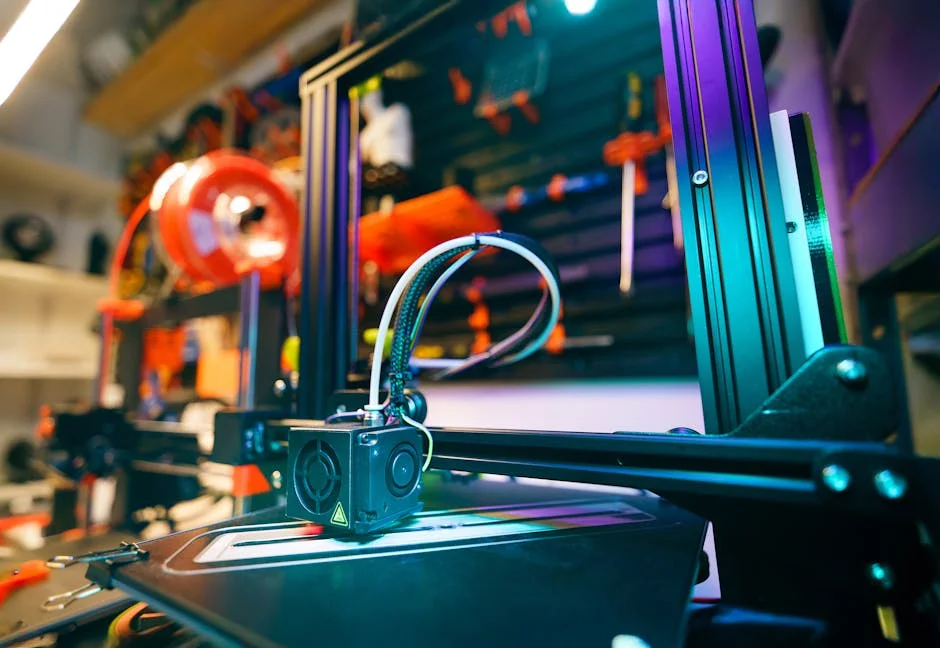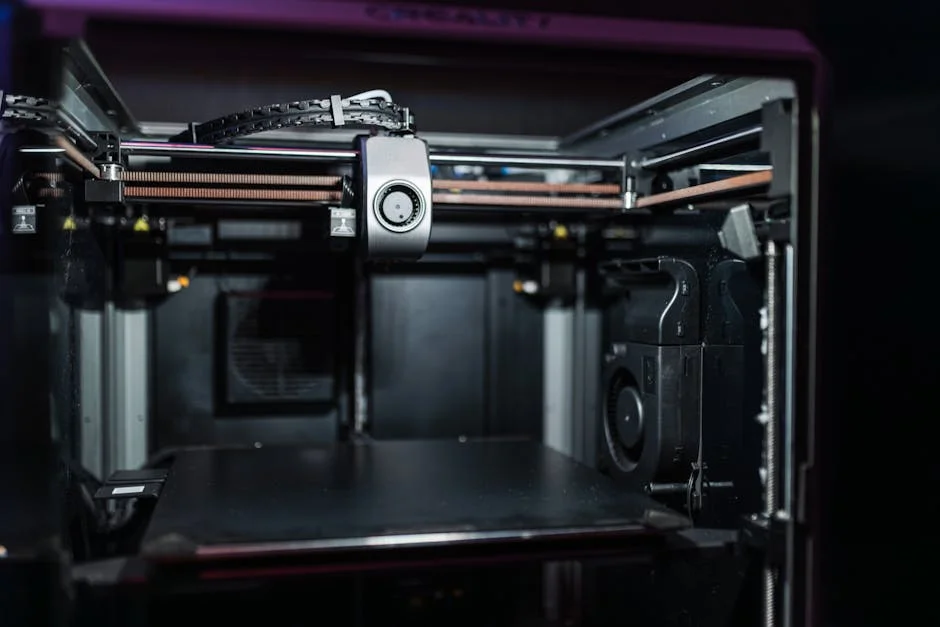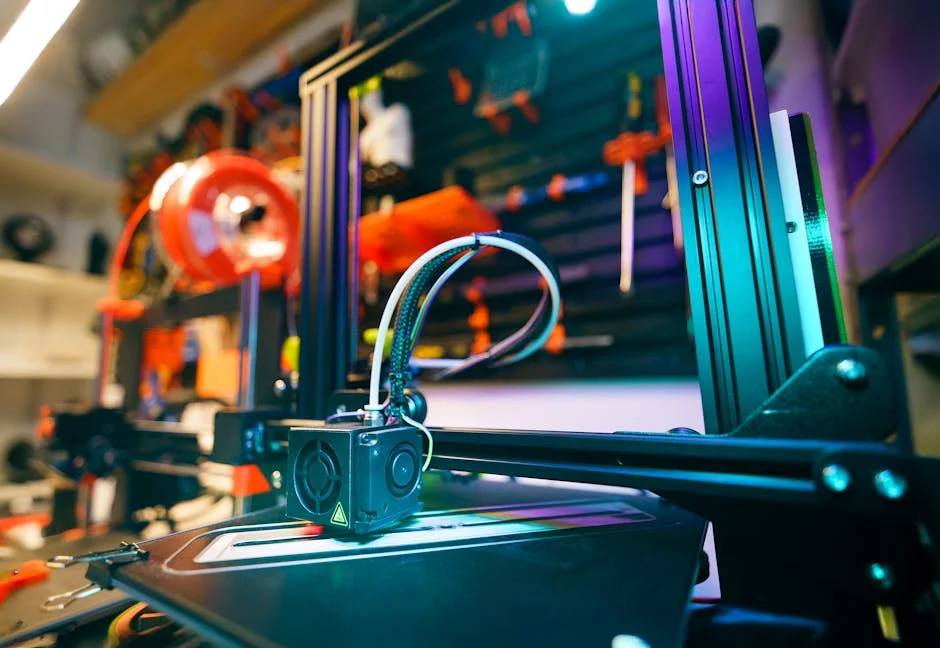
A metal 3D printing service has become a practical production route for teams that need real, end-use components without committing to expensive tooling or long supplier lead times. Instead of cutting away material from a billet or waiting for castings and dies, additive manufacturing builds parts layer by layer directly from a digital model. That shift affects nearly every decision around product development: geometry is no longer limited by cutting tool access, internal channels can be manufactured as part of the component, and multiple assemblies can sometimes be consolidated into a single printed structure. For industries that live and die by performance and iteration speed—medical, aerospace, motorsport, robotics, energy—this approach offers a way to validate designs quickly and then carry those same designs into functional production. The appeal is not only speed. It’s also the ability to fine-tune weight, stiffness, thermal behavior, and flow characteristics in ways that are difficult or impossible with conventional processes. When you outsource to a specialist provider, you gain access to industrial machines, certified powders, experienced build engineers, and post-processing equipment that would be impractical for many organizations to purchase and maintain in-house.
Table of Contents
- My Personal Experience
- Why a Metal 3D Printing Service Is Changing How Parts Get Made
- Core Technologies Used by Metal Additive Manufacturing Providers
- Materials and Alloys Commonly Offered for Metal Printing
- Design Considerations That Reduce Cost and Improve Results
- From Quote to Delivery: What the Workflow Typically Looks Like
- Quality Control, Certifications, and Traceability Expectations
- Lead Times, Production Scaling, and When Additive Makes Sense
- Expert Insight
- Cost Drivers and How to Estimate a Realistic Budget
- Industries and Applications Where Metal Additive Delivers Clear Value
- Post-Processing Options: Heat Treatment, Machining, and Surface Finishing
- Choosing the Right Provider: Practical Evaluation Criteria
- Integrating Metal Additive into Your Supply Chain and Product Lifecycle
- Getting Started: File Preparation, Drawings, and Clear Requirements
- Watch the demonstration video
- Frequently Asked Questions
- Trusted External Sources
My Personal Experience
I used a metal 3D printing service last year when a small stainless bracket on our packaging line kept cracking and the OEM lead time was pushing six weeks. I sent them the worn part and a rough CAD model, and their engineer suggested thickening one rib and adding a fillet where the stress marks showed up. They printed it in 316L, shared photos after the build, and warned me upfront that the surface would be a bit rough unless we paid for extra finishing. The part arrived in about a week; it needed a quick deburr and a couple passes with a reamer on the mounting holes, but it bolted on cleanly and has been running ever since. It wasn’t cheap compared to machining, but the speed and the design feedback saved us a lot more in downtime.
Why a Metal 3D Printing Service Is Changing How Parts Get Made
A metal 3D printing service has become a practical production route for teams that need real, end-use components without committing to expensive tooling or long supplier lead times. Instead of cutting away material from a billet or waiting for castings and dies, additive manufacturing builds parts layer by layer directly from a digital model. That shift affects nearly every decision around product development: geometry is no longer limited by cutting tool access, internal channels can be manufactured as part of the component, and multiple assemblies can sometimes be consolidated into a single printed structure. For industries that live and die by performance and iteration speed—medical, aerospace, motorsport, robotics, energy—this approach offers a way to validate designs quickly and then carry those same designs into functional production. The appeal is not only speed. It’s also the ability to fine-tune weight, stiffness, thermal behavior, and flow characteristics in ways that are difficult or impossible with conventional processes. When you outsource to a specialist provider, you gain access to industrial machines, certified powders, experienced build engineers, and post-processing equipment that would be impractical for many organizations to purchase and maintain in-house.
Another reason a metal 3D printing service is gaining traction is the growing maturity of the surrounding ecosystem: design software, simulation tools, powder handling standards, and quality management practices. Early adopters sometimes treated metal additive as a prototyping novelty, but today it is increasingly used for serial production of complex parts, spares, and customized devices. The best providers help bridge the gap between a CAD file and a part that meets drawing requirements by advising on print orientation, support strategy, wall thickness, hole sizing, and expected surface finish after machining. That guidance matters because printing is only one step in a chain that includes heat treatment, support removal, machining, surface finishing, and inspection. When those steps are planned together, additive becomes a repeatable manufacturing method rather than a one-off experiment. The result is a component that can be lighter, stronger for its weight, or more integrated, while still meeting dimensional tolerances and material specifications demanded by engineering teams.
Core Technologies Used by Metal Additive Manufacturing Providers
Most metal 3D printing service providers offer more than one process because each technology has advantages depending on part size, geometry, alloy, and required properties. Powder bed fusion—often marketed as DMLS, SLM, or LPBF—is one of the most common. In this method, a thin layer of metal powder is spread across a build plate and selectively melted with a laser (or sometimes an electron beam), repeating layer by layer until the part is complete. LPBF is valued for high detail, fine features, and strong mechanical properties, making it a popular choice for aerospace brackets, lattice structures, medical implants, and dense functional components. However, it also requires supports for overhangs, careful thermal management to reduce distortion, and post-processing such as stress relief and machining. A capable provider will explain how these variables influence cost and lead time, and will propose design adjustments that preserve function while improving printability.
Directed energy deposition (DED) is another option you may encounter at a metal 3D printing service, especially for larger parts, repair work, or adding features to existing components. DED feeds powder or wire into a melt pool created by a laser or arc, building material where needed. While surface finish and feature resolution are usually less refined than powder bed fusion, DED can be excellent for near-net-shape builds, cladding, and refurbishment of high-value components such as turbine blades or heavy industrial tooling. Binder jetting is also growing in availability, using a binder to “glue” powder layers before sintering and often infiltration; it can offer high throughput and lower per-part costs for certain geometries, though final density and shrinkage management require expertise. The right technology choice comes from matching performance requirements—density, fatigue strength, corrosion resistance, tolerances, and surface condition—to the strengths and limits of each process. A provider that can explain these trade-offs clearly is often a better partner than one that simply quotes a single method for everything.
Materials and Alloys Commonly Offered for Metal Printing
Material selection is one of the first practical questions when evaluating a metal 3D printing service, because the alloy determines not only mechanical behavior but also printability, heat treatment routes, and finishing options. Stainless steels such as 316L and 17-4PH are frequently used due to their balance of corrosion resistance, strength, and availability. 316L is popular for chemical exposure, marine environments, and medical-adjacent applications where corrosion resistance is critical. 17-4PH can be heat treated to higher strength, which can be useful for tooling components, brackets, and housings that need durability. Tool steels exist in additive-compatible forms as well, though they often require careful thermal control and post-print heat treatment to manage hardness and cracking risk. Aluminum alloys such as AlSi10Mg are widely offered in powder bed fusion and can produce lightweight parts with good strength-to-weight ratio, often used in automotive, consumer electronics fixtures, and thermal management structures.
Titanium, particularly Ti-6Al-4V, is a flagship material for many metal 3D printing service providers because it combines high strength, low density, and excellent corrosion resistance. It is frequently selected for aerospace parts and medical implants, where weight savings and biocompatibility can justify higher powder and processing costs. Nickel superalloys such as Inconel 625 and 718 are chosen for high-temperature and corrosive environments, including energy and aerospace applications. Cobalt-chrome alloys are common in dental and orthopedic uses due to wear resistance and strength. Each alloy comes with expectations around achievable wall thickness, minimum feature size, and post-processing strategy. For example, titanium parts often benefit from hot isostatic pressing (HIP) to reduce internal porosity and improve fatigue properties, while aluminum parts may require specific heat treatments to optimize strength. A strong provider will help you align the material choice with the real service environment—temperature, load cycles, chemicals, and required certifications—rather than selecting an alloy based solely on what is most common in a catalog.
Design Considerations That Reduce Cost and Improve Results
Getting the best outcome from a metal 3D printing service often starts with design decisions that respect how additive manufacturing behaves. While additive enables complex geometry, it is not “free complexity” in every sense; certain shapes increase support volume, build time, and post-processing effort. Overhangs beyond process-specific angles typically require supports, which add material usage and labor for removal. Thin walls can be printed, but they must remain stable during the build and survive post-processing without warping. Holes may print undersized due to melt pool behavior and powder adhesion, so designers often oversize holes and then finish them by drilling or reaming. Threads are frequently printed as pilots and then tapped for accuracy and surface integrity. Orientation also matters: it influences surface finish, support placement, mechanical anisotropy, and the likelihood of distortion. A provider that offers design-for-additive guidance can often reduce your total cost by recommending a different build orientation or adding sacrificial features for fixturing and machining.
Another core factor is how the part will be finished. Many printed components require machining on critical surfaces, sealing faces, bearing bores, and datum features. If the design includes clear machining allowances and accessible tool paths, the final part can be brought to tolerance efficiently. If not, the provider may need to create custom fixtures or perform extra setups, increasing time and risk. Lattice structures and internal channels can deliver weight savings and improved heat transfer, but they must be designed with powder removal in mind; trapped powder can be a functional and safety issue. For fluid channels, designers should consider minimum diameters, smooth transitions, and inspection access where possible. The best projects treat metal additive as a hybrid process: printing creates the near-net geometry and internal complexity, while machining and finishing deliver the final precision. When your CAD model reflects that hybrid reality, the metal 3D printing service can quote more accurately, hit lead times more consistently, and produce parts that meet performance expectations without repeated redesign cycles.
From Quote to Delivery: What the Workflow Typically Looks Like
A professional metal 3D printing service usually follows a structured workflow to control quality and reduce surprises. It starts with a file review, often using STEP files for geometry and an accompanying drawing or specification for tolerances, surface finish, and material requirements. The provider may request information about the part’s function, load conditions, and which surfaces are critical. From there, an engineer plans the build: selecting the machine, setting layer thickness, choosing orientation, generating supports, and nesting parts to optimize build volume. This planning stage is where costs and lead times are largely determined, because it affects laser time, powder usage, support volume, and the amount of post-processing required. A careful provider will also flag risks such as thin unsupported walls, large flat surfaces prone to warping, or enclosed cavities that trap powder. If design changes are needed, they are best made before printing begins, when the cost of iteration is still low.
After printing, the part is removed from the build plate, typically after a stress relief heat treatment to reduce residual stresses created by rapid melting and cooling. Support removal follows, which can be manual, machined, or a combination. Many components then go through additional thermal processing such as solution treatment, aging, or HIP depending on the alloy and property requirements. Surface finishing may include bead blasting, tumbling, polishing, or chemical smoothing where applicable, while precision features are machined to tolerance. Inspection can range from basic dimensional checks to CMM measurement, hardness testing, density checks, and non-destructive testing such as dye penetrant or CT scanning. Packaging and documentation matter too, especially for regulated industries; a reputable provider can supply material certificates, build reports, and inspection records as needed. Understanding this end-to-end chain helps buyers set realistic expectations: additive manufacturing can be fast, but the total lead time depends on how much finishing and verification is required to deliver a production-ready component. If you’re looking for metal 3d printing service, this is your best choice.
Quality Control, Certifications, and Traceability Expectations
Quality is a deciding factor when choosing a metal 3D printing service, particularly for functional parts where failure is not an option. Additive manufacturing introduces process variables that must be monitored: powder batch consistency, oxygen levels, machine calibration, scan strategies, and thermal history across the build. A serious provider maintains documented procedures for powder handling, including storage conditions, reuse ratios, sieving, and contamination control. Machine maintenance schedules, laser calibration records, and build parameter controls also contribute to repeatability. For customers, the practical question is what evidence of control is available. Many providers operate under ISO 9001 quality management systems, and those serving aerospace may pursue AS9100. Medical manufacturing may involve ISO 13485 environments or at least robust traceability practices. Even if you do not need a specific certification, a provider that can explain their control plan clearly is more likely to deliver consistent parts.
Traceability often extends beyond paperwork into how parts are identified and tracked through post-processing. Build plates may carry unique identifiers, and individual parts can be marked or serialized when required. Material certificates (such as mill certs for powder), heat treatment records, and inspection reports create a chain of evidence that supports compliance and reduces risk in supply chains. Inspection methods should match the part’s requirements: CMM for tight tolerances, surface roughness measurement for sealing interfaces, and CT scanning for internal channels or lattice structures where visual inspection is impossible. It’s also worth noting that “as-printed” surface finish is often rougher than machined surfaces, and that fatigue performance can be sensitive to surface condition and internal porosity. A capable metal 3D printing service will discuss these relationships upfront and offer options such as HIP, shot peening, polishing, or machining to achieve the required performance. Quality is not a single step at the end; it is built into the process from powder to final inspection.
Lead Times, Production Scaling, and When Additive Makes Sense
Lead time is one of the most cited benefits of a metal 3D printing service, but it is important to define what “fast” means in your context. For a prototype bracket or a functional test part, additive can often deliver within days once a design is ready, particularly when the provider has machine availability and standard post-processing routes. For production-grade parts with strict inspection, heat treatment, and machining requirements, lead times can extend, though they may still be shorter than casting or forging routes that require tooling. Additive is especially compelling when the alternative involves long tooling queues, minimum order quantities, or complex multi-part assemblies. It can also reduce downtime by enabling spare parts on demand, particularly for legacy equipment where original tooling no longer exists. Even when lead times are similar to traditional manufacturing, additive may win because it reduces the number of suppliers involved, consolidates assemblies, or enables performance improvements that justify the approach.
Expert Insight
Before choosing a metal 3D printing service, send a production-ready model and ask for a quick design-for-additive review: confirm minimum wall thickness, support strategy, and build orientation to reduce distortion and post-processing time. Include your target tolerances and critical surfaces so the provider can recommend the right process (e.g., DMLS/SLM vs. binder jet) and finishing steps.
Lock in quality and cost early by requesting a clear quote breakdown for material, machine time, heat treatment, support removal, and machining, then specify inspection requirements (CMM report, density/porosity data, or tensile coupons) upfront. If the part is functional, order a small pilot batch first to validate fit, surface finish, and repeatability before scaling. If you’re looking for metal 3d printing service, this is your best choice.
Scaling from a few pieces to hundreds or thousands requires a realistic view of capacity and economics. Additive does not always beat machining for simple shapes at high volumes, but it can remain competitive when geometry is complex, material is difficult to machine, or the design benefits from consolidation. Many providers scale by running multiple machines, optimizing nesting strategies, and standardizing post-processing cells. Some also offer “bridge production,” where additive supports early market launch while a traditional process is developed in parallel. This hybrid approach can reduce risk: you can validate the design and build demand before investing in tooling. A strong metal 3D printing service will be transparent about where additive is most cost-effective and where it is not. They may recommend redesigning a part to reduce support volume, splitting a component into printable sections, or switching to a different alloy that meets requirements at lower cost. The best scaling outcomes come from treating additive as part of a manufacturing strategy rather than a one-time purchasing decision.
Cost Drivers and How to Estimate a Realistic Budget
Pricing for a metal 3D printing service is influenced by several interacting factors, and understanding them helps you control cost without compromising function. Build time is a major driver: thicker sections, taller parts, and dense infill increase laser exposure and therefore machine hours. Material cost matters too, especially for titanium and nickel alloys, but it is often secondary to machine time and post-processing labor. Support structures can add both print time and finishing time, so designs that minimize supports or place them on non-critical surfaces can reduce cost significantly. Post-processing is frequently underestimated. Stress relief, HIP, solution treatment, aging, support removal, machining, surface finishing, and inspection all add steps, and each step can require setup time and specialized equipment. If your drawing calls for tight tolerances on many features, the machining portion can become a large part of the quote. Similarly, if you require CT scanning, advanced NDT, or extensive documentation, quality assurance costs rise accordingly.
| Service Option | Best For | Key Benefits |
|---|---|---|
| DMLS / SLM (Metal Powder Bed Fusion) | High-precision, complex metal parts and prototypes | Excellent detail and strength, wide alloy support, ideal for functional end-use components |
| Binder Jetting | Cost-effective production runs with larger volumes | Fast throughput, lower per-part cost at scale, suitable for complex geometries (requires sintering) |
| DED (Directed Energy Deposition) | Repair, adding features to existing parts, and large components | High deposition rates, good for cladding/repairs, enables near-net builds on big parts |
Budgeting is easier when you separate the part into functional zones: surfaces that must be precise and smooth, regions where as-printed condition is acceptable, and internal features that are impossible to machine. Communicate which dimensions are critical and where you can accept looser tolerances. If a provider is forced to assume everything is critical, they will quote conservatively with more machining and inspection than you may actually need. Another practical lever is batch quantity. Many providers can nest multiple parts in one build, spreading setup and machine preparation across the batch, which can reduce per-part cost. However, larger batches may require scheduling into production builds, affecting lead time. A reliable metal 3D printing service will offer options: a faster prototype route with minimal finishing, and a production route with full heat treatment, machining, and inspection. Comparing those options helps you choose the right level of spend for each project phase, from concept validation to qualification and ongoing supply.
Industries and Applications Where Metal Additive Delivers Clear Value
Many high-performance industries have adopted metal additive manufacturing because it solves problems that traditional methods struggle with. Aerospace uses printed metal parts for lightweight brackets, complex ducting, heat exchangers, and engine-adjacent components in high-temperature alloys. Weight reduction translates into fuel savings and payload improvements, while part consolidation reduces fasteners and assembly time. Medical applications include patient-specific implants and surgical tools, where customization and porous structures can improve osseointegration. Industrial sectors use printed metal for conformal cooling in tooling, improving cycle times and part quality in injection molding. Energy companies apply additive to components that face heat, corrosion, and wear, including parts in oil and gas environments where exotic alloys are required. In each case, the value often comes from geometry: internal channels, lattice reinforcement, topology-optimized forms, or integrated features that reduce the number of components in an assembly. If you’re looking for metal 3d printing service, this is your best choice.
Automotive and motorsport teams frequently use a metal 3D printing service for rapid iteration and performance-driven designs. Intake components, brackets, sensor mounts, and lightweight structural elements can be redesigned and tested quickly, supporting tight development timelines. Robotics and automation companies use additive to create compact, integrated end effectors and structural parts with built-in cable routing or pneumatic channels. Defense and maritime applications benefit from corrosion-resistant alloys and the ability to produce spares without maintaining large inventories. Even consumer product companies use metal additive for premium limited runs, customized hardware, and complex hinges or frames where the design language demands forms that are hard to machine. The common thread is that additive becomes valuable when it reduces total system cost or increases system performance, not just when it replaces one manufacturing method with another. Selecting a provider with experience in your industry can help, because they will already understand typical inspection expectations, documentation needs, and the real-world failure modes that must be designed out.
Post-Processing Options: Heat Treatment, Machining, and Surface Finishing
Post-processing is where a printed metal component becomes a usable part, and a capable metal 3D printing service will treat it as an integrated part of the offering rather than an afterthought. Heat treatment is often the first critical step. Stress relief reduces residual stresses that can cause distortion during support removal or machining. Some alloys require solution treatment and aging to reach target strength, while others benefit from HIP to close internal pores and improve fatigue life. These thermal processes must be matched to the alloy and the intended service conditions. Done correctly, they stabilize the microstructure and make the part more predictable in downstream operations. Done poorly, they can introduce distortion, degrade properties, or create variability between builds. Providers that control heat treatment in-house or through qualified partners can offer more reliable outcomes and clearer documentation.
Machining is commonly used to achieve tight tolerances, smooth sealing surfaces, and accurate datum features. Printed parts can include extra stock—machining allowances—so that critical surfaces are cut cleanly. This is especially important for bores, bearing seats, threads, and precision interfaces. Surface finishing options vary depending on requirements: bead blasting can improve appearance and reduce surface roughness moderately; tumbling and vibratory finishing can smooth accessible surfaces; polishing can achieve low roughness where needed; and coatings may be applied for wear or corrosion resistance. For flow components, internal surface condition can matter, and some projects use abrasive flow machining or chemical processes to improve internal channels. The best outcomes occur when finishing requirements are defined early and reflected in the model and drawing. A metal 3D printing service that can coordinate printing, heat treatment, machining, and finishing under one managed plan reduces handoffs and helps ensure the final part meets both dimensional and performance requirements.
Choosing the Right Provider: Practical Evaluation Criteria
Selecting a metal 3D printing service is less about finding the lowest quote and more about finding a partner that can deliver repeatable results aligned with your application. Start by evaluating process fit: do they offer the technology that matches your needs, and do they have experience with your chosen alloy? Ask what machine models they run and whether they maintain consistent parameter sets for production or adjust settings per build. Review their design support capabilities: can they provide design-for-additive feedback, suggest orientation changes, and help you plan machining allowances? Communication quality matters because additive projects involve trade-offs, and a provider who explains those trade-offs clearly will save time and cost over multiple iterations. Also consider how they handle scheduling and capacity. If you have ongoing demand, you need confidence that they can reserve production slots and maintain consistent output across months, not just deliver a single prototype quickly.
Quality systems and inspection capability should be evaluated against your risk level. If the part is safety critical, you will want robust documentation, traceability, and potentially advanced inspection such as CT scanning. If the part is non-critical, you may prefer a lighter documentation package to keep costs down. Ask about powder traceability, reuse policies, and how they prevent cross-contamination between alloys. Discuss post-processing: do they offer HIP, heat treatment, machining, and surface finishing, and can they manage the full chain without you coordinating multiple vendors? Finally, evaluate how they handle revisions and learning. Additive manufacturing often improves over time as orientation, support strategy, and finishing steps are optimized. A good metal 3D printing service captures that learning in controlled build documentation so that your part becomes easier, faster, and more predictable to produce with each run.
Integrating Metal Additive into Your Supply Chain and Product Lifecycle
Using a metal 3D printing service effectively often involves rethinking parts of procurement and engineering workflows. Traditional supply chains are built around fixed tooling, stable designs, and long production runs. Additive supports a different rhythm: more frequent design updates, smaller batches, and digital inventory. Digital inventory is especially valuable for spare parts. Instead of stocking physical components that may never be used, organizations can store qualified build files, drawings, and inspection plans, then print parts when needed. This approach can reduce carrying costs and mitigate obsolescence, particularly for legacy equipment. It can also improve resilience when conventional supply routes are disrupted. However, to make digital inventory viable, the process must be well controlled, and the provider must be able to reproduce the part consistently. That is why qualification builds, controlled parameter sets, and documented post-processing routes matter for long-term supply, not just for initial prototypes.
Lifecycle integration also includes engineering change management. Additive makes it tempting to tweak designs frequently, but regulated industries and critical applications require disciplined revision control. A professional provider can support this by tracking file versions, build IDs, powder lots, and inspection results. Another lifecycle consideration is end-of-life support: when a product is discontinued, additive can keep spares available without maintaining tooling. For products that evolve, additive can serve as a bridge between generations, allowing older and newer parts to be produced concurrently in small quantities. Finally, consider how additive interacts with sustainability goals. While metal printing uses energy and requires powder production, it can reduce waste compared to subtractive machining and can produce lighter components that reduce operational energy use, especially in transportation. When evaluated across the full lifecycle, a metal 3D printing service can be more than a vendor; it can be a strategic capability that supports faster development, flexible production, and more resilient maintenance planning.
Getting Started: File Preparation, Drawings, and Clear Requirements
Successful projects begin with clear inputs. When engaging a metal 3D printing service, provide a high-quality CAD export such as STEP, along with a drawing that identifies critical dimensions, tolerances, surface finish requirements, and any geometric dimensioning and tolerancing (GD&T) that matters for assembly. If you have mating parts, include context or an assembly model so the provider can understand interfaces and suggest practical datum schemes for inspection. Call out which surfaces will be machined and which can remain as-printed or bead blasted. If the part will be pressure-bearing, exposed to chemicals, or subjected to cyclic loads, share those details early; they influence material selection, heat treatment, and inspection strategy. Also specify any documentation requirements such as certificates of conformance, material traceability, or inspection reports. Clarity at this stage reduces back-and-forth and helps the provider quote accurately rather than padding the quote to cover unknowns.
It also helps to communicate your intent: prototype for fit check, functional testing, pre-production qualification, or ongoing supply. Each intent suggests a different balance of speed, cost, and verification. A fit-check prototype may need minimal finishing, while a functional part may need HIP, machining, and more rigorous inspection. If you are unsure, a good provider can propose a staged plan: print a quick prototype to validate geometry, then move to a controlled build with full post-processing once the design is locked. Finally, be open to design feedback. Additive manufacturing rewards collaboration—small changes like adding drain holes for powder removal, adjusting fillets to reduce stress concentration, or repositioning a critical surface to improve machinability can significantly improve results. With the right preparation and communication, your first build with a metal 3D printing service can move from a simple purchase to a repeatable manufacturing pathway that supports your product goals from early development through long-term production.
Watch the demonstration video
Discover how a metal 3D printing service can take your idea from concept to finished part. This video explains the end-to-end process—design checks, material selection, printing methods, post-processing, and quality inspection—so you’ll know what to expect, how to prepare your files, and how to choose the right service for your project.
Summary
In summary, “metal 3d printing service” is a crucial topic that deserves thoughtful consideration. We hope this article has provided you with a comprehensive understanding to help you make better decisions.
Frequently Asked Questions
What is a metal 3D printing service?
A metal 3D printing service manufactures metal parts from a 3D CAD file using additive processes like laser powder bed fusion (LPBF), binder jetting, or directed energy deposition (DED), typically offering quoting, printing, finishing, and inspection.
Which metals and alloys can you print?
Material choices often span stainless steels like 316L, aluminum alloys such as AlSi10Mg, titanium grades including Ti-6Al-4V, high-performance nickel alloys like Inconel 718, along with tool steels and cobalt-chrome. The exact selection you can use through a **metal 3d printing service** will vary depending on the printing process and the specific machine platform.
What file formats do you accept and how should I prepare my design?
Most providers will quote from STEP or IGES files and print from STL or 3MF, so it helps to prep your model with the right wall thickness, realistic tolerances, and smart support-friendly features. If you’re using a **metal 3d printing service**, be sure to call out any critical dimensions and special requirements in notes or a simple drawing to avoid surprises during production.
How much does metal 3D printing cost?
Pricing for a **metal 3d printing service** depends on several factors, including the material you choose, the part’s volume and height, and how much support structure it requires. Costs also reflect machine time, any post-processing steps like heat treatment, machining, or surface finishing, and the level of inspection or certification needed. Ordering higher quantities can lower the price per part, since batch builds spread setup and production time across multiple components.
What tolerances and surface finish can I expect?
As-printed parts typically have visible layer texture and moderate tolerances; tighter tolerances and smoother finishes are usually achieved with secondary operations such as machining, tumbling, bead blasting, polishing, or coating. If you’re looking for metal 3d printing service, this is your best choice.
What is the typical lead time and what post-processing is available?
Lead times commonly range from a few days to a few weeks depending on queue and complexity; services may offer support removal, heat treatment/HIP, CNC machining, threading, surface finishing, and dimensional/material inspection with reports. If you’re looking for metal 3d printing service, this is your best choice.
📢 Looking for more info about metal 3d printing service? Follow Our Site for updates and tips!

Trusted External Sources
- Metal 3D Printing Service – Shapeways
Metal additive manufacturing technology like Binder Jetting, Selective Laser Melting, and Wax Casting make it possible for Shapeways customers to enjoy metal 3D …
- Custom Metal 3D Printing Service – Online Metal Parts and Quote
Xometry’s 3D metal printing services include direct metal laser sintering (DMLS) and metal binder jetting as options.
- Craftcloud® | The Streamlined 3D Printing Service
Get high-quality parts at competitive prices with Craftcloud’s **metal 3d printing service** and full on-demand manufacturing platform. Choose from 150+ materials and processes like FDM, SLS, MJF, and SLA, get instant quotes in seconds, and order exactly what you need—no minimum order required.
- Cheapest metal 3d printing services? : r/3Dprinting – Reddit
Oct 23, 2026 … I would consider Quickparts as a solid option If you’re exploring metal 3d printing service, this guide walks you through how it works, what to watch for, and whether it fits your situation. They have several manufacturing …
- Markforged Metal 3D Printer: The Metal X 3D Printing System
The Metal X metal 3D printer offers a cost-effective way to produce high-quality parts in tool steel, stainless steel, Inconel, and other advanced alloys—making it a strong option for manufacturers or anyone considering a reliable **metal 3d printing service**.