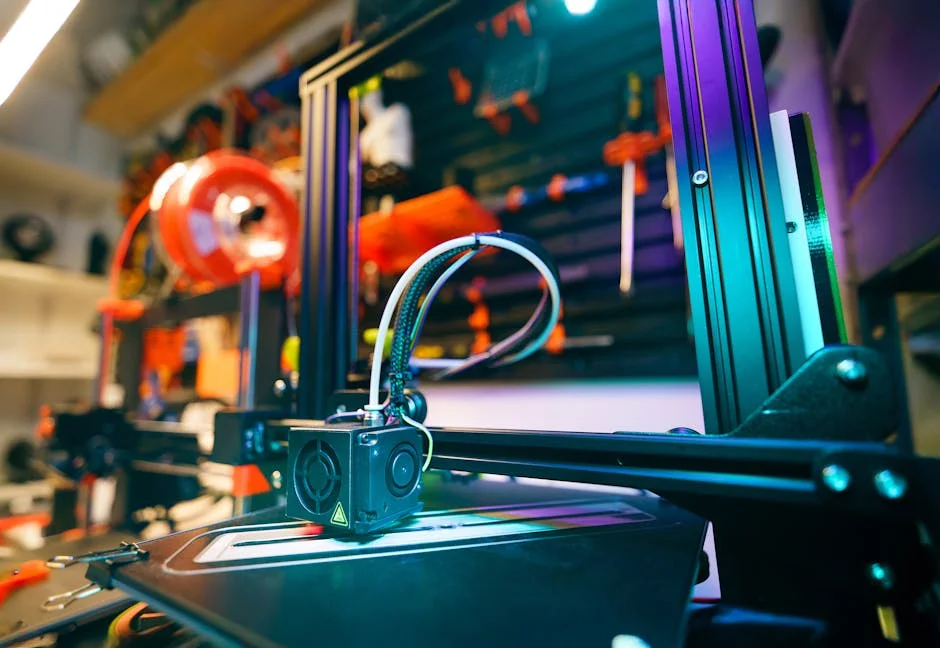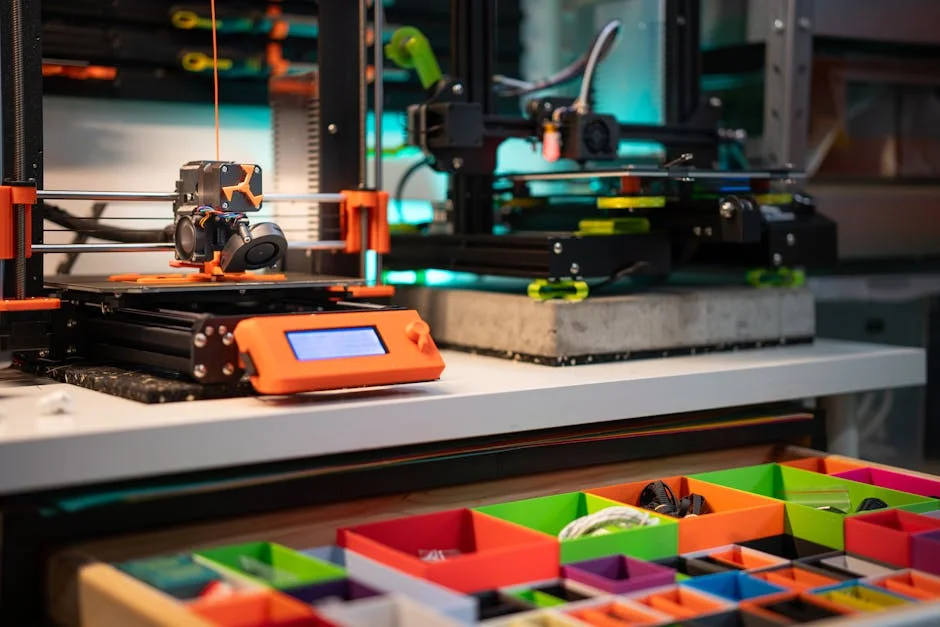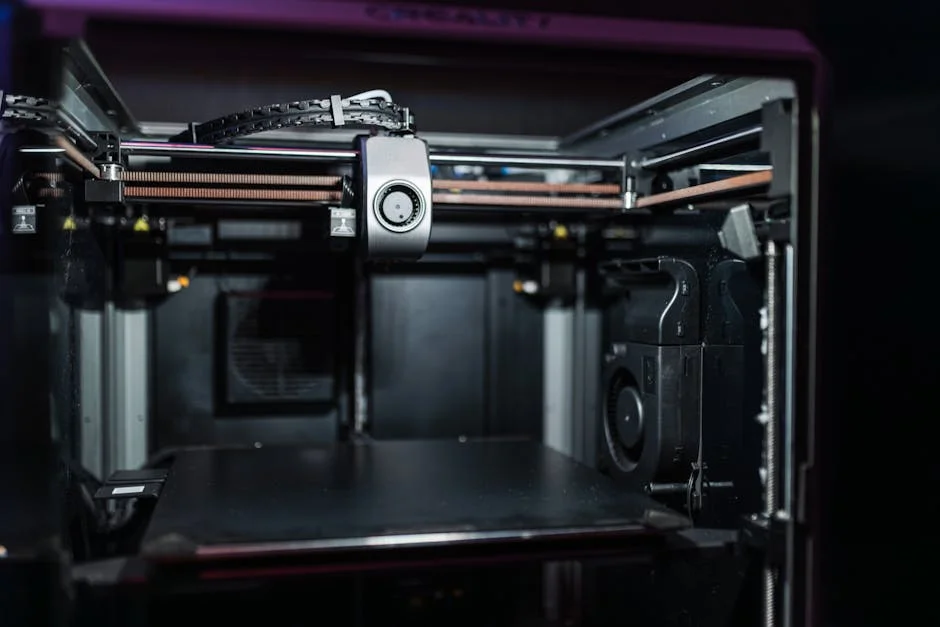
A metal 3d printer is a manufacturing system that produces parts by building metal layer by layer from digital design data, rather than cutting material away like traditional machining. The core idea is simple: a CAD model is sliced into thin layers, and the machine fuses or binds metal feedstock into a solid object that matches the geometry. The practical impact is profound because metal additive manufacturing can create internal channels, lattice structures, and consolidated assemblies that are difficult or expensive to make with casting, forging, or multi-axis milling. Many organizations adopt the technology for lightweighting, part count reduction, rapid prototyping with production-grade alloys, and on-demand manufacturing of spares. While the phrase “3D printing” sometimes brings to mind plastic desktop machines, metal systems are industrial tools that require careful process control, robust safety practices, and post-processing to meet dimensional and mechanical requirements. The modern metal additive ecosystem includes printers, powder handling equipment, inert gas supply, filtration, heat treatment, machining, metrology, and software for build preparation and quality assurance.
Table of Contents
- My Personal Experience
- Understanding What a Metal 3D Printer Really Is
- Key Metal Additive Manufacturing Technologies and How They Differ
- Materials and Alloys Commonly Used in Metal Additive Systems
- Workflow: From CAD Model to Finished Metal Part
- Design Considerations: DfAM for Metal Printing Success
- Accuracy, Surface Finish, and Mechanical Properties
- Applications Across Industries: Where Metal Printing Delivers Value
- Expert Insight
- Cost Drivers: What Makes Metal Printing Expensive (and When It Isn’t)
- Safety, Facility Requirements, and Best Practices
- Quality Control, Inspection, and Certification Considerations
- Choosing the Right Metal 3D Printer for Your Needs
- Future Trends: Where Metal Additive Manufacturing Is Heading
- Practical Steps to Start Implementing Metal Additive Manufacturing
- Watch the demonstration video
- Frequently Asked Questions
- Trusted External Sources
My Personal Experience
The first time I used a metal 3D printer at work, I underestimated how much of the job happens before you ever hit “print.” I spent most of the morning tweaking the support strategy and arguing with myself about part orientation, because one bad decision there can mean a warped build plate and a wasted day. When the machine finally started, it was surprisingly uneventful—just the steady hum of the recoater and that faint, hot-metal smell through the filters—until I checked the live camera and saw a tiny streak where the powder wasn’t laying evenly. We paused, cleaned the hopper, and restarted, and the second run finished clean. Holding the part after it cooled, still attached to the base like it was welded on, felt equal parts satisfying and intimidating, especially knowing I’d have to cut it off, heat-treat it, and machine the critical surfaces before it was truly “done.”
Understanding What a Metal 3D Printer Really Is
A metal 3d printer is a manufacturing system that produces parts by building metal layer by layer from digital design data, rather than cutting material away like traditional machining. The core idea is simple: a CAD model is sliced into thin layers, and the machine fuses or binds metal feedstock into a solid object that matches the geometry. The practical impact is profound because metal additive manufacturing can create internal channels, lattice structures, and consolidated assemblies that are difficult or expensive to make with casting, forging, or multi-axis milling. Many organizations adopt the technology for lightweighting, part count reduction, rapid prototyping with production-grade alloys, and on-demand manufacturing of spares. While the phrase “3D printing” sometimes brings to mind plastic desktop machines, metal systems are industrial tools that require careful process control, robust safety practices, and post-processing to meet dimensional and mechanical requirements. The modern metal additive ecosystem includes printers, powder handling equipment, inert gas supply, filtration, heat treatment, machining, metrology, and software for build preparation and quality assurance.
It is also important to recognize that “metal 3D printing” is not a single method. A metal 3d printer can use laser powder bed fusion, electron beam powder bed fusion, directed energy deposition, binder jetting, or other less common approaches such as bound metal extrusion followed by sintering. Each route has distinct tradeoffs in accuracy, surface finish, throughput, part size, alloy selection, and operating cost. Powder bed fusion generally excels at fine detail and complex geometries, but it can be slower and more sensitive to thermal distortion. Directed energy deposition is often used for larger parts, repairs, and adding features to existing components, trading off surface finish and fine resolution for deposition rate and flexibility. Binder jetting can be extremely fast for certain geometries and batch production, but it typically requires sintering and sometimes infiltration, which introduces shrinkage management as a critical capability. Knowing what a metal 3d printer is, therefore, starts with understanding the process family, the feedstock, and the downstream steps needed to transform a printed “green” or “as-built” component into a certified part.
Key Metal Additive Manufacturing Technologies and How They Differ
Laser Powder Bed Fusion (LPBF), sometimes called Selective Laser Melting (SLM) or Direct Metal Laser Sintering (DMLS), is the most widely recognized metal 3d printer category for high-detail components. In LPBF, a recoater spreads a thin layer of metal powder across a build plate inside an inert chamber, and a laser scans the cross-section to melt the powder into dense metal. This repeats thousands of times until the part is complete, often attached to support structures that anchor it and manage heat flow. LPBF is known for producing near-wrought properties in many alloys when parameters are well tuned and post-processing is properly applied. It is commonly used for aerospace brackets, medical implants, tooling inserts with conformal cooling, and high-performance components with complex internal features. The limitations include build volume constraints relative to large castings, sensitivity to powder quality, and the need to manage residual stress through support strategy and heat treatment.
Other metal 3d printer technologies address different needs. Electron Beam Powder Bed Fusion (EB-PBF) uses an electron beam in a vacuum, which can be advantageous for specific reactive materials and for achieving high build temperatures that reduce residual stress. Directed Energy Deposition (DED) feeds powder or wire into a melt pool created by a laser, electron beam, or plasma arc; it is frequently used for repair, cladding, and adding features to preforms, and it can handle larger parts and higher deposition rates. Binder Jetting deposits a liquid binder selectively onto a powder bed to create a “green” part, which is then cured, debound, and sintered; it can produce many parts per build with high throughput, but shrinkage and density depend on sintering control. Bound Metal Extrusion (often marketed as “metal FFF”) extrudes a metal-polymer filament or rod to form a green part that is later debound and sintered; it is attractive for lower entry cost and simpler operation, though the parts typically require careful sintering compensation and may not match LPBF resolution. Choosing among these options is less about a single “best” metal 3d printer and more about aligning geometry, alloy, mechanical requirements, volume, and certification needs with the strengths of each process.
Materials and Alloys Commonly Used in Metal Additive Systems
The material palette for a metal 3d printer has expanded rapidly, but the most common alloys still reflect industrial demand and process maturity. Stainless steels such as 316L and 17-4PH are widely used due to their corrosion resistance, mechanical performance, and relatively robust printability. Tool steels and maraging steels can be used for molds, dies, and high-strength applications, often with heat treatment to achieve desired hardness. Titanium alloys, especially Ti-6Al-4V, are prominent in aerospace and medical sectors because they offer high strength-to-weight ratio and biocompatibility; titanium does require stringent oxygen control and careful powder handling. Aluminum alloys such as AlSi10Mg are frequently printed for lightweight components, housings, and heat exchangers, though achieving consistent properties can depend heavily on parameter optimization and post-processing. Nickel-based superalloys like Inconel 625 and 718 are used in high-temperature environments, including turbine-related applications, because they maintain strength under heat and corrosion, but they can be challenging due to residual stress and cracking susceptibility in certain conditions.
Material selection for a metal 3d printer is not just a matter of choosing a datasheet alloy. Powder morphology, particle size distribution, flowability, and chemistry all influence layer spreading, melt stability, and defect formation. Reuse strategy matters too: repeatedly recycling powder can change oxygen content, introduce satellites, and shift size distribution, which can affect density and mechanical properties. In binder jetting and bound metal extrusion, the powder characteristics interact with binder systems and debinding behavior, influencing shrinkage uniformity and sintered density. For safety and consistency, many facilities implement incoming powder inspection, controlled storage with humidity management, and traceability records linking powder lots to builds. Another consideration is standards and certification: aerospace and medical applications often require validated material supply chains and process qualification. Additionally, designers must consider how post-processing affects the alloy. Heat treatments such as solutionizing, aging, stress relief, and hot isostatic pressing (HIP) can significantly improve fatigue performance and reduce porosity, but they can also alter dimensions and microstructure. The best outcomes come from treating the metal 3d printer as one element of an integrated materials system rather than a standalone machine.
Workflow: From CAD Model to Finished Metal Part
A successful metal 3d printer workflow begins long before the build starts. The digital thread typically starts with CAD, where design intent, tolerances, and functional requirements are defined. Next comes design for additive manufacturing (DfAM), which adapts the geometry to the process: adding fillets to reduce stress concentration, integrating lattice structures, reorienting holes to minimize supports, and consolidating assemblies into single parts. Build preparation software then slices the model, generates supports, assigns scan strategies, and lays out parts on the build plate to balance heat distribution and maximize throughput. Orientation is a critical decision because it affects surface finish, support contact, distortion risk, and build time. Even small changes in angle can influence how overhangs form and how residual stresses accumulate. For powder bed systems, the build environment is controlled with inert gas and filtration, and the build plate is often preheated to reduce thermal gradients. For DED, toolpaths, deposition parameters, and substrate preparation become the key planning elements.
Once printing is complete, the work is only partly done. Most metal 3d printer processes require post-processing steps to meet final specifications. Parts are typically removed from the build plate using wire EDM, band saw, or machining. Support structures are cut away, sometimes with hand tools and sometimes with CNC. Heat treatment is often applied for stress relief, microstructure control, and property optimization; HIP may be used to close internal pores and improve fatigue life, especially for critical components. Surface finishing can include blasting, tumbling, machining, grinding, polishing, or chemical processes depending on the required roughness and functional surfaces. Dimensional inspection follows, using CMM, laser scanning, or CT scanning for internal features. If the part is destined for regulated industries, documentation and traceability are essential: parameter sets, powder lot records, calibration logs, and inspection reports may be required. When the workflow is well designed, a metal 3d printer becomes a repeatable production tool rather than a one-off prototyping device, enabling predictable cost, quality, and delivery time.
Design Considerations: DfAM for Metal Printing Success
Designing for a metal 3d printer requires a shift from traditional manufacturing assumptions. Instead of minimizing machining operations alone, designers can exploit geometric freedom to improve performance. Internal channels for cooling, complex manifolds, and topology-optimized structures can reduce weight while maintaining stiffness. However, additive processes have constraints that must be respected. Overhang angles, minimum wall thickness, and feature resolution depend on the process and material. In LPBF, unsupported overhangs below a certain angle often need supports, which add build time, material use, and post-processing effort. Thin walls can warp due to residual stress or may not form reliably if scan parameters are not tuned. Holes and threads often print undersized or with rough surfaces, so designers commonly add machining allowances for critical bores and sealing faces. Another key factor is anisotropy: mechanical properties can differ between the build direction and the plane of the layers, especially if process parameters, heat treatment, and scan strategy are not optimized. For fatigue-critical parts, smooth transitions and reduced notch sensitivity are important, and post-processing such as polishing or shot peening may be required.
Support strategy is a major design lever. Supports conduct heat away, prevent distortion, and anchor overhangs, but they also create witness marks and require removal. Designers can reduce supports by changing orientation, adding self-supporting angles, using teardrop-shaped holes, and splitting parts into subcomponents for later joining. Joining methods may include welding, brazing, diffusion bonding, or mechanical fastening, and each has implications for certification and performance. Another DfAM consideration is powder removal. Internal channels must have escape routes, and designers should avoid trapped powder volumes unless the application tolerates it. For lattice structures, cell size and strut thickness should balance strength, manufacturability, and inspectability; extremely fine lattices can be difficult to verify and may trap powder. Finally, tolerancing strategy should reflect the capabilities of the chosen metal 3d printer process. It is common to specify tighter tolerances only on functional surfaces and allow looser tolerances elsewhere, combining additive with machining to achieve a cost-effective result. When DfAM is applied thoughtfully, metal printing becomes a performance-driven manufacturing choice rather than a novelty.
Accuracy, Surface Finish, and Mechanical Properties
Accuracy in a metal 3d printer depends on the process physics, machine calibration, material behavior, and post-processing plan. Powder bed fusion can achieve fine details, but thermal distortion can cause parts to curl, especially with large flat surfaces or asymmetric geometries. Compensation strategies include adjusting scan patterns, using contour scans, applying pre-deformation in software, and designing stronger supports. Dimensional accuracy also depends on how the part is removed from the plate; stress relief before removal can reduce spring-back. Binder-based processes introduce additional complexity because sintering shrinkage must be predicted and controlled; anisotropic shrink can occur if the part geometry, packing, or thermal profile is uneven. For DED, bead geometry and heat input can lead to larger tolerances, and machining allowances are often necessary. In practice, many production workflows treat additive as a near-net shaping step, with final dimensions achieved by CNC machining, grinding, or reaming on critical interfaces.
Surface finish is another defining characteristic. As-built surfaces from a metal 3d printer can be relatively rough compared to machined surfaces, especially on downward-facing areas where partially fused powder and stair-stepping effects appear. Powder bed fusion typically produces better surface finish than DED, but it still often requires finishing for sealing surfaces, aerodynamic profiles, or fatigue-critical regions. Surface roughness influences fatigue life because micro-notches act as crack initiation sites; improving surface finish through machining, polishing, abrasive flow machining, or chemical smoothing can significantly enhance fatigue performance. Mechanical properties can be excellent when the process is well controlled, but they are not automatic. Porosity, lack of fusion defects, and residual stress can reduce strength and fatigue life. Heat treatment and HIP can help, but they must be selected based on alloy and application. For example, precipitation-hardening steels rely on aging to reach target hardness, and titanium may require stress relief and annealing to balance strength and ductility. Ultimately, evaluating a metal 3d printer for production requires looking beyond a single tensile strength number and considering fatigue, fracture toughness, corrosion behavior, and variability across builds.
Applications Across Industries: Where Metal Printing Delivers Value
Many of the strongest use cases for a metal 3d printer appear where complexity, performance, or supply chain constraints make conventional methods less attractive. In aerospace, weight reduction and part consolidation are major drivers. Additive brackets, ducts, and heat exchangers can reduce mass while maintaining strength, and consolidated assemblies can reduce fasteners and inspection points. In space systems, low-volume production and rapid iteration align well with additive, and designers can integrate internal features for thermal management. In medical and dental fields, patient-specific implants and instruments are a natural fit. Titanium implants with porous surfaces can encourage osseointegration, and custom geometries can match patient anatomy. However, medical applications also demand rigorous validation, biocompatibility considerations, and robust post-processing to ensure cleanliness and consistency.
Expert Insight
Start by matching the metal 3D printer process to your part’s requirements: use powder-bed fusion for fine detail and tight tolerances, and consider directed energy deposition for larger repairs or near-net builds. Before printing, validate wall thickness, overhang angles, and support strategy with a small coupon test to avoid costly failed builds.
Control quality through disciplined material and post-processing workflows: store powder in dry, sealed containers, track reuse ratios, and sieve regularly to prevent contamination and inconsistent flow. After printing, plan stress relief, support removal, and final machining in the design stage, and include inspection features (datum surfaces, witness coupons) to streamline metrology and certification. If you’re looking for metal 3d printer, this is your best choice.
In automotive and motorsport, a metal 3d printer can enable rapid development of lightweight components, optimized fluid passages, and specialized tooling. While high-volume automotive production often favors casting and stamping, additive can be valuable for high-performance variants, prototyping, and low-volume spares. In industrial manufacturing, tooling is a major application: conformal cooling channels in injection molds can reduce cycle time and improve part quality, delivering economic value even if the mold insert is expensive to print. Oil and gas, energy, and heavy industry use additive for parts that must withstand harsh environments, and DED is frequently used for repair and refurbishment of high-value components. Electronics and thermal management applications benefit from complex heat exchanger geometries and integrated features that improve heat transfer. Across these sectors, the metal 3d printer is often most valuable when it enables a measurable performance gain, lead-time reduction, or inventory simplification, rather than when it merely replaces a well-optimized conventional process.
Cost Drivers: What Makes Metal Printing Expensive (and When It Isn’t)
The cost structure of a metal 3d printer project includes capital equipment, consumables, labor, post-processing, and quality assurance. Machine acquisition can be significant, especially for high-end powder bed fusion systems with multi-laser configurations and advanced monitoring. Consumables include metal powder or wire, inert gas, filters, build plates, recoater blades, and personal protective equipment. Labor costs are influenced by the level of automation in powder handling, the complexity of build preparation, and the amount of manual post-processing required. Post-processing is often a major contributor: removing supports, heat treatment, HIP, machining, surface finishing, and inspection can exceed the printing cost itself. For regulated industries, documentation and validation add additional overhead. This is why comparing “cost per kilogram printed” can be misleading; the real metric is cost per qualified part meeting specification, delivered on time.
| Feature | Metal 3D Printer (Industrial) | Metal 3D Printer (Desktop/Compact) | Metal 3D Printing Service |
|---|---|---|---|
| Upfront cost | High (machine + installation + facility requirements) | Medium–high (smaller footprint, fewer facility upgrades) | Low (pay per part; no equipment purchase) |
| Materials & processes | Broad: DMLS/SLM, EBM, Binder Jetting; wide alloy support | More limited: often bound metal extrusion or compact powder systems | Broad: access to multiple processes and certified materials |
| Best for | High throughput, tight tolerances, production & qualified workflows | Prototyping, small parts, in-house iteration with lower volume | Occasional builds, complex parts, when certification/finishing is needed |
Despite these costs, metal additive can be economical under the right conditions. Part consolidation can remove multiple machining steps and reduce assembly labor, inventory, and failure points. Lightweighting can improve fuel efficiency or payload capacity, creating downstream value that dwarfs manufacturing cost. Tooling inserts with conformal cooling can reduce cycle times, increasing production throughput and lowering per-part cost in injection molding operations. For spare parts, on-demand printing can reduce warehousing and obsolescence, especially for legacy equipment. Additionally, as machine productivity improves with more lasers, better scan strategies, and higher deposition rates, the per-part economics continue to improve. Binder jetting can be cost-effective for higher-volume production of smaller metal parts, particularly when sintering furnaces are optimized and shrinkage control is mature. The right way to evaluate a metal 3d printer investment is to model total cost of ownership and compare it to the full lifecycle cost of the conventional alternative, including lead time, inventory, and performance benefits.
Safety, Facility Requirements, and Best Practices
Operating a metal 3d printer involves safety considerations that are more demanding than many other manufacturing tools, largely due to fine metal powders, high-energy beams, hot surfaces, and inert gas systems. Metal powders can be combustible, and some alloys carry additional risks; for example, aluminum and titanium powders require heightened attention to ignition sources and dust control. Facilities often implement dedicated powder handling rooms, grounded equipment to reduce static discharge, and vacuum systems designed for combustible dust. Personal protective equipment may include respirators, gloves, protective clothing, and eye protection, depending on the risk assessment. Inert gas systems, such as argon or nitrogen, can create asphyxiation hazards if leaks occur, so oxygen monitoring and ventilation planning are important. Fire suppression planning should be appropriate for metal fires, which cannot be handled with water; Class D extinguishing agents and trained staff are commonly required. Safe workflows also address housekeeping, spill response, and waste disposal in compliance with local regulations.
Beyond safety, facility requirements influence performance and uptime. Temperature and humidity control can affect powder behavior and machine stability, and clean areas help reduce contamination. Power quality and compressed air supply may be required, and some systems need chilled water or other thermal management. For powder bed fusion, sieving and recycling equipment helps maintain powder quality, and controlled storage reduces oxygen pickup. Many organizations implement standard operating procedures for powder traceability, including labeling, lot tracking, and documentation of reuse cycles. Calibration and maintenance are also critical: optics cleaning, recoater inspection, filter changes, and sensor verification can prevent costly build failures. Monitoring systems, such as melt pool monitoring or layer imaging, can provide additional assurance, but they also require data management and interpretation. Treating the metal 3d printer as part of a controlled production cell—rather than a standalone machine—improves consistency, safety, and the ability to scale from prototypes to repeatable manufacturing.
Quality Control, Inspection, and Certification Considerations
Quality assurance for a metal 3d printer program typically combines process control, in-situ monitoring, and post-build inspection. Process control starts with validated parameter sets, machine calibration, and material traceability. For powder bed fusion, ensuring consistent layer thickness, stable oxygen levels, and repeatable laser performance are foundational. Many production environments use witness coupons built alongside parts to test density, tensile properties, and microstructure. Non-destructive evaluation methods such as CT scanning can detect internal porosity, lack of fusion, and trapped powder in complex channels, though CT can be expensive and may not be feasible for every part. Dye penetrant inspection and X-ray can be used for surface and internal defects, and ultrasonic inspection may apply for certain geometries. Dimensional inspection often uses CMM, optical scanning, or structured light scanning, and critical internal features may require borescopes or CT for verification.
Certification requirements vary by industry, but they often demand a documented and repeatable process window. Aerospace programs may require process qualification, operator training records, machine maintenance logs, and strict change control for parameters, powder suppliers, and post-processing vendors. Medical devices require additional controls around biocompatibility, cleanliness, sterilization compatibility, and patient safety, and they may require validation of each step from design to final inspection. Even outside regulated sectors, customers increasingly expect consistent documentation: heat treatment charts, material certificates, and inspection reports. One of the biggest challenges is correlating build data to final part performance in a way that supports predictive quality. In-situ monitoring can flag anomalies, but turning that data into acceptance criteria requires statistical methods and validated thresholds. A mature metal 3d printer quality system treats additive as a controlled manufacturing process, not an artisanal craft, and it recognizes that repeatability comes from harmonizing design rules, parameter control, post-processing, and inspection strategy.
Choosing the Right Metal 3D Printer for Your Needs
Selecting a metal 3d printer starts with a clear definition of parts, volumes, and performance requirements. Build size and productivity matter: a larger build volume can improve batching, but it can also increase the cost per build and the risk exposure if a build fails. Multi-laser systems can increase throughput, but they require careful calibration and scan strategy to avoid stitch artifacts and maintain uniform properties. Material compatibility should be evaluated not only by whether the alloy is “supported,” but also by the maturity of parameter sets, the availability of powder supply, and the proven post-processing recipes. Consider whether your applications need fine features and tight tolerances (favoring powder bed fusion) or larger parts and repair capability (favoring DED). If cost per part at higher volumes is the priority and the geometry is suitable, binder jetting may be attractive, provided you have access to sintering expertise and dimensional control methods.
Operational considerations are equally important. Evaluate powder handling automation, sieving systems, and the cleanliness of the workflow, because these affect safety and repeatability. Review the software ecosystem: build preparation, simulation for distortion prediction, and data logging can reduce trial-and-error. Service support, spare parts availability, and operator training can determine whether the metal 3d printer delivers consistent uptime. Also consider the downstream equipment you will need: heat treatment furnaces, HIP access, machining capacity, and metrology. Many organizations underestimate post-processing and end up with bottlenecks that limit throughput. Finally, look at total cost of ownership rather than purchase price alone, including consumables, maintenance, facility upgrades, and staffing. A well-chosen system aligns with your part portfolio and your ability to control the full process chain, turning metal printing into a reliable production capability rather than an occasional experiment.
Future Trends: Where Metal Additive Manufacturing Is Heading
The future of the metal 3d printer landscape is shaped by productivity improvements, better process monitoring, and expanding material options. Hardware trends include more powerful and more numerous lasers in powder bed fusion, faster recoating systems, and improved gas flow designs that reduce spatter-related defects. In DED, advances in closed-loop control, multi-axis deposition, and hybrid machines that combine additive and subtractive operations are making it easier to achieve near-net shapes with predictable results. Binder jetting continues to evolve with better binder chemistries, furnace sintering control, and debinding methods that improve density and dimensional repeatability. Across all processes, automation in powder handling and part removal is becoming more common, reducing labor cost and exposure risk. These changes aim to make metal printing more scalable for production rather than limited to prototyping and niche applications.
Software and data will play an even larger role. Simulation tools that predict distortion, support requirements, and thermal history are improving, helping engineers reduce iterations and avoid build failures. In-situ monitoring data is increasingly used to support quality assurance, with machine learning approaches emerging to classify anomalies and correlate signatures with defect types. Standards development is also advancing, making it easier to qualify processes and share best practices across organizations. Materials innovation is expanding the set of printable alloys and improving performance, including high-strength aluminum variants, copper and copper alloys for thermal applications, and specialized steels and superalloys tuned for additive. Sustainability considerations are also influencing adoption: additive can reduce material waste compared to machining from billet, and localized production can reduce logistics, although energy use and powder lifecycle management remain important topics. As these trends mature, the metal 3d printer is likely to become a more routine element of industrial manufacturing, integrated into supply chains where it offers measurable advantages in performance, lead time, and design freedom.
Practical Steps to Start Implementing Metal Additive Manufacturing
Organizations that succeed with a metal 3d printer typically start with a disciplined pilot plan rather than jumping directly into high-stakes production. The first step is choosing candidate parts that benefit from additive strengths: complex internal channels, weight reduction, part consolidation, or long lead-time spares. Next, establish a cross-functional team that includes design engineering, manufacturing, quality, and procurement, because additive touches all of these domains. Develop DfAM guidelines specific to your chosen process and alloy, and create a repeatable workflow for build preparation, parameter selection, and support design. Early builds should include test coupons and benchmark geometries to understand density, surface finish, distortion, and mechanical properties. It also helps to define acceptance criteria early, including which dimensions will be machined, what surface roughness is required, and what inspection methods will be used.
Scaling beyond the pilot phase requires investment in post-processing and quality infrastructure. Heat treatment, machining, and inspection capacity often determine throughput more than the printer itself. Establish powder handling protocols, including storage, sieving, reuse limits, and traceability. Train operators not only on machine operation but also on safe powder practices and basic troubleshooting. If certification is a goal, implement documentation systems that capture machine logs, powder lots, parameter sets, and inspection results in a structured way. Consider partnering with experienced service bureaus or application centers to accelerate learning and reduce the risk of expensive mistakes. Over time, build a library of qualified parameter sets and proven design patterns that reduce engineering effort for new parts. With these steps, a metal 3d printer becomes a predictable manufacturing asset, and the organization gains the ability to move from prototypes to repeatable, value-generating production.
When matched to the right applications and supported by strong design, post-processing, and quality systems, a metal 3d printer can deliver parts that are lighter, more functional, and faster to source than many conventional alternatives, while also opening up geometries that were previously impractical or impossible to manufacture.
Watch the demonstration video
In this video, you’ll learn how a metal 3D printer turns digital designs into strong, functional parts by building them layer by layer. It explains the basic workflow—from preparing a model and selecting metal powder to printing, heat treatment, and finishing—plus key benefits, limitations, and common real-world applications.
Summary
In summary, “metal 3d printer” is a crucial topic that deserves thoughtful consideration. We hope this article has provided you with a comprehensive understanding to help you make better decisions.
Frequently Asked Questions
What is a metal 3D printer?
A metal 3D printer is an additive manufacturing machine that builds parts layer-by-layer from metal powder or wire using a heat source such as a laser, electron beam, or electric arc.
How does metal 3D printing work?
Common methods include powder bed fusion (laser/EBM), directed energy deposition (DED), and metal binder jetting; each forms solid metal parts by selectively fusing or binding material in layers, often followed by post-processing. If you’re looking for metal 3d printer, this is your best choice.
What metals can be 3D printed?
Commonly used materials range from stainless and tool steels to titanium and aluminum, along with high-performance options like Inconel (nickel alloys) and cobalt-chrome. Depending on the metal 3d printer technology and how each material is qualified, certain copper alloys may also be available.
How much does a metal 3D printer cost?
Costs range from tens of thousands to over a million USD, depending on process type, build volume, automation, and required safety/handling systems; operating costs also include powders, inert gas, maintenance, and post-processing. If you’re looking for metal 3d printer, this is your best choice.
What post-processing is required for metal 3D printed parts?
Post-processing often involves several key steps to get parts up to spec: depowdering, removing supports, heat treatment or stress relief, and—when using binder jetting—sintering. Depending on the application, hot isostatic pressing may be added, followed by machining and surface finishing to achieve the required tolerances and material properties from a **metal 3d printer**.
What are the main pros and cons of metal 3D printing?
Pros: complex geometries, part consolidation, rapid iteration, lightweight lattices, and on-demand production. Cons: high cost, slower throughput than casting/machining for volume, design constraints (supports/warping), and significant post-processing and quality control. If you’re looking for metal 3d printer, this is your best choice.
📢 Looking for more info about metal 3d printer? Follow Our Site for updates and tips!

Trusted External Sources
- Metal 3D printers: are there any great ones out there yet? – Reddit
May 2, 2026 … There are two types of metal 3D printers. Filament based or welding based. Most any 3D printer with a heated chamber and a hardened nozzle can …
- Metal 3D Printers | 3D Systems
Design, test, and produce metal components with a **metal 3d printer**—unlocking geometries and performance that traditional manufacturing can’t achieve. Create lightweight, high-strength structures with complex internal features, optimize designs quickly through rapid iteration, and move from prototype to production with greater speed and precision.
- Markforged Composite and Metal 3D Printers Archive – Mark3D UK
Markforged’s 3D printers do far more than churn out basic prototypes. With their innovative technology—capable of printing continuous carbon fiber reinforcement and even producing durable metal parts with a **metal 3d printer**—you can move from early concepts to strong, functional components ready for real-world use.
- FX10 Industrial Metal and Composite 3D Printer – Markforged
The FX10 is the world’s first industrial metal and composite 3D printer, and the most versatile tool for your factory floor.
- Markforged – Metal X – 3D-Printer – buy online now – Mark3D
The Metal X is helping spark an industrial revolution by making it possible to produce pure metal parts overnight. This **metal 3d printer** uses ADAM technology—a groundbreaking new approach to building high-quality metal components quickly and efficiently.