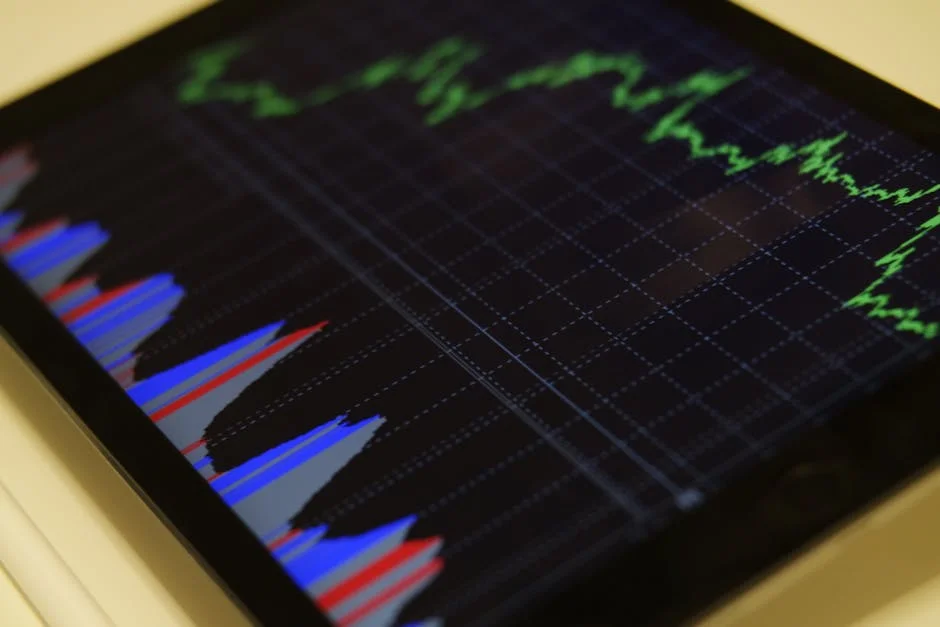
A forex demo account is a practice environment offered by most currency brokers that lets you place simulated trades using virtual funds while seeing real-time (or near real-time) pricing. The key idea is that the market data, order types, and platform tools are designed to mirror the live trading experience, but the money at risk is not real. That makes a forex demo account a low-pressure way to learn how currency pairs move, how spreads and commissions appear on the ticket, and how to execute basic actions such as opening, modifying, and closing positions. Many newcomers assume it is only useful for absolute beginners, yet experienced traders also use demo modes to test new strategies, evaluate broker execution, and practice around major economic releases without exposing capital. Because the foreign exchange market trades nearly 24 hours a day during the business week, a simulated account offers a convenient place to explore sessions, volatility patterns, and the practical difference between major pairs like EUR/USD and more volatile crosses like GBP/JPY.
Table of Contents
- My Personal Experience
- Understanding What a Forex Demo Account Really Is
- How Demo Trading Mirrors the Live Market (and Where It Doesn’t)
- Choosing the Right Broker and Platform for a Forex Demo Account
- Setting Up Your Demo Account to Match Realistic Trading Conditions
- Learning Core Platform Skills Without Paying “Tuition” to the Market
- Building and Testing a Trading Strategy in a Demo Environment
- Risk Management Practice: The Most Valuable Demo Lesson
- Trading Psychology: Using Demo to Build Habits That Transfer
- Expert Insight
- Understanding Costs: Spreads, Commissions, Swaps, and Slippage
- Creating a Repeatable Practice Plan and Measuring Progress
- When to Move from Demo to Live (and How to Do It Safely)
- Common Mistakes to Avoid When Using a Demo Account
- Maximizing Long-Term Value: Using Demo Even After You’re Experienced
- Final Thoughts on Getting Real Results from a Forex Demo Account
- Watch the demonstration video
- Frequently Asked Questions
- Trusted External Sources
My Personal Experience
I opened a forex demo account before risking any real money, mostly because I didn’t trust myself to stay calm when prices started moving fast. At first I treated it like a game and took oversized trades, and my “balance” swung wildly—fun, but not useful. Once I started using the demo like it was real, setting a fixed position size and writing down why I entered each trade, I noticed how often I chased moves out of boredom or fear of missing out. The biggest benefit wasn’t the fake profits; it was getting comfortable with the platform—placing stop-losses, adjusting orders, and seeing how spreads and news spikes could mess with entries. After a few weeks, I had a simple routine and a strategy I could follow without improvising every trade, which made the jump to a small live account feel a lot less intimidating.
Understanding What a Forex Demo Account Really Is
A forex demo account is a practice environment offered by most currency brokers that lets you place simulated trades using virtual funds while seeing real-time (or near real-time) pricing. The key idea is that the market data, order types, and platform tools are designed to mirror the live trading experience, but the money at risk is not real. That makes a forex demo account a low-pressure way to learn how currency pairs move, how spreads and commissions appear on the ticket, and how to execute basic actions such as opening, modifying, and closing positions. Many newcomers assume it is only useful for absolute beginners, yet experienced traders also use demo modes to test new strategies, evaluate broker execution, and practice around major economic releases without exposing capital. Because the foreign exchange market trades nearly 24 hours a day during the business week, a simulated account offers a convenient place to explore sessions, volatility patterns, and the practical difference between major pairs like EUR/USD and more volatile crosses like GBP/JPY.
It helps to understand what a demo environment can and cannot replicate. Most platforms simulate fills and slippage in a simplified way, which means a forex demo account may not fully capture the emotional side of trading, the impact of real liquidity during fast markets, or the subtle differences between order routing models. Still, it can replicate the mechanics: position sizing, margin requirements, stop-loss and take-profit placement, pending orders, and the way profit and loss fluctuates as quotes change. A good practice setup also teaches you how to read the platform’s account metrics—balance, equity, free margin, margin level—so you can avoid common mistakes like over-leveraging. When approached with structure rather than random clicking, a forex demo account becomes a training ground for process: planning trades, documenting reasons, managing risk, and reviewing outcomes. Used that way, it builds competence before you ever decide whether to deposit money into a live account.
How Demo Trading Mirrors the Live Market (and Where It Doesn’t)
Most brokers connect a forex demo account to the same pricing feed used for live clients, so charts and quotes often look identical. This is valuable because it allows you to practice decision-making based on real market conditions: you can observe how spreads widen during low-liquidity periods, how price reacts to economic data, and how trends develop across different time frames. You can also test the full set of order types your platform supports—market orders, limit orders, stop orders, stop-limit orders, trailing stops, and OCO (one-cancels-the-other) where available. Many traders underestimate how much skill is required simply to execute cleanly: setting the correct lot size, choosing the right order type for the scenario, and understanding how the platform calculates margin. A forex demo account is ideal for turning these operational steps into habit so you don’t hesitate or misclick when the market moves quickly.
Even with realistic quotes, simulated trading can diverge from live conditions in ways that matter. Execution quality in a forex demo account is typically “best case”: orders fill instantly, partial fills are rare, and slippage is often reduced. In live trading, the speed of execution and the price you receive can vary with volatility, server load, and liquidity. Additionally, some brokers configure demo spreads to be slightly tighter or more stable than live spreads, particularly around news, which can lead to overly optimistic back-of-the-envelope expectations. Another gap is psychological: virtual losses do not sting the same way as real losses, so risk-taking can become reckless in demo mode. To counter this, many disciplined traders treat the demo balance as if it were their real bankroll, choose position sizes consistent with a realistic deposit, and keep a strict risk-per-trade rule. When you treat a forex demo account like a professional rehearsal rather than a game, you can still extract highly reliable insights about your process and strategy.
Choosing the Right Broker and Platform for a Forex Demo Account
Not all demo environments are created equal, and the broker you choose for a forex demo account can influence what you learn. Start by checking whether the demo uses the same platform and pricing model as the live offering. If a broker provides multiple account types—such as standard spread-only accounts and raw-spread plus commission accounts—see if the demo lets you simulate both. That matters because your trading costs affect strategy performance, especially for short-term methods. Also evaluate the platform itself. MetaTrader 4 and MetaTrader 5 are common, as are cTrader and proprietary web platforms. Each has different strengths: some are better for algorithmic trading, others for depth-of-market, integrated news, or advanced order management. A demo should let you explore these features without restrictions so you can decide whether the workflow suits you.
Practical details can make or break the usefulness of a forex demo account. Check whether the demo expires after a certain number of days, whether you can reset the balance easily, and whether you can open multiple demo profiles for different strategies. If you plan to trade on mobile, confirm the mobile demo experience matches the live app, including chart tools and order controls. Another important factor is the broker’s regulatory status and transparency. Even though you are not depositing money to use a demo, the point of practice is to transition smoothly. If the broker is poorly regulated or has unclear fee structures, you may end up learning on a setup you won’t trust with real funds. Finally, pay attention to customer support responsiveness even during demo use; a broker that answers technical questions promptly helps you solve platform issues before they become costly in a live environment.
Setting Up Your Demo Account to Match Realistic Trading Conditions
A common mistake is opening a forex demo account with an enormous virtual balance—$100,000 or $1,000,000—then trading oversized positions that would be impossible with a typical retail deposit. This can create false confidence and distort your perception of drawdowns. A better approach is to choose a demo balance that matches what you realistically plan to fund in the near future. If you expect to start with $1,000, set your simulated account near that amount. Then configure leverage consistent with your intended live account, because leverage changes margin usage and affects how quickly a string of losses can trigger a margin call. If the broker offers different base currencies, select one that matches your local currency or the currency you will use for funding so that profit and loss feel familiar. The goal is to make the forex demo account behave like a rehearsal for your actual constraints.
Beyond balance and leverage, align your environment with your intended trading style. If you plan to trade major pairs and avoid exotic pairs, build a watchlist accordingly and practice only those instruments. If your method depends on specific sessions—London, New York, or the overlap—practice during those hours so you experience the volatility you’ll face later. Set up templates: preferred chart time frames, indicators, and drawing tools, but keep them consistent to avoid constantly changing variables. Also configure risk settings: decide on a maximum percentage risk per trade, a maximum number of concurrent positions, and a daily loss limit. Even in a forex demo account, these guardrails build discipline. Finally, create a simple routine: pre-market review, planned levels, execution rules, and post-trade journaling. This transforms demo trading from random experimentation into a structured training program.
Learning Core Platform Skills Without Paying “Tuition” to the Market
Many losses in early trading come not from poor ideas but from operational errors: entering the wrong lot size, confusing buy and sell on a quote, placing stops on the wrong side, or misunderstanding how pending orders trigger. A forex demo account is ideal for eliminating those mistakes. Practice opening and closing trades in different ways: using one-click trading, using the order ticket, and managing positions from the chart. Learn how to set stop-loss and take-profit levels as price or as pips, and understand how the platform calculates those distances. Explore how swaps (overnight financing) are displayed, how commissions are charged, and where to see your trading history and performance metrics. When you can navigate these features quickly, you reduce friction and improve decision quality under time pressure.
Platform mastery also includes learning how to analyze charts efficiently. Use your forex demo account to practice marking support and resistance, drawing trendlines, identifying consolidation zones, and switching between time frames without losing context. If you use indicators, learn what each input does and how it changes signals; avoid the trap of adding tools without understanding them. Practice setting alerts for price levels and economic events so you are not glued to the screen. Many platforms also include depth-of-market, sentiment tools, or built-in economic calendars—features that can be powerful when used properly. Finally, rehearse emergency actions: closing all positions quickly, reducing exposure, or handling connection issues by using mobile as a backup. A forex demo account gives you the freedom to practice these scenarios repeatedly until they become second nature.
Building and Testing a Trading Strategy in a Demo Environment
A forex demo account is often the first place traders try to turn a market idea into a repeatable strategy. The key is to define rules that are specific enough to test. Instead of vague statements like “buy when it looks strong,” create criteria: trend direction on a higher time frame, entry trigger on a lower time frame, stop placement logic, and profit-taking method. Decide whether the strategy is trend-following, mean-reversion, breakout-based, or news-driven. Then choose a small set of currency pairs so your sample is consistent. As you place demo trades, record each setup with screenshots and notes explaining why it met the rules. This turns your forex demo account into a laboratory where you can identify which conditions produce your best outcomes.
Testing should include both performance and practicality. A strategy can look good on paper but be difficult to execute in real time due to rapid moves or frequent signals. Use the forex demo account to measure how often you miss entries, how often spreads affect your fills, and whether your stops are too tight for normal volatility. Track metrics such as win rate, average win to average loss, maximum drawdown, and expectancy. Also track behavioral metrics: did you follow the plan, did you move stops, did you overtrade after losses? If you can, test across different market phases—trending weeks, ranging weeks, and high-news periods. Consider forward-testing for several weeks rather than relying on a handful of trades. The longer you use a forex demo account with consistent rules, the more reliable your conclusions become, and the easier it is to refine the strategy without guessing.
Risk Management Practice: The Most Valuable Demo Lesson
Risk management is where a forex demo account can deliver outsized benefits, because it allows you to experience the consequences of position sizing decisions without financial damage. Start by selecting a fixed risk per trade, such as 0.5% or 1% of account equity, and calculate lot sizes based on stop-loss distance and pip value. Many platforms have built-in calculators or you can use external tools, but learning to estimate quickly is also useful. Practice setting stops at logical technical levels rather than arbitrary distances, and then adjusting position size to keep risk constant. This reinforces a professional mindset: the market determines where the trade is invalidated, and you determine how much you can afford to lose. A forex demo account is the right place to make this process automatic.
Beyond per-trade risk, practice portfolio-level controls. Decide on a maximum total exposure across correlated pairs—EUR/USD and GBP/USD often move together, for example—and avoid stacking risk unknowingly. Set a daily loss limit that triggers a pause, and practice honoring it even when you feel tempted to “win it back.” Use the demo to experience drawdowns and learn how they affect decision-making. Also evaluate risk-to-reward planning: test whether you perform better with fixed targets, trailing stops, or scaling out. Because emotions are muted in a forex demo account, you must deliberately create rules and follow them to simulate the discipline needed live. When risk management becomes routine in demo mode, your transition to real trading is far less likely to be derailed by a single bad day.
Trading Psychology: Using Demo to Build Habits That Transfer
While a forex demo account cannot fully reproduce the emotional impact of real money, it can still be used to build psychological skills through habit formation. The most transferable habit is consistency: trading the same hours, following the same pre-trade checklist, and executing the same entry and exit rules. This consistency reduces decision fatigue and prevents impulsive actions. Another habit is patience—waiting for your setup instead of forcing trades. In a demo environment, it is easy to overtrade because the losses are virtual, but that is exactly why practicing restraint matters. If you can treat a forex demo account as if it were funded with your own savings, you train the part of your mind that follows process over excitement.
| Option | Best for | Key benefits | Limitations |
|---|---|---|---|
| Standard Forex Demo Account | Beginners learning the basics and placing first trades | Risk-free practice with virtual funds; real-time quotes; learn order types, spreads, and leverage | Execution and psychology differ from live trading; may have time limits or fixed virtual balance |
| ECN/RAW Spread Demo Account | Intermediate traders testing tight spreads and faster execution | Closer-to-live pricing model; practice with commissions + raw spreads; useful for scalping and news testing | Still may not replicate live liquidity/slippage; demo fills can be unrealistically smooth |
| Strategy/Algorithm (MT4/MT5/cTrader) Demo | Traders backtesting and forward-testing EAs/algos and indicators | Run automated strategies 24/5; validate rules, risk settings, and stability before going live | Historical data quality varies; forward results can diverge from live due to latency, slippage, and broker conditions |
Expert Insight
Treat your forex demo account like a live account: set a fixed starting balance, risk no more than 1% per trade, and use the same position sizes you plan to trade later. This builds realistic habits and prevents “demo bravado” from masking flaws in your strategy.
Track every trade in a simple journal (entry, stop, target, reason, result) and review it weekly to spot patterns in mistakes and strengths. Before switching to real money, require a clear benchmark—such as 30–50 trades with consistent rule-following and a positive expectancy—so the move is based on data, not emotion. If you’re looking for forex demo account, this is your best choice.
Journaling is one of the best ways to make demo practice psychologically meaningful. After each trade, write what you saw, what you expected, what you did, and whether you followed your plan. Include screenshots before entry and after exit. Over time, patterns appear: you might notice you perform poorly after a missed trade, or you tend to cut winners early. Use the forex demo account to run “behavior experiments,” such as limiting yourself to three trades per day or requiring a minimum risk-to-reward ratio. Another useful practice is rehearsing acceptance of losses: when a stop is hit, record it as a normal business expense rather than a personal failure. Even without financial pain, repeating these routines in a forex demo account can make them feel natural when real stakes arrive.
Understanding Costs: Spreads, Commissions, Swaps, and Slippage
Trading costs can quietly determine whether a strategy is viable, and a forex demo account is a good place to learn how costs appear in practice. The spread is the difference between bid and ask, and it is effectively an immediate cost when you enter a position. Some brokers charge a wider spread with no commission, while others offer raw spreads plus a commission per lot. Use the demo to observe how spreads change by time of day, by currency pair, and during volatile events. Compare major pairs, which often have tighter spreads, with minors and exotics, which can be substantially more expensive. When you understand the cost structure inside a forex demo account, you can design strategies that are realistic rather than relying on perfect, frictionless fills.
Swaps (also called rollover or overnight financing) matter if you hold positions beyond the daily cutoff. In your forex demo account, check where the platform shows swap rates and how they are applied. Learn about triple-swap days, which typically occur midweek to account for weekend settlement. If you plan to swing trade, these costs can meaningfully affect returns, especially on high-interest-rate differentials. Slippage is harder to simulate accurately in a demo, but you can still practice using limit orders to control entry price and understand the trade-off: limit orders may not fill if price moves away. You can also test how stop orders behave around fast moves, even if fills are optimistic. The point is to build awareness: every strategy must pay for access to the market, and a forex demo account helps you see those expenses in the platform before you commit real capital.
Creating a Repeatable Practice Plan and Measuring Progress
Random demo trading can feel productive while delivering little improvement. A structured plan turns a forex demo account into a skill-building program. Start with a time-bound schedule, such as four weeks of practice, and define what you are trying to improve: platform execution, one strategy, or risk discipline. Set measurable targets like “follow my checklist on 90% of trades,” “risk exactly 1% per trade,” or “place stops and targets immediately after entry.” Choose a limited number of pairs and a limited set of time frames, because too many variables make learning slower. Treat each week like a training block: focus on one skill, review results, and adjust. This approach makes a forex demo account feel less like entertainment and more like deliberate practice.
Measuring progress requires tracking both statistics and behavior. Export your trade history and compute metrics: win rate, average win, average loss, profit factor, and maximum drawdown. But also grade yourself on rule adherence: did you trade only during planned hours, did you avoid revenge trading, did you respect daily loss limits? A trader who is slightly unprofitable but perfectly consistent may be closer to live readiness than a trader who makes big demo gains through oversized risk. Use the forex demo account to build a small dataset—ideally dozens of trades under the same rules—so your results are not just noise. Then run reviews: identify your most common mistake and set a specific correction for the next batch of trades. Over time, the demo becomes a feedback loop where you can see whether improvements in discipline lead to improvements in performance.
When to Move from Demo to Live (and How to Do It Safely)
There is no universal timeline for graduating from a forex demo account to a live account, but there are clear readiness signals. One is consistency of process: you can follow your plan without frequent rule-breaking. Another is stability of results over a meaningful sample size, such as several weeks or a few months depending on trade frequency. Readiness also includes operational confidence: you know how margin works, you can calculate position size, and you can handle the platform smoothly. If you still find yourself changing strategies every few days, chasing losses, or trading impulsively, more time in a forex demo account is usually the cheaper choice. The goal is not perfection; it is a repeatable method with controlled risk.
When you do transition, consider a staged approach. Start with a small live deposit that you can afford to lose, and trade the same way you did in the forex demo account but with reduced size. This phase is about adapting to real emotions and real execution differences. Keep the same journal and performance tracking, and be prepared for the psychological impact of real profit and loss. If you notice that you take profits too early or hesitate to enter, reduce size further until you can follow the plan. Another safe technique is to run the demo and live side by side: take the same signals in both, compare fills and spreads, and observe how your behavior changes. The forex demo account remains useful even after going live, because it provides a place to test adjustments without risking your funded account. Treat the transition as a gradual calibration rather than a one-time leap.
Common Mistakes to Avoid When Using a Demo Account
A forex demo account can accelerate learning, but certain habits can undermine its value. The most common mistake is ignoring risk because the money is virtual. Traders may open huge positions, hold losing trades far beyond their planned stop, or gamble around news events. This can create a false sense of skill and make the eventual live experience feel like a shock. Another mistake is constantly switching strategies, indicators, and time frames without giving any method enough trades to evaluate. Consistency is what turns practice into insight. Also, some traders treat demo mode as a place to “predict” the market rather than manage risk; they focus on being right instead of following a process that can survive being wrong. A forex demo account should be used to build a decision framework, not to chase perfect entries.
Another set of mistakes involves unrealistic assumptions about execution and costs. If your demo environment has unusually tight spreads or instant fills, you might overestimate performance, especially for scalping. To counter this, choose a broker whose demo closely reflects live conditions and assume slightly worse fills when evaluating results. It is also a mistake to skip journaling because the trades “don’t count.” The learning comes from review, and review requires records. Finally, many traders stop using a forex demo account too early, moving live after a short streak of wins. Short-term results can be random; what matters is how the strategy performs across different conditions and whether you can follow the rules when outcomes vary. Avoiding these pitfalls keeps your demo period productive and makes your eventual live trading more stable.
Maximizing Long-Term Value: Using Demo Even After You’re Experienced
Even seasoned traders keep a forex demo account because markets evolve and strategies need maintenance. A demo can be used to test new currency pairs, new time frames, or new execution tactics without disrupting a profitable live routine. For example, if you trade swing setups on majors, you might use the demo to explore intraday entries that improve risk-to-reward, or to test whether a different stop placement reduces drawdowns. If you use algorithmic strategies, the demo environment is useful for forward-testing updates and verifying that the logic behaves as expected in real-time conditions. A forex demo account can also help you evaluate broker changes, platform updates, or new order types without risking mistakes in a live account.
Another long-term use is scenario practice. Major economic events—central bank decisions, CPI releases, employment reports—can create rapid moves and spread expansion. Practicing around these events in a forex demo account helps you refine rules: whether to stay flat, reduce size, widen stops, or use pending orders. You can also use demo mode to practice recovery from errors, such as accidentally entering the wrong size and immediately correcting it, or handling a platform disconnection by switching to mobile. Over time, this kind of rehearsal improves resilience. Most importantly, keeping a forex demo account available prevents stagnation: it gives you a safe space to experiment while protecting the discipline and performance of your live trading. When used intentionally, a demo is not just a beginner tool; it remains part of a professional workflow.
Final Thoughts on Getting Real Results from a Forex Demo Account
The real benefit of a forex demo account is not the ability to trade without risk; it is the ability to build a repeatable process before the market starts charging you for mistakes. When you set realistic balances and leverage, practice consistent risk management, and journal every trade, the demo environment becomes a training system rather than a toy. It can teach platform fluency, help you understand costs, and provide a structured way to test strategies across different market conditions. The more deliberately you practice, the more your results will reflect skill rather than luck, and the smoother your transition to live trading tends to be.
To keep progress moving, treat your forex demo account like a professional rehearsal: use the same schedule you plan to trade live, follow a checklist, measure performance over a meaningful sample, and refine one variable at a time. If you later decide to trade real money, keep the demo available for testing improvements and staying sharp around unusual conditions. With discipline and honest review, a forex demo account can remain one of the most practical tools for developing competence in the currency market while protecting your capital during the learning phase.
Watch the demonstration video
In this video, you’ll learn what a forex demo account is and how it works, including how to place trades with virtual money in real market conditions. It explains how to practice using a trading platform, test strategies, manage risk, and build confidence—without risking your own funds—before moving to a live account.
Summary
In summary, “forex demo account” is a crucial topic that deserves thoughtful consideration. We hope this article has provided you with a comprehensive understanding to help you make better decisions.
Frequently Asked Questions
What is a forex demo account?
A forex demo account is a practice trading account that uses virtual funds to simulate real market trading without risking real money.
Is trading on a demo account the same as live trading?
While market prices may look almost identical, the actual trade execution can vary widely because real trading involves slippage, changing liquidity, wider or tighter spreads, and emotional pressure—factors a **forex demo account** can’t fully replicate.
How long can I use a forex demo account?
It really comes down to the broker: some let you keep a **forex demo account** indefinitely, while others set an expiration window—often 30 to 90 days—unless you upgrade by opening a live account.
Do I need to deposit money to open a demo account?
In most cases, no—you can open a **forex demo account** with many brokers using just your email and a few basic details, and you typically won’t need to make a deposit.
What should I practice on a forex demo account?
Practice order types, risk management (position sizing, stop-loss/take-profit), strategy rules, and keeping a trading journal to evaluate performance.
Can I withdraw profits from a demo account?
No; demo profits are not real and cannot be withdrawn—only live accounts with real funds can generate withdrawable profits.
📢 Looking for more info about forex demo account? Follow Our Site for updates and tips!

Trusted External Sources
- Trading Demo Account – FOREX.com US
Open your **forex demo account** today and start practicing with confidence. Trade risk-free using **$50,000 in virtual funds**, follow **live market prices**, and explore **80+ FX pairs** on our easy-to-use demo platform.
- Open a Forex Account – OANDA
Open a **forex demo account** in just minutes. Start by selecting your country or region, then confirm your details and continue to the next step. © 1996–2026 OANDA Corporation. All rights reserved.
- Metatrader 4 Demo – MT4 Demo Account – FOREX.com US
Try a **forex demo account** with FOREX.com US on MetaTrader 4 and practice trading risk-free for 30 days with **$50,000 in virtual funds**. Explore the platform and trade **80+ currency pairs** as you build your strategy and confidence.
- What are the best free or inexpensive simulators/demos? : r/Forex
As of May 3, 2026, MetaTrader 4 remains a popular choice among traders, and it’s easy to get started by opening a **forex demo account** to practice and explore the platform risk-free.
- Learn to Trade Forex with a Free Demo Account
FOREX.com lets you try trading with a free **forex demo account** loaded with €10,000 in virtual funds—no risk and no commitment. Open yours in seconds and start practicing your strategies with real-market conditions.