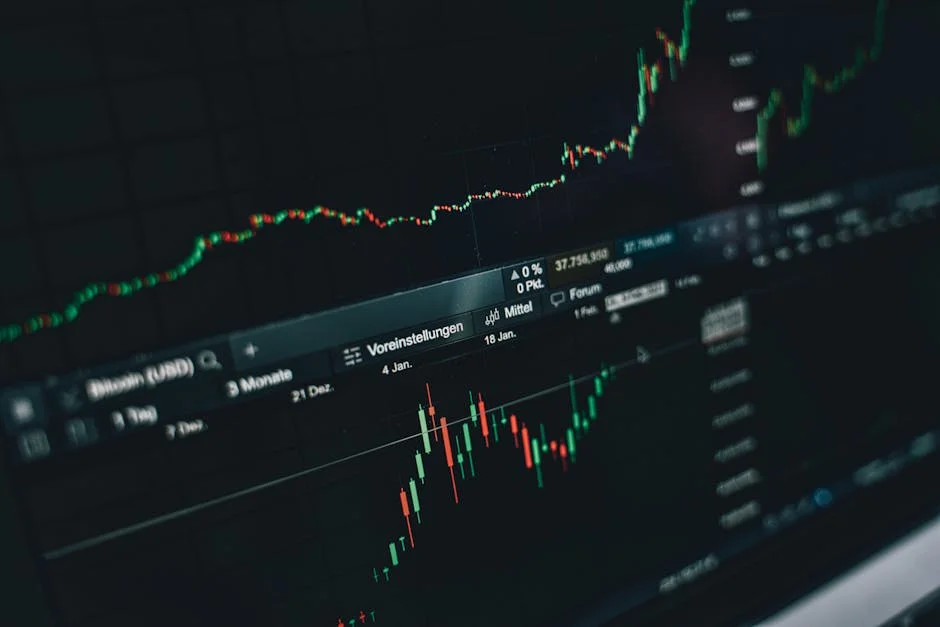
Choosing between forex vs stocks for beginners often feels like picking between two languages you don’t yet speak. Both markets can grow wealth, both can destroy capital, and both reward disciplined learning more than raw enthusiasm. The difference is that the “rules of conversation” are not the same. Forex trading is primarily the exchange of one currency for another, driven by global macroeconomic forces, interest-rate expectations, and cross-border capital flows. Stock investing and trading revolve around owning shares in companies, where value is influenced by earnings, growth expectations, competitive positioning, and sentiment about industries. Beginners usually get pulled toward whatever looks simpler or more exciting, yet the more useful approach is to match the market’s structure to your personality, schedule, risk tolerance, and learning style.
Table of Contents
- My Personal Experience
- Getting Oriented: What “Forex vs Stocks for Beginners” Really Means
- Market Structure and What You’re Trading: Currencies vs Companies
- Hours, Liquidity, and Volatility: How Your Schedule Shapes Success
- Costs and Fees: Spreads, Commissions, and Hidden Friction
- Leverage and Margin: The Fastest Way to Learn Risk the Hard Way
- What Moves Prices: Macro Drivers in Forex vs Fundamentals and Sentiment in Stocks
- Learning Curve and Information Overload: Building a Beginner-Friendly Process
- Risk Management Basics: Stops, Position Sizing, and Drawdown Control
- Expert Insight
- Tools, Platforms, and Ease of Execution: What a Beginner Actually Needs
- Comparison Table: Forex vs Stocks Options for Beginners (Typical Offerings)
- Strategy Fit: Day Trading, Swing Trading, and Long-Term Investing
- Psychology and Common Beginner Mistakes: Why the Market Choice Matters Less Than Behavior
- Safety, Regulation, and Broker Selection: Avoiding Expensive Lessons
- Practical Beginner Roadmaps: Picking One, Starting Small, and Measuring Progress
- Final Thoughts: Choosing Between Forex and Stocks Without Regret
- Watch the demonstration video
- Frequently Asked Questions
- Trusted External Sources
My Personal Experience
When I first started investing, I couldn’t decide between forex and stocks, so I tried both with small amounts. Forex looked exciting because it’s open almost 24 hours and the price moves fast, but that speed (and the leverage) made my beginner mistakes feel expensive—I’d overtrade, chase moves, and get stopped out in minutes. With stocks, things felt slower and easier to follow: I could read earnings reports, understand what the company actually did, and set a plan without staring at charts all night. After a few stressful weeks in forex, I realized I learned more consistently with stocks, so I stuck to long-term stock investing and only keep forex on a demo account now to practice without the pressure. If you’re looking for forex vs stocks for beginners, this is your best choice.
Getting Oriented: What “Forex vs Stocks for Beginners” Really Means
Choosing between forex vs stocks for beginners often feels like picking between two languages you don’t yet speak. Both markets can grow wealth, both can destroy capital, and both reward disciplined learning more than raw enthusiasm. The difference is that the “rules of conversation” are not the same. Forex trading is primarily the exchange of one currency for another, driven by global macroeconomic forces, interest-rate expectations, and cross-border capital flows. Stock investing and trading revolve around owning shares in companies, where value is influenced by earnings, growth expectations, competitive positioning, and sentiment about industries. Beginners usually get pulled toward whatever looks simpler or more exciting, yet the more useful approach is to match the market’s structure to your personality, schedule, risk tolerance, and learning style.
When people compare forex vs stocks for beginners, they often focus on surface-level points such as “forex is open 24 hours” or “stocks are easier to understand.” Those can be true, but the deeper differences show up in how prices move, how orders are filled, how risk is managed, and how information gets reflected into prices. Forex pairs can react instantly to central bank remarks or inflation surprises; stocks can gap up or down on earnings and guidance. Forex tends to offer high leverage by default, which magnifies small moves; stocks can be traded unlevered in cash accounts, though margin exists. Beginners need a framework that clarifies what they’re actually buying, what causes price changes, and how to control downside when a trade goes wrong. With the right framework, the question becomes less about which market is “better” and more about which market is more compatible with your beginner phase.
Market Structure and What You’re Trading: Currencies vs Companies
Forex is an over-the-counter market where currencies trade in pairs like EUR/USD, USD/JPY, or GBP/USD. You are always simultaneously buying one currency and selling another, which means you’re trading relative strength. If EUR/USD rises, it’s not only that the euro is “strong,” but also that the U.S. dollar is “weaker” in that moment relative to the euro. This relative nature can be helpful because it ties your decision to a comparison rather than a single asset’s absolute value. Yet it also adds complexity: a currency pair can move because of news in either country, and because of shifts in global risk appetite. Understanding forex vs stocks for beginners at this level means accepting that currencies are national balance sheets and policy regimes expressed as price, and those forces can change quickly.
Stocks represent ownership in a company. Even if you trade short-term, the underlying logic is that a business has revenues, costs, assets, liabilities, and a strategic position in its market. A stock price is a forward-looking vote on future cash flows, discounted by interest rates and risk. For beginners, that can be intuitive: you can read about a company, try its products, compare it to competitors, and form a thesis. But stocks also have their own complexity: sector rotations, index flows, buybacks, dilution, and the reality that large institutions can move prices around key events. Unlike a currency pair that is tightly tied to macro policy and cross-border flows, a stock can be dominated by company-specific catalysts such as product launches, regulatory actions, or management changes. This is why many new traders feel “closer” to stocks, while others prefer the macro clarity of forex. If you’re looking for forex vs stocks for beginners, this is your best choice.
Hours, Liquidity, and Volatility: How Your Schedule Shapes Success
Forex trades nearly 24 hours a day, five days a week, following the sun from Asia to Europe to North America. For a beginner with a day job, that flexibility can be appealing. You can potentially trade before work, during lunch, or in the evening. Liquidity is typically deepest in major pairs during overlapping sessions, such as London-New York, where spreads are usually tighter and order execution is smoother. However, the same 24-hour access can become a trap: beginners may overtrade, chase moves late at night, or ignore the need for rest. In forex vs stocks for beginners, time availability is not just convenience; it’s a risk factor. If you’re tired, you make poorer decisions, and a market that is always open can encourage impulsive behavior.
Stocks trade during set exchange hours, and many beginners benefit from that structure. A defined open and close can help you plan, review, and step away. Liquidity varies widely: large-cap stocks and major ETFs can be very liquid, while small-caps can be thin and prone to sharp moves. Volatility in stocks often clusters around specific events—earnings, economic releases, or market-wide shocks—leading to gaps at the open. Those gaps can be dangerous for beginners who place stop losses that don’t protect against overnight moves. Forex generally doesn’t “gap” as frequently during the week, but weekend gaps can occur, and high-impact news can still cause rapid slippage. The practical takeaway is to align your trading window with the most liquid times and to choose instruments that match your comfort with fast price changes. If you’re looking for forex vs stocks for beginners, this is your best choice.
Costs and Fees: Spreads, Commissions, and Hidden Friction
Trading costs can quietly decide whether a beginner thrives or struggles. In forex, many brokers offer “commission-free” accounts where the cost is embedded in the spread, the difference between bid and ask. Others provide raw spreads with a separate commission. The true cost depends on your pair, time of day, and broker quality. Major pairs often have low spreads, while exotic pairs can be expensive. Another cost is swap or rollover, a credit or debit applied when holding positions overnight, influenced by interest rate differentials. Beginners comparing forex vs stocks for beginners should pay attention to rollover because it can meaningfully affect swing trades, especially in high-rate environments. Low spreads look attractive, but if you hold positions for days, swap can become the larger cost.
Stock trading costs have become more transparent in many regions due to commission-free trading, but “free” can still include friction such as wider spreads, payment for order flow impacts, or less favorable execution for market orders. Additionally, stocks can have regulatory fees, exchange fees, and in some cases, short-borrow fees if you short hard-to-borrow names. If you invest rather than trade, the biggest cost might be fund expense ratios for ETFs or mutual funds, though many are very low. A beginner should also consider taxes: frequent stock trading can create short-term gains taxed at higher rates in some jurisdictions, while forex taxation varies widely depending on country and product type. The key is to calculate expected cost per trade and cost per month, then choose a style that doesn’t get eaten alive by friction. If you’re looking for forex vs stocks for beginners, this is your best choice.
Leverage and Margin: The Fastest Way to Learn Risk the Hard Way
Leverage is one of the most important differences in forex vs stocks for beginners. Retail forex often offers high leverage, which means you can control a large position with a small deposit. That can make forex look accessible, but it also means small price moves can produce large percentage gains or losses. Beginners often underestimate how quickly a series of small mistakes can compound into a large drawdown when leverage is high. Margin calls and stop-outs can happen quickly, sometimes during volatile news. If you choose forex, learning position sizing and using modest leverage is not optional; it is the foundation of survival. Many successful beginners treat leverage as a tool to be earned slowly rather than a default feature to maximize.
Stocks can be traded with no leverage in a cash account, which naturally limits risk to what you invest. Margin exists for stock trading too, and options can create very high effective leverage, but a beginner can choose a simpler path by avoiding margin until they have consistent process. The psychological benefit of lower leverage is that you can make mistakes without catastrophic damage, which is valuable while learning. Still, stocks can be volatile, and concentrated positions can behave like leveraged bets if you put too much of your account into one name. A practical approach is to set a maximum risk per trade—often a small percentage of your account—and to cap total exposure across all positions. Whether you pick currencies or equities, the beginner advantage comes from controlled experimentation rather than trying to “win big” early. If you’re looking for forex vs stocks for beginners, this is your best choice.
What Moves Prices: Macro Drivers in Forex vs Fundamentals and Sentiment in Stocks
Forex prices are heavily influenced by macroeconomic variables: interest rates, inflation, employment trends, trade balances, and central bank guidance. If the market believes one central bank will cut rates sooner than another, that expectation can move a currency pair long before the policy change happens. Risk sentiment also matters: during “risk-off” periods, certain currencies tend to strengthen while others weaken, depending on how capital seeks safety. For forex vs stocks for beginners, the takeaway is that currency trading often requires paying attention to calendars of economic releases and understanding how surprises versus expectations move markets. You don’t need an economics degree, but you do need a habit of checking upcoming high-impact events and knowing when not to trade.
Stocks respond to company fundamentals—earnings, margins, growth, balance sheets—and to narrative and positioning. A company can report solid numbers and still drop if expectations were higher, or if guidance disappoints. Stocks also move with broader factors: interest rates influence valuation multiples, commodity prices impact sectors, and index rebalancing can create flows. Sentiment can dominate in the short run, especially in popular themes like AI, biotech, or clean energy. Beginners can use this to their advantage by focusing on high-quality, widely followed companies where information is abundant, and by avoiding thinly traded names that can be manipulated or whipsawed. If you prefer to analyze businesses and follow corporate news, stocks may feel more intuitive; if you prefer macro narratives and relative value, forex may fit better. If you’re looking for forex vs stocks for beginners, this is your best choice.
Learning Curve and Information Overload: Building a Beginner-Friendly Process
The learning curve in forex vs stocks for beginners differs not only in content but in how information is consumed. Forex traders often watch economic calendars, central bank speeches, yield differentials, and global headlines. The market is highly sensitive to small shifts in expectations. That can feel overwhelming, yet it can also be streamlined: many beginners do well by focusing on a few major pairs and a small set of recurring catalysts such as inflation reports, rate decisions, and employment data. Technical analysis is widely used in forex, partly because currencies often respect liquidity zones and ranges, especially during quieter sessions. A beginner-friendly forex process might include trading only during one session, using a consistent setup, and avoiding high-impact news until you can manage volatility.
Stock beginners face a different kind of overload: thousands of tickers, endless commentary, and constant “hot picks.” The easiest mistake is to jump between strategies—day trading one week, swing trading the next, then buying long-term because a friend said so—without building skill. A more stable approach is to define your time horizon and choose instruments aligned with it. If you can’t watch the screen, long-term investing in diversified ETFs may be more appropriate than fast trading. If you want to learn trading, start with highly liquid large-cap stocks or index ETFs and practice a limited number of patterns. The goal is not to know everything but to develop repeatable decision rules: what triggers an entry, where the stop goes, how you take profit, and when you do nothing. That “do nothing” rule is often the most profitable one for beginners. If you’re looking for forex vs stocks for beginners, this is your best choice.
Risk Management Basics: Stops, Position Sizing, and Drawdown Control
Risk management is the common ground where forex vs stocks for beginners becomes less about market choice and more about survival. The first principle is position sizing: decide how much money you are willing to lose if you are wrong, then build your trade size from that number. Many beginners pick a trade size first and only later think about risk, which reverses the correct order. In forex, this includes understanding pip value, lot size, and how volatility changes across pairs. In stocks, it means recognizing that a $5 move in a $20 stock is not the same as a $5 move in a $200 stock, and that volatility differs by sector and market regime. Using stop losses is not about being pessimistic; it’s about limiting the cost of being wrong.
Expert Insight
If you’re a beginner choosing between forex and stocks, start with the market that matches your schedule and risk tolerance. Stocks often move more gradually and are easier to research with company fundamentals, while forex can swing quickly due to leverage and 24/5 trading—so begin with small position sizes and avoid high leverage until you’ve proven consistent risk control. If you’re looking for forex vs stocks for beginners, this is your best choice.
Whichever you pick, build a simple routine: use a demo account for 2–4 weeks, then trade a single strategy with strict rules (risk no more than 1% per trade, set a stop-loss before entering, and track every trade in a journal). Focus on one or two instruments (e.g., a broad-market ETF for stocks or one major currency pair for forex) to reduce complexity and speed up learning. If you’re looking for forex vs stocks for beginners, this is your best choice.
Drawdown control is the second principle. A beginner can be “right” 50% of the time and still lose money if losses are larger than gains or if they increase size after losses. Setting daily or weekly loss limits can prevent emotional spirals. Another useful habit is to separate your “learning account” from your “long-term account.” If you invest in stocks for retirement, keep that capital away from experimental trading. If you trade forex, consider starting with very small size or a micro account until your process is stable. Risk management also includes avoiding correlated exposure. In forex, being long EUR/USD and long GBP/USD is often a similar USD-short bet. In stocks, owning five tech stocks can behave like one concentrated tech position. Beginners do better when they measure the combined risk of their portfolio, not just each trade in isolation. If you’re looking for forex vs stocks for beginners, this is your best choice.
Tools, Platforms, and Ease of Execution: What a Beginner Actually Needs
Forex platforms are often built around fast execution, charting, and order types like stop, limit, trailing stop, and OCO (one-cancels-the-other) depending on broker features. Many beginners start with popular platforms that support indicators and automated strategies, which can be helpful but also distracting. The temptation is to add indicators instead of improving decision quality. For forex vs stocks for beginners, a practical toolset is simple: a reliable broker with strong regulation, transparent pricing, and stable execution; a charting platform; and a calendar for economic events. Because forex is OTC, broker quality matters a lot. Two brokers can show slightly different prices, spreads, and slippage. Beginners should prioritize safety, regulation, and customer support over flashy promotions.
| Category | Forex (FX) | Stocks |
|---|---|---|
| What you trade | Currency pairs (e.g., EUR/USD), price reflects one currency vs another | Shares of individual companies (e.g., AAPL), price reflects a company’s value |
| Hours & market access | Typically 24/5 trading; high liquidity in major pairs, easier to enter/exit | Set exchange hours (plus limited pre/after-hours); liquidity varies by stock |
| Risk & learning curve for beginners | Often higher leverage available (can amplify gains/losses); tighter spreads but fast moves | Usually lower default leverage; company news/earnings matter, can be simpler to research long-term |
Stock trading platforms range from simple apps to professional terminals. A beginner doesn’t need advanced level II data to start, but they do need clear order entry, the ability to set stop losses, and good reporting for performance tracking. If you invest rather than trade, you need low-cost access to diversified funds and the ability to automate contributions. Stocks also require awareness of corporate actions: dividends, splits, and earnings dates. A beginner-friendly execution habit is to use limit orders rather than market orders in less liquid names, and to be cautious around the open when spreads can be wider. Regardless of market, keep a trading journal that records the reason for entry, risk level, outcome, and what you learned. The journal is a tool that turns experience into skill. If you’re looking for forex vs stocks for beginners, this is your best choice.
Comparison Table: Forex vs Stocks Options for Beginners (Typical Offerings)
Beginners often compare “forex” and “stocks” as if each is a single product, but your real experience depends on the instrument you choose and how it’s packaged. In stocks, you might buy individual shares, broad-market ETFs, or sector ETFs. In forex, you might trade major pairs, minors, or exotics. Costs, volatility, and complexity vary. The table below summarizes common beginner-facing choices using typical characteristics. Ratings are indicative for beginner-friendliness, not a guarantee of performance, and “Price” refers to typical cost structure rather than a fixed fee. If you’re looking for forex vs stocks for beginners, this is your best choice.
Use this kind of breakdown when weighing forex vs stocks for beginners: pick the simplest instrument that matches your objective. If you want long-term growth with minimal monitoring, broad ETFs tend to be simpler than active currency trading. If you want to practice short-term decision-making with tight spreads and high liquidity, major forex pairs or index ETFs can be more manageable than small-cap stocks or exotic currencies.
| Name | Features | Ratings (Beginner-Friendliness) | Price (Typical Cost Structure) |
|---|---|---|---|
| Major Forex Pairs (e.g., EUR/USD, USD/JPY) | High liquidity, tight spreads, strong news sensitivity, 24/5 access | 4.0/5 | Spread-based or low spread + commission; possible overnight swap |
| Minor/Exotic Forex Pairs | Lower liquidity, wider spreads, sharper moves, higher event risk | 2.5/5 | Wider spreads; higher swap; higher slippage risk |
| Large-Cap Stocks | Company fundamentals, earnings catalysts, generally good liquidity | 3.5/5 | Often commission-free; spread + possible regulatory/exchange fees |
| Broad Index ETFs (e.g., S&P 500 ETF) | Diversification, high liquidity, suitable for investing or trading | 4.5/5 | Low expense ratio; spread; often commission-free |
| Sector/Thematic ETFs | Targeted exposure, higher volatility than broad indexes | 3.5/5 | Moderate expense ratio; spread; often commission-free |
Strategy Fit: Day Trading, Swing Trading, and Long-Term Investing
Strategy selection is where forex vs stocks for beginners becomes practical. If you are drawn to day trading, forex offers consistent liquidity across major pairs and frequent intraday movement, especially during session overlaps. Many beginner day traders like the clarity of trading a small watchlist and repeating the same setup. However, day trading forex can be demanding: you must manage leverage, avoid trading every small fluctuation, and respect news. Stock day trading has its own challenges, including pattern day trading rules in some jurisdictions, variable liquidity across tickers, and sudden halts in extreme moves. Beginners who day trade stocks often gravitate toward index ETFs or highly liquid mega-caps to reduce execution surprises.
Swing trading can work in both markets. In forex, swing trades often revolve around multi-week macro themes such as diverging central bank policy or risk-on/risk-off cycles, with technical levels used for timing. In stocks, swing trades may follow earnings trends, sector momentum, or mean-reversion after overreactions. Long-term investing is generally more associated with stocks because companies can compound value over years through innovation and profit growth. While currencies can trend for long periods, they are often mean-reverting over very long horizons because they reflect relative economic conditions and policy. For beginners who want a simpler path, a common approach is to build a core long-term stock portfolio (often ETFs) and, only if desired, allocate a small “satellite” portion to active trading in forex or stocks. This structure keeps your future goals from being dependent on short-term trading performance. If you’re looking for forex vs stocks for beginners, this is your best choice.
Psychology and Common Beginner Mistakes: Why the Market Choice Matters Less Than Behavior
Most losses for new traders come from behavior, not from choosing the “wrong” market. In forex vs stocks for beginners, the psychological traps show up differently. Forex can tempt beginners into overleveraging because the required margin seems small and the market feels liquid and “safe.” That combination can cause a trader to ignore the real risk of a sudden 50–100 pip move during news. Stocks can tempt beginners into story-driven decisions—buying because a company is exciting, a friend recommended it, or social media is hyping it—without a plan for what would prove the idea wrong. Both markets punish the same habits: doubling down after losses, moving stop losses farther away, and trading out of boredom.
Another common mistake is confusing activity with progress. Beginners often believe that more trades equal more learning, but random trades teach random lessons. Deliberate practice is slower and more structured: take fewer trades, predefine criteria, and review outcomes. A beginner also needs to accept that missing a move is not a problem; chasing is. In forex, chasing can happen after a breakout candle; in stocks, after a gap-up at the open. Build routines that reduce impulsivity: set trading hours, limit the number of trades per day, and create a checklist. If you are frequently anxious or unable to sleep because of positions, that’s a sign your risk is too high or your time horizon is mismatched. The right market for a beginner is the one that allows calm, repeatable decisions. If you’re looking for forex vs stocks for beginners, this is your best choice.
Safety, Regulation, and Broker Selection: Avoiding Expensive Lessons
Because forex is largely OTC, broker selection is central to a safe beginner experience. Regulation standards vary widely by region, and the difference between a well-regulated broker and a questionable offshore entity can be the difference between fair execution and constant disputes. Beginners comparing forex vs stocks for beginners should look for clear regulation, segregated client funds where applicable, transparent pricing, and a history of stable operations. Also pay attention to order execution policies and how slippage is handled. If a broker advertises extremely high leverage, huge bonuses, or “guaranteed profits,” treat that as a warning sign. A beginner should prefer a broker that makes risk controls easy, such as allowing micro-lots, providing negative balance protection where applicable, and offering straightforward reporting.
Stock brokers are often more standardized because trades route through exchanges, but quality still varies. Consider whether the broker offers reliable order handling, good customer support, and protection mechanisms. If you plan to invest long term, assess whether the broker supports dividend reinvestment, recurring buys, and low-cost access to diversified funds. If you plan to trade, look for robust order types and stable platform performance during volatile sessions. In both markets, be cautious with complex products early on. For stocks, options can be powerful but can also introduce nonlinear risk. For forex, CFDs or highly leveraged products can amplify losses. Safety is not only about avoiding scams; it’s about choosing an environment where you can learn without structural disadvantages. If you’re looking for forex vs stocks for beginners, this is your best choice.
Practical Beginner Roadmaps: Picking One, Starting Small, and Measuring Progress
A practical way to resolve forex vs stocks for beginners is to choose a primary path for 90 days and measure results in process terms, not just profit. Process metrics include: did you follow your rules, did you size positions correctly, did you avoid trading during events you didn’t understand, and did you review trades with honesty. If you choose forex, start with one or two major pairs, trade the most liquid session overlap, and use conservative sizing. Learn how spreads change during quiet hours and around news. If you choose stocks, start with broad index ETFs or a small set of highly liquid large-caps, focus on one timeframe (such as daily charts for swing trading), and avoid earnings trades until you understand gap risk. The beginner goal is consistency, not excitement.
Progress also requires separating market learning from money pressure. Many beginners benefit from paper trading to learn platform mechanics, but paper results can be misleading because emotions are absent. A balanced approach is to paper trade briefly, then move to very small real trades where mistakes are affordable. Keep records of every trade and calculate whether your average win is larger than your average loss, whether your biggest losing day came from breaking rules, and whether you are trading too frequently. Over time, you can decide whether to expand into the other market. Some beginners end up investing in stocks for long-term goals while trading forex for shorter-term opportunities, but that only works when risk controls are mature. The market will always be there; your capital must be there too. If you’re looking for forex vs stocks for beginners, this is your best choice.
Final Thoughts: Choosing Between Forex and Stocks Without Regret
The most useful conclusion about forex vs stocks for beginners is that the “best” choice is the one that supports disciplined behavior, fits your schedule, and keeps risk manageable while you learn. Forex can be efficient and liquid, with flexible hours and clear macro drivers, but it demands respect for leverage and news volatility. Stocks offer ownership in businesses, a natural path to long-term investing, and a structured trading day, but they can gap sharply and overwhelm beginners with too many choices. Start with the simplest instruments, control position size, and treat learning as a skill-building project rather than a race. If you do that, forex vs stocks for beginners becomes less of a dilemma and more of a personal alignment decision that you can revisit as your experience grows.
Watch the demonstration video
In this video, you’ll learn the key differences between forex and stocks for beginners, including how each market works, what drives price movements, typical trading hours, and common costs like spreads and commissions. It also covers risk, volatility, and which option may better fit your goals, time commitment, and starting budget. If you’re looking for forex vs stocks for beginners, this is your best choice.
Summary
In summary, “forex vs stocks for beginners” is a crucial topic that deserves thoughtful consideration. We hope this article has provided you with a comprehensive understanding to help you make better decisions.
Frequently Asked Questions
Which is better for beginners: forex or stocks?
Stocks are often simpler for beginners due to clearer company-based fundamentals and less leverage by default. Forex can be beginner-friendly too, but it typically involves higher leverage and faster-moving markets, which increases risk. If you’re looking for forex vs stocks for beginners, this is your best choice.
How much money do I need to start trading forex vs stocks?
Forex brokers often allow very small deposits (sometimes $50–$500), while stock investing can start with any amount if your broker offers fractional shares. For active stock trading without fractions, you may need more to diversify. If you’re looking for forex vs stocks for beginners, this is your best choice.
Is forex riskier than stocks?
Forex is often riskier for beginners because leverage is commonly used, and small price moves can create large gains or losses. Stocks can also be risky, but many beginners choose long-term investing strategies that reduce day-to-day volatility exposure. If you’re looking for forex vs stocks for beginners, this is your best choice.
What are the typical fees in forex vs stocks?
Forex costs are usually built into the spread and sometimes commissions; holding positions overnight may incur swap/financing fees. Stocks may involve commissions (often $0 in many regions), plus bid-ask spreads, and possible account or data fees depending on the broker. If you’re looking for forex vs stocks for beginners, this is your best choice.
When can I trade forex compared to stocks?
Forex markets are open nearly 24 hours a day, five days a week, giving traders plenty of flexibility to jump in at different times. Stock trading, on the other hand, is mostly limited to standard exchange hours, with only some additional pre-market and after-hours access depending on your broker and the market—an important distinction to understand when comparing **forex vs stocks for beginners**.
What should a beginner learn first for forex vs stocks?
When comparing **forex vs stocks for beginners**, it helps to focus on the core skills each market demands. With stocks, you’ll want to learn the basics of diversification, how to research individual companies or ETFs, and how to manage risk with a long-term mindset. With forex, the priorities shift toward careful position sizing, tight control of leverage, understanding what moves major currency pairs—like interest rates, inflation, and breaking news—and sticking to strict stop-loss rules to keep losses contained.
📢 Looking for more info about forex vs stocks for beginners? Follow Our Site for updates and tips!

Trusted External Sources
- Forex vs stocks (swing/day trading) – Reddit
Dec 18, 2026 … The forex market is a global market for the trading of currencies, while the stock market is a marketplace for buying and selling company stocks … If you’re looking for forex vs stocks for beginners, this is your best choice.
- Forex vs Stocks: What are the Key Differences? | Dukascopy Bank SA
Oct 24, 2026 … Forex trading can be attractive to beginners because it doesn’t take a lot of money to get started. With leverage, you can open trades with a … If you’re looking for forex vs stocks for beginners, this is your best choice.
- Forex Trading vs Stock Trading – Differences, Advantage
The forex market is known for its deep liquidity, fast-moving price action, and near-round-the-clock trading (24/5), with the added appeal—and risk—of high leverage. The stock market, by contrast, runs on fixed exchange hours, often moves at a steadier pace, and lets you invest in individual companies with a focus on long-term growth and dividends. If you’re weighing **forex vs stocks for beginners**, the best choice comes down to your schedule, risk tolerance, and whether you prefer rapid, leveraged trading or a more traditional investing approach.
- Trading stocks or forex? – Reddit
Aug 24, 2026 … You don’t necessarily need to trade more time or days. While Forex offers 24/5 access, finding an edge is key. As a stocks trader, I prefer the … If you’re looking for forex vs stocks for beginners, this is your best choice.
- Forex vs Stocks: What are the Differences? | CMC Markets
The forex market often moves faster and with sharper swings than the stock market, which can create quick opportunities for experienced, disciplined traders. But that same speed can also amplify losses, especially without a clear strategy and solid risk management. If you’re weighing **forex vs stocks for beginners**, it’s worth remembering that forex can be exciting and liquid, while stocks may feel steadier and easier to research—so the better choice depends on your goals, time commitment, and comfort with risk.