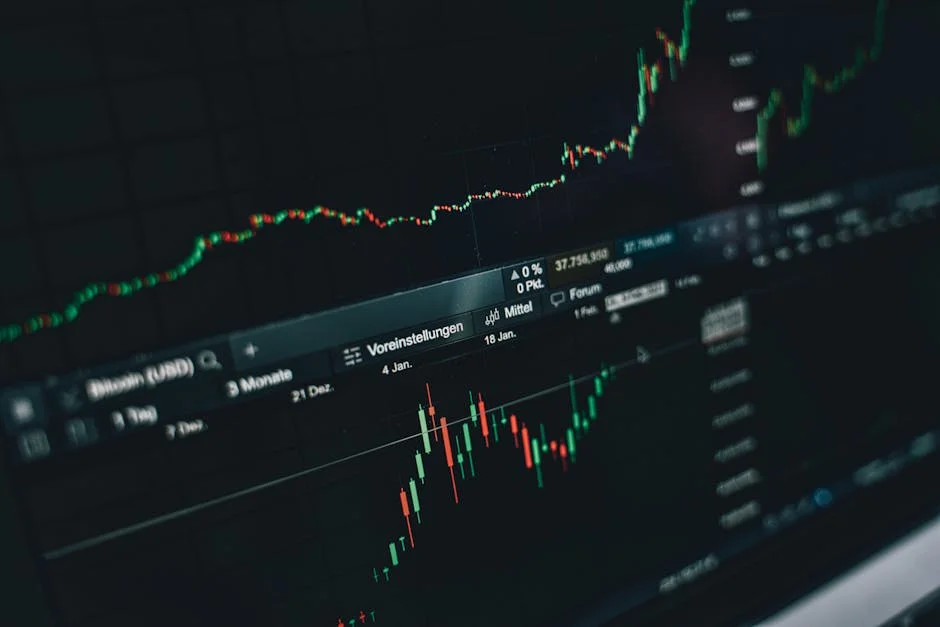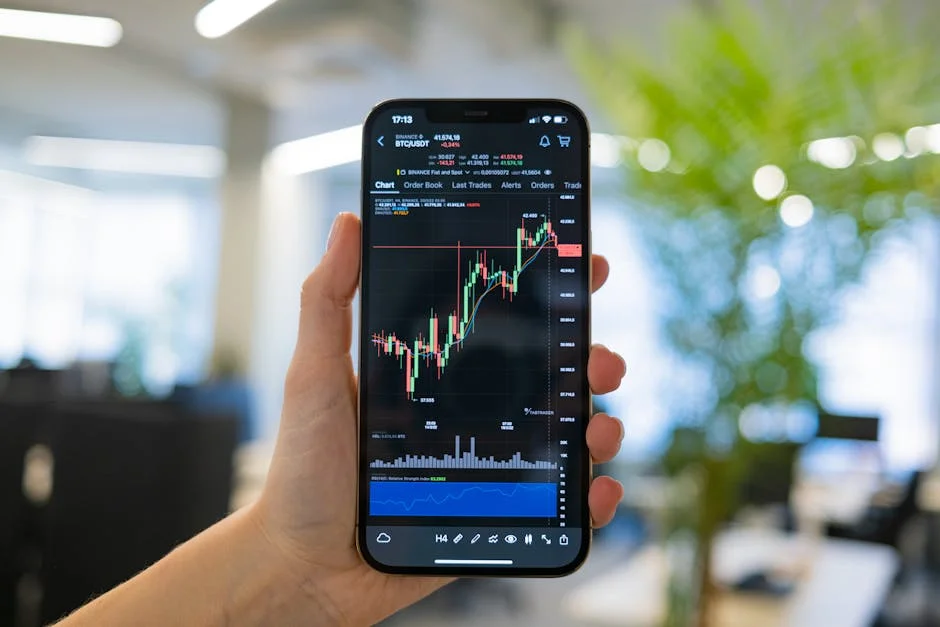
Currency trading vs stock trading is often framed as a choice between two financial worlds that look similar on the surface—both involve buying and selling assets in search of profit—but that behave very differently once real money is on the line. In the foreign exchange market, traders exchange one currency for another, with prices driven by relative value between economies, interest-rate expectations, and global capital flows. In equities, traders buy partial ownership in companies, and prices respond to corporate earnings, growth narratives, competitive dynamics, and broader market sentiment. Both arenas can be traded actively or held longer term, yet the mechanics, costs, volatility patterns, and risk exposures diverge in ways that materially shape strategy. Knowing how each market “moves” is not a trivia exercise; it changes how you size positions, where you place stops, how you interpret news, and what kind of edge is realistic.
Table of Contents
- My Personal Experience
- Understanding the Core Differences Between Currency Trading and Stock Trading
- Market Structure and Trading Venues: OTC FX Versus Centralized Stock Exchanges
- Liquidity, Volatility, and Typical Price Behavior Across Both Markets
- What Moves Prices: Macroeconomics in FX and Fundamentals in Equities
- Leverage, Margin, and Position Sizing: Risk Amplifiers and Risk Controls
- Trading Hours, Session Dynamics, and Lifestyle Fit
- Costs, Spreads, Commissions, and Hidden Friction
- Risk Events: Central Bank Shocks, Earnings Gaps, and Tail Risks
- Expert Insight
- Analysis Styles: Technicals, Fundamentals, Quant Methods, and Sentiment
- Accessibility, Regulation, and Broker Considerations
- Comparison Table: Typical Platforms and Trading Options
- Strategy Fit: Scalping, Day Trading, Swing Trading, and Long-Term Investing
- Psychology and Discipline: Why Traders Struggle Differently in Each Market
- Choosing Between Currency Trading and Stock Trading Based on Goals
- Watch the demonstration video
- Frequently Asked Questions
My Personal Experience
I started out trading stocks because it felt more intuitive—pick a company, follow earnings, and hold through the noise. When I first tried currency trading, I was surprised by how different the pace and mindset were. Forex moved fast, especially around economic releases, and I found myself reacting to headlines and sudden spikes more than I ever did with stocks. The leverage was tempting, but it also punished small mistakes, and I learned the hard way that a “small” move in a currency pair can still hit your account hard if your position is too big. With stocks, I felt like I had more time to think and could lean on longer-term trends, while forex forced me to be stricter with stops and risk limits. These days I still trade both, but I treat currencies like a short, rules-based exercise and stocks like a slower conviction play. If you’re looking for currency trading vs stock trading, this is your best choice.
Understanding the Core Differences Between Currency Trading and Stock Trading
Currency trading vs stock trading is often framed as a choice between two financial worlds that look similar on the surface—both involve buying and selling assets in search of profit—but that behave very differently once real money is on the line. In the foreign exchange market, traders exchange one currency for another, with prices driven by relative value between economies, interest-rate expectations, and global capital flows. In equities, traders buy partial ownership in companies, and prices respond to corporate earnings, growth narratives, competitive dynamics, and broader market sentiment. Both arenas can be traded actively or held longer term, yet the mechanics, costs, volatility patterns, and risk exposures diverge in ways that materially shape strategy. Knowing how each market “moves” is not a trivia exercise; it changes how you size positions, where you place stops, how you interpret news, and what kind of edge is realistic.
Another key distinction in currency trading vs stock trading is the structure of the marketplace itself. The FX market is largely decentralized (over-the-counter), with pricing aggregated through banks, liquidity providers, and brokers rather than a single centralized exchange. Stocks typically trade on regulated exchanges with transparent order books and defined trading sessions. That difference affects spreads, slippage, and how quickly prices react to information. It also affects what “fair pricing” means: currencies are quoted as pairs, so every trade is inherently relative; stocks are quoted in a currency and represent a claim on business performance. Many newcomers treat both as interchangeable “charts,” but the underlying drivers, the typical catalysts, and the timing of liquidity are distinct. A trader who understands these structural realities can choose tools and timeframes that match the market’s nature instead of forcing a stock mindset onto FX or an FX mindset onto equities.
Market Structure and Trading Venues: OTC FX Versus Centralized Stock Exchanges
Currency markets operate as a network of participants rather than a single location, which shapes the experience of currency trading vs stock trading in practical ways. Foreign exchange is the world’s most liquid market, with continuous pricing across time zones as major financial centers open and close. Because FX is over-the-counter, your broker’s feed reflects a composite of quotes from liquidity providers, and the exact spread you see can change depending on market conditions, account type, and the broker’s execution model. During calm periods, spreads can be tight, but around major data releases or unexpected geopolitical events, spreads can widen quickly and execution can become less predictable. This does not mean FX is “worse” or “better”—it means that execution quality, broker selection, and risk controls matter a great deal. The decentralized nature also affects how volume is reported; unlike stocks, there is no single authoritative tape for FX volume, so traders often use tick volume or futures data as a proxy.
Stocks, by contrast, typically trade on centralized exchanges with clearer session boundaries and more standardized reporting. Equities have opening and closing auctions, regular trading hours, and after-hours sessions, each with different liquidity characteristics. The centralized exchange model can provide more consistent transparency in displayed liquidity and prints, and regulation often prescribes how orders are routed and how best execution is evaluated. For many traders comparing currency trading vs stock trading, this is a meaningful comfort factor: the idea that a stock’s last traded price is a widely recognized reference point. Yet stocks also have their own microstructure quirks—limit up/limit down rules, halts, auction imbalances, and varying liquidity across tickers. A large-cap stock can be extremely liquid; a small-cap can be thin and gap-prone. In practice, FX tends to offer plentiful liquidity in major pairs, while equities offer a spectrum from ultra-liquid to highly illiquid, requiring careful selection to avoid hidden costs.
Liquidity, Volatility, and Typical Price Behavior Across Both Markets
Liquidity is one of the most cited reasons traders gravitate toward FX when weighing currency trading vs stock trading, especially in major pairs such as EUR/USD, USD/JPY, and GBP/USD. Deep liquidity can translate into smoother intraday movement, tighter spreads, and the ability to enter and exit positions with less price impact—at least in normal conditions. However, liquidity is not uniform across all currency pairs. Exotic pairs can be far less liquid, with wider spreads and more dramatic jumps. Volatility in FX also tends to cluster around macroeconomic releases, central bank decisions, and shifts in risk sentiment. Many currency pairs spend long stretches mean-reverting or range-bound, then break into trends during periods of policy divergence or crisis. That rhythm—quiet ranges punctuated by bursts—often shapes FX strategies, favoring methods that respect support/resistance, volatility regimes, and scheduled news risk.
Stocks can display a different volatility signature. Individual equities are exposed to idiosyncratic risk: earnings surprises, product launches, lawsuits, management changes, acquisitions, regulatory rulings, and sector rotation. This can create gaps at the open and sharp intraday swings that are unrelated to macro data. When comparing currency trading vs stock trading, it’s important to recognize that stock volatility is often “name-specific,” while FX volatility is frequently “macro-driven.” Index stocks and ETFs can behave more like macro instruments, but single names can move 10%–30% on a catalyst, particularly in growth or biotech segments. That can be opportunity or hazard depending on your approach. Traders who prefer predictable event calendars may find macro releases more manageable than earnings season surprises; traders who like catalyst-driven momentum may prefer equities. Neither market is inherently calmer; they simply express risk differently, and the best fit depends on how you plan, hedge, and tolerate uncertainty.
What Moves Prices: Macroeconomics in FX and Fundamentals in Equities
The primary drivers behind FX are often top-down. Interest rate differentials, yield expectations, inflation trajectories, fiscal stability, trade balances, and central bank communication shape demand for currencies. In currency trading vs stock trading, this means FX participants frequently interpret the same news through a relative lens: if one central bank is expected to cut rates faster than another, the currency associated with the more dovish policy path may weaken versus the other. Even strong economic data can weaken a currency if it changes risk sentiment or triggers different policy expectations. This relative framework can be challenging for newcomers because there is rarely a single “good” or “bad” number; the reaction depends on positioning, surprise magnitude, and how it shifts forward expectations. FX also responds to global risk appetite: during risk-off periods, safe-haven currencies may strengthen, while high-yielding or emerging currencies may weaken, even if domestic data is stable.
Stocks, while influenced by macro conditions and rates, are deeply tied to company-level fundamentals and narratives. Revenue growth, margins, competitive moats, innovation pipelines, and capital allocation decisions can dominate price behavior, especially over medium to long horizons. In currency trading vs stock trading, equity investors can lean on valuation frameworks—cash flows, multiples, growth rates—and can analyze management guidance and industry structure. The flip side is that fundamentals can be slow-moving while price can be fast-moving; a stock may rally on expectations long before earnings confirm them. Additionally, equities are subject to sentiment cycles, factor rotations (value vs growth), and liquidity conditions driven by monetary policy. The result is a layered driver set: macro sets the backdrop, but company specifics can override it. Traders who enjoy researching businesses, reading financial statements, and building a thesis may find equities more intuitive, while those who prefer macro data, policy analysis, and cross-country comparisons may find currencies a better match.
Leverage, Margin, and Position Sizing: Risk Amplifiers and Risk Controls
Leverage is one of the most consequential differences in currency trading vs stock trading. Retail FX brokers often offer higher leverage than typical stock broker margin, which can make small price moves produce large profit or loss swings. Higher leverage can be useful for hedging or for capital-efficient strategies, but it also compresses the margin for error. A modest adverse move can trigger margin calls or forced liquidation if the account is overexposed. Because major currency pairs can move tens of pips quickly around news, traders need position sizing rules that account for volatility and event risk. Sensible leverage is less about what is available and more about what keeps drawdowns survivable. Many experienced FX traders focus on risk per trade (for example, a small percentage of equity) rather than position size alone, and they treat leverage as a tool, not a target.
Stock trading can involve margin, options, and leveraged ETFs, but the baseline experience for many equity traders is lower leverage than FX. That can reduce the probability of rapid account blow-ups, but it does not eliminate risk. Stocks can gap overnight on earnings or headlines, bypassing stop orders and causing losses larger than anticipated. In currency trading vs stock trading, this is a crucial nuance: FX may have continuous trading that can reduce overnight gap risk in major sessions, but it can still gap on weekend opens or during extreme events. Equities, with defined sessions, can gap more frequently between close and open. Position sizing in stocks must account for gap risk and liquidity; a stop-loss is not a guarantee when the next available price is far away. Traders who prefer to avoid high leverage may feel more comfortable in equities, while those who understand leverage mechanics and prioritize tight risk frameworks can operate in FX responsibly. Either way, the discipline of sizing positions to survive worst-case scenarios is more important than the market choice.
Trading Hours, Session Dynamics, and Lifestyle Fit
Time availability is a practical factor that often decides currency trading vs stock trading more than theory does. FX runs nearly 24 hours a day during the trading week, rotating liquidity through Asia, Europe, and North America. This can be advantageous for traders with nontraditional schedules, because there is usually an active session somewhere. It also means opportunities can emerge at odd hours, and the temptation to monitor markets constantly can be draining. Liquidity and volatility vary by session: EUR pairs tend to be more active during London and the London–New York overlap, while JPY pairs can become livelier during Tokyo hours. Traders who understand session behavior can align their strategies with the times when spreads are tight and movement is sufficient for their targets. The near-continuous nature of FX can also allow faster reactions to breaking news compared with markets that pause overnight.
Stocks generally have set trading hours, with pre-market and after-hours sessions that are often thinner and more volatile. For many people comparing currency trading vs stock trading, the structured schedule is a benefit: it enforces boundaries, helps with routine, and concentrates liquidity during the main session. Day traders may focus on the open, when volume and volatility are highest, while swing traders might plan entries and exits around key levels and catalysts. The drawback is that major news can hit outside market hours, creating gaps and limiting flexibility. Earnings releases often occur before the open or after the close, which can be both opportunity and risk. Lifestyle fit matters because consistency matters; a strategy that requires you to trade at 2 a.m. or to watch every tick may not be sustainable. Many successful traders choose the market whose active hours align with their energy, responsibilities, and ability to execute without rushing.
Costs, Spreads, Commissions, and Hidden Friction
Transaction costs are not just line items; they shape whether a strategy is viable. In currency trading vs stock trading, FX costs are often embedded in the spread, though some accounts charge commissions with raw spreads. The effective cost depends on the pair, the time of day, and market conditions. Major pairs can be inexpensive to trade in liquid hours, which supports short-term strategies, but costs can rise sharply during rollovers, illiquid sessions, or high-impact news. Another cost component in FX is swap/rollover, reflecting the interest rate differential between the two currencies. If you hold positions overnight, swap can either pay or charge you, and it can meaningfully affect longer-term trades. Traders sometimes underestimate swap, especially when holding leveraged positions for weeks, and then wonder why performance differs from the price move alone.
Stocks typically involve commissions that may be low or zero at many brokers, but costs still exist through bid-ask spreads, market impact, and potential platform or data fees. In currency trading vs stock trading, equities can carry additional friction such as SEC fees on sales in certain jurisdictions, exchange fees, and the cost of borrowing shares to short. Shorting hard-to-borrow stocks can be expensive or even impossible at times, and borrow rates can spike. Options introduce their own pricing complexities, including implied volatility and time decay. Even with “commission-free” trading, poor execution—entering market orders in thin names, trading during illiquid after-hours, or chasing spreads—can quietly erode returns. A realistic comparison requires modeling costs under your intended holding period and trade frequency. Scalpers care about fractions of a cent or a pip; swing traders may care more about overnight financing, gaps, and slippage. Cost awareness is a competitive advantage in both markets.
Risk Events: Central Bank Shocks, Earnings Gaps, and Tail Risks
Every market has tail risks, but they arrive in different forms. In currency trading vs stock trading, FX tail events often stem from policy surprises, geopolitical escalations, or sudden shifts in global funding conditions. Central banks can change tone abruptly, intervene, or deliver unexpected rate decisions that move currency pairs rapidly. There are also rare but consequential events such as pegs breaking or liquidity evaporating during crises. Because FX is highly leveraged for many participants, volatility spikes can cascade through stop-outs and margin calls, amplifying moves. Even if you trade conservatively, liquidity conditions can change, spreads can widen, and stops can fill worse than expected. Managing this requires respect for the economic calendar, cautious exposure around major releases, and scenario planning for shocks.
| Aspect | Currency (Forex) Trading | Stock Trading |
|---|---|---|
| Market & Trading Hours | Decentralized global market; typically trades 24 hours a day, 5 days a week. | Centralized exchanges; trading limited to exchange hours (with some pre/after-hours). |
| Leverage & Risk | Often higher leverage available, which can amplify gains and losses. | Generally lower leverage for most retail accounts; risk tied to company performance and market moves. |
| What Drives Price | Primarily macroeconomic factors (interest rates, inflation, central banks, geopolitics). | Company fundamentals (earnings, guidance), sector trends, and broader market sentiment. |
Expert Insight
Match the market to your schedule and risk tolerance: currency trading runs nearly 24/5 and can move fast, so use smaller position sizes and always place a stop-loss before entering; stock trading is session-based and often less volatile, so plan entries around market open/close and key earnings dates. If you’re looking for currency trading vs stock trading, this is your best choice.
Build a simple, repeatable process for each: in forex, focus on a few major pairs and track interest-rate decisions and economic releases with a calendar; in stocks, screen for liquidity and catalysts, then define your thesis, target, and exit rules in advance—especially around earnings and major news. If you’re looking for currency trading vs stock trading, this is your best choice.
Stocks face a different set of tail risks, many of which are concentrated in individual names. A single earnings report can reprice a company dramatically, and guidance can shift the entire narrative. Regulatory actions, fraud allegations, or product failures can trigger sudden drops that are difficult to manage with stops alone, especially if the move happens outside regular hours. In currency trading vs stock trading, equities also carry broader systemic risk during market crashes, when correlations rise and liquidity can deteriorate. Index circuit breakers and trading halts can protect the market’s integrity but can also leave traders unable to exit at desired levels. Hedging tools differ: FX traders may hedge with correlated pairs or options; stock traders can use options, index hedges, or sector rotation. Regardless of market, the most robust defense is avoiding oversized positions, diversifying exposure, and acknowledging that extreme outcomes are part of the distribution, not an anomaly.
Analysis Styles: Technicals, Fundamentals, Quant Methods, and Sentiment
Technical analysis is popular in both arenas, but its application can differ in currency trading vs stock trading due to market structure and typical behavior. FX traders often emphasize support and resistance, trendlines, volatility bands, and multi-timeframe confluence, partly because macro narratives can take time to play out and price can oscillate in ranges. Many also track positioning indicators, such as futures COT reports, and watch how price reacts around key macro levels. Because FX is a relative market, intermarket analysis can be particularly useful: yields, commodity prices, and equity risk sentiment can all influence currency pairs. Still, purely technical approaches can struggle around high-impact news if stops are too tight or if the strategy ignores scheduled volatility regimes.
Equity analysis often blends technical signals with company fundamentals and sector context. In currency trading vs stock trading, stock traders might use earnings estimates, revenue growth, and valuation alongside chart patterns. Quant methods also flourish in equities because of the richness of cross-sectional data: factors like momentum, value, quality, and size can be tested across thousands of securities. Sentiment analysis can include short interest, insider transactions, analyst revisions, and options flow. FX quants, on the other hand, may focus more on macro variables, carry trades, mean reversion, and regime shifts. The best approach is the one you can execute consistently: if you enjoy reading central bank statements and modeling rate paths, FX may feel natural; if you enjoy building screens for strong balance sheets or momentum breakouts across many tickers, equities may provide more breadth. Importantly, neither market guarantees an edge from any single tool—edge comes from a repeatable process, realistic assumptions, and disciplined risk management.
Accessibility, Regulation, and Broker Considerations
Practical access can tilt the decision in currency trading vs stock trading. FX accounts are often easy to open, with low minimum deposits and simple access to major pairs. However, regulation varies widely by jurisdiction, and broker quality matters enormously in an OTC environment. Execution model (market maker vs ECN-style), slippage policies, negative balance protection, and the broker’s financial stability should be evaluated carefully. Pricing transparency and the ability to verify fills become more important when there is no centralized exchange. Traders should also understand how leverage limits are regulated locally, as high leverage can be restricted in some regions. A well-regulated broker with clear disclosures and robust risk controls is often a better choice than a flashy platform offering extreme leverage and aggressive promotions.
Stock trading access depends on the exchanges and products you want. Many jurisdictions have strong investor protections, standardized reporting, and established dispute processes. In currency trading vs stock trading, equities benefit from clearer corporate disclosures, audited financial statements, and structured market oversight, though that does not eliminate fraud or manipulation. Broker selection still matters: order routing practices, payment for order flow, available order types, and borrowing availability for shorting can affect outcomes. International stock access may require additional permissions, currency conversion fees, or tax documentation. Data costs can be higher for real-time exchange feeds, especially for professional accounts. Both markets require due diligence, but the due diligence is different: in FX, you scrutinize the broker’s execution and stability; in stocks, you scrutinize both the broker and the specific instruments, including liquidity, corporate actions, and trading halts. Choosing a reputable intermediary is a foundational step, not an afterthought.
Comparison Table: Typical Platforms and Trading Options
Because the experience of currency trading vs stock trading depends heavily on the tools used, it helps to compare common platform categories and account types rather than assuming every broker offers the same execution quality. The table below summarizes typical options traders encounter. Ratings are general-purpose impressions based on common feature sets and are not endorsements, and “Price” reflects typical cost structure rather than a single fixed fee. The most useful takeaway is how features line up with your strategy: a high-frequency approach needs tight spreads and fast execution, while a longer-term approach may prioritize research, reporting, and robust order handling.
Before choosing any platform category, consider your likely trade frequency, the instruments you want (spot FX, FX futures, single stocks, options, ETFs), and whether you need advanced order types. In currency trading vs stock trading, cost can be deceptively complex: “free” trading can still be expensive if spreads are wide or fills are poor, while commission-based pricing can be economical if execution is strong. Also factor in non-trading costs such as data subscriptions, inactivity fees, withdrawal fees, and currency conversion charges. A platform that looks cheap for one style can be costly for another, so align the tool with the workflow you can maintain consistently.
| Name | Features | Ratings | Price |
|---|---|---|---|
| Retail FX Broker (Spread-Based) | Spot FX pairs, leverage, basic charting, often fixed/variable spreads, rollover pricing | 4.0/5 (varies by regulation and execution) | Spread embedded; swap/rollover overnight |
| Retail FX Broker (Commission + Raw Spread) | Tighter raw spreads, explicit commission per lot, often better for active trading | 4.3/5 (when liquidity is strong) | Commission + variable spread; swap/rollover overnight |
| Stock Brokerage (Cash Account) | Stocks/ETFs, research tools, corporate actions support, standard session trading | 4.5/5 (strong transparency) | Often low/zero commissions; spreads and fees apply |
| Stock Brokerage (Margin + Options) | Margin, options chains, advanced order types, portfolio margin (eligible accounts) | 4.6/5 (feature-rich) | Commissions on options; margin interest; potential data fees |
| Futures Brokerage (FX Futures / Index Futures) | Centralized exchange, transparent volume, standardized contracts, intraday margins | 4.4/5 (robust for systematic traders) | Commission + exchange fees; contract-based costs |
Strategy Fit: Scalping, Day Trading, Swing Trading, and Long-Term Investing
Different styles thrive in different environments, and this is where currency trading vs stock trading becomes a question of fit rather than superiority. Scalping in FX can be attractive because major pairs often have tight spreads during liquid hours, and price can oscillate within identifiable intraday ranges. Yet scalping is also sensitive to execution quality, slippage, and spread widening during volatility spikes. Many scalpers fail not because the idea is wrong but because costs and latency eat the edge. Day trading in FX frequently centers on session opens, breakouts from consolidation, and reactions to scheduled data. Swing trading in FX may involve riding policy divergence themes or technical breakouts that align with macro narratives, while managing swap and event risk. Longer-term currency positioning can resemble macro investing, where the holding period may extend for weeks or months, but leverage must be used carefully to avoid being forced out by interim volatility.
In equities, day trading often focuses on the open, momentum bursts, and news-driven movers. Currency trading vs stock trading takes on a different texture here: stocks offer a vast universe of instruments, so a trader can scan for volatility and volume each day rather than focusing on a handful of pairs. Swing trading in stocks can be driven by earnings cycles, sector rotation, and trend following in strong names. Long-term investing is where equities have a distinctive advantage, because stocks can represent ownership in productive businesses that may compound value through growth and dividends. While long-term FX positioning is possible, currencies do not compound in the same way; returns tend to come from directional moves or carry rather than business growth. That doesn’t make FX inferior, but it changes the logic of “buy and hold.” Many market participants end up using both: FX for tactical macro exposure or hedging, and stocks for long-term wealth building, depending on goals, time horizon, and risk tolerance.
Psychology and Discipline: Why Traders Struggle Differently in Each Market
Psychological pressure is universal, but it manifests differently depending on whether you choose currency trading vs stock trading. In FX, the combination of leverage and frequent price updates can create a feedback loop of overtrading. Because the market is open most of the week, it can feel like there is always another setup, which can encourage impulsive entries and revenge trading after a loss. The relative steadiness of many major pairs can also lure traders into using tight stops and large size, only to get chopped up by normal noise. Another psychological trap is treating macro news as a guarantee; a trader may correctly predict a data surprise but still lose because the market was positioned differently or because the reaction was already priced in. Mastery in FX often requires learning to sit out, respect scheduled volatility, and accept that being right about the narrative is not the same as being right about timing.
Stocks can trigger a different set of emotional responses. In currency trading vs stock trading, equities can provoke attachment to stories and brands, leading traders to rationalize losing positions because they “believe in the company.” Earnings season can feel like a recurring casino moment, tempting traders to gamble on binary outcomes. The sheer number of tickers can also cause distraction; instead of refining a process, a trader may hop from one hot name to another, chasing social-media narratives. On the other hand, the ability to build a thesis based on tangible business performance can provide psychological grounding for longer-term investors. Discipline in equities often means separating investing from trading, defining holding periods, and using rules for entries, exits, and portfolio concentration. In both markets, the traders who survive are rarely the ones with the most exciting predictions; they are the ones who manage exposure, limit losses, and keep execution consistent even when outcomes are uncertain.
Choosing Between Currency Trading and Stock Trading Based on Goals
The most practical way to decide on currency trading vs stock trading is to start with your objective and constraints rather than market myths. If your goal is active trading with frequent opportunities, the FX market’s liquidity and extended hours can be attractive, especially if you can specialize in a few major pairs and learn their session rhythms. If your goal is to build long-term wealth through ownership of productive assets, stocks and diversified ETFs can be a more natural foundation, because businesses can grow earnings and return capital over time. If you want to hedge international exposure—such as income or expenses in different currencies—FX can be directly functional in a way that stock trading is not. If you prefer analyzing macro policy and relative economics, currencies may align with your interests; if you prefer analyzing competitive advantage, management execution, and innovation, equities may feel more intuitive.
Risk tolerance and learning style also matter. Currency trading vs stock trading is not just a difference in charts; it’s a difference in how losses can occur and how quickly mistakes are punished. High leverage in FX can accelerate both learning and damage, making conservative sizing essential. Stocks can be less leveraged by default, but single-name risk and overnight gaps can create sharp losses if you trade catalysts without a plan. Many traders eventually blend approaches: a core stock portfolio for long-term goals, complemented by tactical FX positions for diversification or macro views. The best choice is the one you can execute with discipline, adequate capitalization, and a clear process for risk management, journaling, and review. Currency trading vs stock trading is ultimately a decision about which risk profile, time structure, and analytical framework you can handle consistently, not which market promises easy profits.
Watch the demonstration video
In this video, you’ll learn how currency (forex) trading compares with stock trading—covering market hours, liquidity, volatility, leverage, and typical costs. It explains what moves exchange rates versus share prices, the risks and rewards of each, and which style may better fit your goals, time commitment, and risk tolerance. If you’re looking for currency trading vs stock trading, this is your best choice.
Summary
In summary, “currency trading vs stock trading” is a crucial topic that deserves thoughtful consideration. We hope this article has provided you with a comprehensive understanding to help you make better decisions.
Frequently Asked Questions
What’s the main difference between currency (forex) trading and stock trading?
In **currency trading vs stock trading**, forex focuses on exchanging currency pairs in a decentralized, worldwide market that runs nearly around the clock, whereas stock trading centers on buying and selling shares of individual companies on regulated exchanges with set trading hours.
Which market has more liquidity and trading hours?
Forex is generally more liquid and trades nearly 24 hours a day, five days a week; stocks trade during specific exchange hours, with limited after-hours sessions depending on the market. If you’re looking for currency trading vs stock trading, this is your best choice.
How do typical costs compare (spreads, commissions, fees)?
In **currency trading vs stock trading**, forex markets typically feature tight spreads and, depending on the broker, little to no commission. Stock trading, on the other hand, often comes with a mix of costs—commissions (sometimes waived), exchange or regulatory fees, and the ever-present bid-ask spread.
Is leverage different in forex vs stocks?
Forex brokers often provide much higher leverage than stock brokers, which means your profits—and your losses—can grow quickly. In contrast, leverage in stock markets is usually lower and more strictly regulated, making risk exposure generally easier to control when comparing **currency trading vs stock trading**.
What drives price movement in forex compared to stocks?
In **currency trading vs stock trading**, the forces behind price moves are quite different: forex markets tend to react most strongly to big-picture macroeconomic drivers such as interest rates, inflation data, and geopolitical developments, whereas stock prices are shaped more by individual company performance, industry and sector trends, and the wider economic backdrop.
Which is riskier for beginners: forex or stocks?
Both carry risk, but forex can be riskier for beginners due to higher leverage and rapid price moves; stocks may be easier to research via company fundamentals, though volatility can still be significant. If you’re looking for currency trading vs stock trading, this is your best choice.
📢 Looking for more info about currency trading vs stock trading? Follow Our Site for updates and tips!