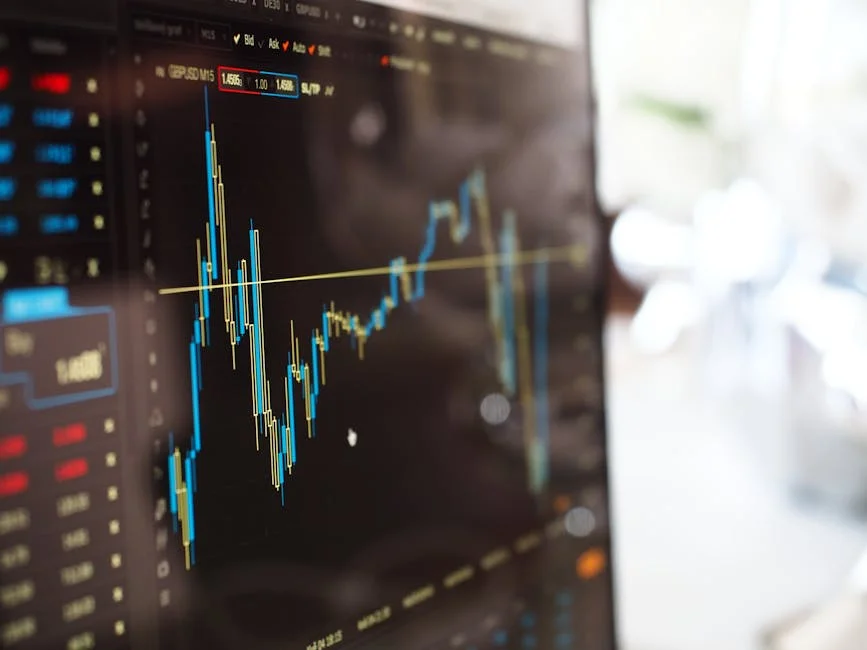
Learning how to trade in the forex market starts with understanding what the market actually is: a global network of banks, brokers, institutions, and individuals exchanging one currency for another. Unlike centralized exchanges, currency trading happens over-the-counter, which means pricing and liquidity come from a web of participants rather than a single venue. This structure is part of why forex is open nearly 24 hours a day from Monday to Friday, following the sun across major financial centers. When you place a forex trade, you are not buying a “stock” of a company; you are exchanging a base currency for a quote currency, aiming to profit from changes in the exchange rate. A quote like EUR/USD 1.0850 means one euro costs 1.0850 U.S. dollars. If you believe the euro will strengthen, you might buy EUR/USD; if you think it will weaken, you might sell it. This simple exchange-rate logic sits beneath every strategy, indicator, and trading plan you will ever use. The market’s size and liquidity can be appealing, but those same traits can magnify mistakes if you approach forex without preparation.
Table of Contents
- My Personal Experience
- Understanding the Forex Market and What It Means to Trade Currencies
- Choosing a Broker, Platform, and Account Type with Trading Costs in Mind
- Reading Forex Quotes, Pips, Lots, and Leverage Without Confusion
- Building a Practical Trading Plan: Goals, Timeframes, and Market Selection
- Fundamental Analysis: Using Economic Data and Central Banks to Find Direction
- Technical Analysis: Trends, Support and Resistance, and High-Probability Setups
- Risk Management: Position Sizing, Stop-Loss Strategy, and Drawdown Control
- Expert Insight
- Order Types and Trade Execution: Market Orders, Limit Orders, and Managing Slippage
- Developing a Repeatable Trading Strategy: Scalping, Day Trading, and Swing Trading
- Trading Psychology: Discipline, Patience, and Handling Wins and Losses
- Backtesting, Demo Trading, and Journaling to Improve Performance Over Time
- Common Mistakes to Avoid: Overleveraging, Overtrading, and Ignoring Correlation
- Putting It All Together: A Practical Routine for Consistent Forex Trading
- Watch the demonstration video
- Frequently Asked Questions
- Trusted External Sources
My Personal Experience
When I first tried trading forex, I jumped in with a small account and quickly learned that guessing direction wasn’t a strategy. I started by sticking to one pair (EUR/USD) and one timeframe, marking key support and resistance levels and checking the economic calendar so I wouldn’t get blindsided by news. The biggest change for me was risk management: I began risking only 1% per trade, placing a stop-loss the moment I entered, and sizing my position based on that stop instead of what I “felt” like trading. I also kept a simple journal noting why I took the trade, how I managed it, and what I did wrong—most of my losses came from moving stops or overtrading after a win. Over time, focusing on a repeatable setup and protecting my downside mattered more than chasing big moves, and my results became steadier even when I wasn’t right all the time. If you’re looking for how to trade in the forex market, this is your best choice.
Understanding the Forex Market and What It Means to Trade Currencies
Learning how to trade in the forex market starts with understanding what the market actually is: a global network of banks, brokers, institutions, and individuals exchanging one currency for another. Unlike centralized exchanges, currency trading happens over-the-counter, which means pricing and liquidity come from a web of participants rather than a single venue. This structure is part of why forex is open nearly 24 hours a day from Monday to Friday, following the sun across major financial centers. When you place a forex trade, you are not buying a “stock” of a company; you are exchanging a base currency for a quote currency, aiming to profit from changes in the exchange rate. A quote like EUR/USD 1.0850 means one euro costs 1.0850 U.S. dollars. If you believe the euro will strengthen, you might buy EUR/USD; if you think it will weaken, you might sell it. This simple exchange-rate logic sits beneath every strategy, indicator, and trading plan you will ever use. The market’s size and liquidity can be appealing, but those same traits can magnify mistakes if you approach forex without preparation.

Another core idea behind how to trade in the forex market is recognizing what moves currency prices. Exchange rates reflect expectations about interest rates, inflation, economic growth, geopolitical stability, and risk appetite. A central bank hinting at higher rates can lift a currency because higher yields attract capital; political turmoil can weaken a currency as investors seek safer alternatives. Even within the same day, shifts in sentiment can cause rapid changes, especially during major data releases like U.S. Non-Farm Payrolls or inflation reports. Major pairs such as EUR/USD, GBP/USD, USD/JPY, and USD/CHF tend to be more liquid and may have tighter spreads, while minors and exotics can be more volatile and costly to trade. Understanding these categories helps you choose instruments that match your tolerance for price swings and trading costs. By treating forex as a market driven by macroeconomic forces, microstructure (spreads and liquidity), and crowd psychology, you begin building a framework that supports disciplined decision-making rather than impulsive clicking.
Choosing a Broker, Platform, and Account Type with Trading Costs in Mind
Broker selection is one of the most practical steps in how to trade in the forex market because it directly affects execution quality, pricing, and the safety of your funds. A reputable broker should be regulated in a well-known jurisdiction, keep client money segregated, and clearly disclose trading costs. Costs typically appear as spreads (the difference between bid and ask), commissions (common on “raw” spread accounts), and swaps/rollover fees for holding positions overnight. Some brokers offer fixed spreads, others variable; variable spreads may be tighter during liquid hours but widen during news or low-liquidity periods. Execution model matters too: some brokers operate as market makers, others offer STP/ECN routing. Instead of chasing buzzwords, focus on tangible outcomes like slippage behavior, order fill reliability, and transparency. If you plan to trade frequently, a small difference in spread or commission can meaningfully affect results over hundreds of trades. If you plan to hold swing positions, swap rates and financing costs deserve extra attention.
Your platform choice also shapes how you experience forex trading. Many traders use MetaTrader 4, MetaTrader 5, cTrader, or proprietary web platforms. Look for stable charting, easy order entry, reliable mobile access, and an economic calendar. Account type is equally important: standard accounts bundle costs into spreads, while commission-based accounts separate spreads and commissions. If you are new, a demo account is essential to practice order placement, position sizing, and trade management without risking real money. When you move to live trading, consider starting with a smaller deposit while you validate your process under real spreads and real emotions. Also review leverage options carefully. High leverage can make forex feel accessible, but it also increases the speed at which losses accumulate. A broker offering 1:500 leverage may sound attractive, yet prudent traders often use far less in practice. Treat the broker as a long-term business partner: prioritize regulation, cost clarity, execution quality, and tools that help you follow a plan consistently. If you’re looking for how to trade in the forex market, this is your best choice.
Reading Forex Quotes, Pips, Lots, and Leverage Without Confusion
Before placing real orders, you need fluency in the language of currency trading, because misunderstandings about pips, lots, and leverage can sabotage even a good strategy. A pip is typically the fourth decimal place for most pairs (0.0001), while for JPY pairs it’s usually the second decimal place (0.01). If EUR/USD moves from 1.0850 to 1.0860, that’s a 10-pip move. Pips matter because profit and loss are often calculated in pip terms, then translated into account currency based on position size. Lots define that size: a standard lot is commonly 100,000 units of the base currency, a mini lot 10,000, and a micro lot 1,000. Many brokers also allow fractional lot sizes, which is useful for fine-tuning risk. The point is not to memorize numbers for their own sake; it’s to be able to estimate what a stop-loss distance means in dollars (or your account currency) before you click buy or sell. If you’re looking for how to trade in the forex market, this is your best choice.
Leverage is the mechanism that allows you to control a larger position with a smaller amount of margin, but it is also where many beginners misunderstand how to trade in the forex market responsibly. If you open a 1-lot EUR/USD position, you are controlling 100,000 euros. With 1:100 leverage, the margin required might be about 1% of the notional value, but your profit and loss still move as if you controlled the full position. That means a relatively small price move can produce a large percentage change in your account if your position is too big. Margin is not a cost by itself, but it is a constraint: if losses reduce your free margin, you can face a margin call or forced liquidation. Smart traders treat leverage as optional and choose position sizes based on risk per trade, not on maximum allowable margin. When you can translate “I’m risking 40 pips” into “I’m risking 0.5% of my account,” you are operating with clarity. This clarity is foundational for consistent execution, because it keeps the emotional impact of each trade within manageable bounds.
Building a Practical Trading Plan: Goals, Timeframes, and Market Selection
A trading plan is the bridge between knowing concepts and applying them consistently. Without a plan, how to trade in the forex market becomes a series of guesses dressed up as analysis. A practical plan defines the timeframes you trade, the pairs you focus on, the setups you take, and the conditions that keep you out of the market. Start by identifying your availability and personality. If you can only trade a couple of hours per day, a swing approach on the 4-hour and daily charts might suit you better than fast scalping. If you enjoy active decision-making and can watch screens during liquid sessions, intraday trading on the 15-minute to 1-hour charts may fit. Pair selection should also match your schedule. For example, EUR/USD and GBP/USD are often most active during London and New York overlap, while AUD/USD and NZD/USD can show more movement during Asia and early London. Concentrating on a small list of pairs helps you learn their rhythm and typical responses to news.
Your plan should define entry triggers, stop-loss placement logic, profit-taking rules, and risk limits. It should also outline what you do when conditions change, such as a major news event approaching or volatility expanding beyond normal levels. Define what counts as a valid trade: perhaps a trend setup requires higher highs and higher lows plus a pullback to a moving average, or a breakout requires a clean consolidation with a volatility contraction. Add a checklist so you can confirm alignment before entering. A plan is not just about entries; it includes trade management, such as moving stops only under specific conditions rather than out of fear, and taking partial profits at preplanned levels. It also includes “no trade” rules, such as avoiding the minutes before high-impact releases if you cannot tolerate slippage. Over time, the plan becomes a living document refined by journaling and review. The goal is not to predict every tick, but to create a repeatable process where your edge, however small, can play out across many trades with controlled downside. If you’re looking for how to trade in the forex market, this is your best choice.
Fundamental Analysis: Using Economic Data and Central Banks to Find Direction
Fundamental analysis is a powerful lens for understanding currency direction because exchange rates are deeply tied to interest rate expectations and macroeconomic conditions. When learning how to trade in the forex market, it helps to know which data points matter most and why. Central banks like the Federal Reserve, European Central Bank, Bank of England, and Bank of Japan influence currencies through policy rates, guidance, and asset purchases. If markets expect a central bank to raise rates, that currency often strengthens as investors anticipate higher returns. Inflation data, employment reports, and GDP growth shape those expectations. For example, persistent inflation can push a central bank toward tighter policy, while weakening labor markets can lead to rate cuts. Beyond scheduled data, themes like fiscal policy, trade balances, commodity prices, and geopolitical risk can drive multi-week trends. Commodity-linked currencies such as AUD, CAD, and NZD can be influenced by iron ore, oil, and dairy prices, while safe-haven flows can strengthen CHF or JPY during risk-off episodes.

Using fundamentals does not require making long speeches about the economy; it requires translating macro information into a directional bias and then aligning trades with that bias. A practical method is to follow an economic calendar and categorize events by impact. High-impact events can create volatility spikes, while medium-impact data can gradually shift expectations. You can track rate expectations via yield differentials or market-implied probabilities, then compare them across two currencies in a pair. If the U.S. is expected to cut rates faster than the eurozone, that can create a bearish bias for USD relative to EUR, supporting EUR/USD strength. However, fundamentals can take time to be reflected in price, and short-term moves can be driven by positioning and sentiment. That is why many traders combine fundamentals with technical triggers: fundamentals provide the “why” and broad direction, while technical analysis provides the “when” and “where” for entries and exits. This combination can reduce the temptation to chase random price movements and helps you stay focused on trades that align with a coherent narrative. If you’re looking for how to trade in the forex market, this is your best choice.
Technical Analysis: Trends, Support and Resistance, and High-Probability Setups
Technical analysis helps you interpret the market’s behavior by studying price action and patterns. For many traders, it is the most actionable part of how to trade in the forex market because it offers concrete entry and exit frameworks. Start with structure: trends, ranges, and transitions. In an uptrend, price forms higher highs and higher lows; in a downtrend, lower highs and lower lows. Support and resistance zones are areas where buying or selling pressure has previously appeared, often around prior swing highs/lows, round numbers, and consolidation ranges. These zones are not single lines; they are areas where orders tend to cluster. Using multiple timeframes can help you avoid tunnel vision: the daily chart can define the main trend, while the 4-hour and 1-hour charts can refine entries. Candlestick behavior around key zones provides clues about acceptance or rejection, such as long wicks showing failed pushes beyond a level.
Indicators can complement price action, but they should support a clear decision rather than create confusion. Moving averages can help define trend direction and dynamic support/resistance; RSI or stochastic can highlight momentum shifts or overextended moves; ATR can help size stops based on volatility. Common setups include trend pullbacks, breakouts from consolidation, and reversals at major levels. A trend pullback might involve waiting for price to retrace to a moving average or prior support, then entering on a bullish engulfing candle or a break of a minor structure. A breakout setup might require a tight range and a close beyond resistance, ideally with confirmation such as increased momentum. Reversal setups can be higher risk; they often work best at significant higher-timeframe levels with clear signs of exhaustion. The key is to define your setup precisely: what must be present before you enter, where the stop goes, and what invalidates the idea. Precision reduces overtrading and makes performance measurable, because you can review whether you followed your rules rather than blaming the market for every outcome. If you’re looking for how to trade in the forex market, this is your best choice.
Risk Management: Position Sizing, Stop-Loss Strategy, and Drawdown Control
Risk management is the difference between participating in forex trading and surviving long enough to improve. Many people focus on finding the “best” entry, but the most important skill in how to trade in the forex market is controlling how much you lose when you are wrong. Start with risk per trade. A common approach is risking a fixed percentage of your account, such as 0.25% to 2% per trade, depending on experience and volatility. This allows you to endure losing streaks without catastrophic damage. Position sizing then becomes a simple calculation: determine your stop-loss distance in pips based on market structure, then adjust your lot size so that the dollar risk matches your chosen percentage. A stop-loss is not an admission of failure; it is the cost of doing business and a tool for protecting your decision-making capacity. Without a stop, a manageable loss can become a paralyzing one, leading to emotional trading and long-term account erosion.
Expert Insight
Start with a clear plan for each trade: define your entry, stop-loss, and take-profit before you click “buy” or “sell.” Risk a small, fixed percentage of your account per trade (commonly 1–2%), and size your position so a stop-loss hit is a manageable loss rather than a setback. If you’re looking for how to trade in the forex market, this is your best choice.
Trade what you can explain: focus on a few major pairs, learn their typical volatility, and align your sessions with when they’re most active (e.g., London/New York overlap). Use a simple checklist—trend direction on a higher timeframe, key support/resistance levels, and a scheduled news scan—to avoid impulsive trades and stay consistent. If you’re looking for how to trade in the forex market, this is your best choice.
Stop-loss placement should be logical, not arbitrary. Instead of using a fixed pip number for every trade, place the stop where your trade idea is invalidated. For a long trade, that might be below a swing low or below support; for a short trade, above a swing high or above resistance. Then consider volatility: if the pair’s normal daily movement is large, a tight stop may be hit by noise even if your direction is correct. Tools like ATR can help you avoid setting stops too close. Risk management also includes controlling total exposure. If you open multiple trades that are highly correlated, you may unknowingly concentrate risk. For example, being long EUR/USD and long GBP/USD can effectively double your USD short exposure. Set rules for maximum daily loss, weekly loss, and maximum open risk at one time. If you hit a limit, step back and review rather than trying to “win it back.” Drawdown control is a professional habit: it keeps you in the game, preserves confidence, and ensures that a bad day does not turn into a broken account. If you’re looking for how to trade in the forex market, this is your best choice.
Order Types and Trade Execution: Market Orders, Limit Orders, and Managing Slippage
Execution mechanics matter more than many beginners realize, because even a strong strategy can be weakened by poor order placement. To master how to trade in the forex market, you should understand the most common order types and when to use them. A market order executes immediately at the best available price, which is useful when you need to enter quickly, but it can expose you to slippage during fast markets. A limit order executes at a specified price or better, giving you price control, but it may not fill if the market does not return to your level. Stop orders (buy stop or sell stop) are often used for breakout entries, triggering when price reaches a certain point. Many platforms also support stop-loss and take-profit orders attached to a position, which is essential for disciplined management. Knowing the difference between a stop-loss and a stop entry is critical; mixing them up can cause unintended trades.
| Approach | How it works in forex | Best for | Key risk / watch-out |
|---|---|---|---|
| Day trading | Opens and closes positions within the same trading day, aiming to capture short-term price moves around sessions (London/NY) and news. | Active traders who can monitor charts and manage trades intraday. | Spread/slippage and news volatility can quickly flip a trade; requires strict stops and position sizing. |
| Swing trading | Holds trades for days to weeks to ride multi-day trends or reversals using technical levels and higher-timeframe structure. | Traders who prefer fewer decisions and can hold through normal pullbacks. | Overnight/weekend gaps and swap/rollover costs; needs wider stops and patience. |
| Position trading | Holds for weeks to months based on macro/fundamental themes (rates, inflation, growth) with confirmation from longer-term charts. | Longer-term investors/traders with strong fundamental view and lower screen time. | Theme changes (central bank shifts) can invalidate the thesis; leverage can amplify drawdowns over time. |

Slippage and spread widening are realities, especially around news. During high-impact releases, liquidity can thin, spreads can widen, and orders can fill at worse prices than expected. If you trade news, you must accept this risk and reduce size accordingly. If you do not trade news, consider staying flat before major events or using wider stops with smaller position sizes. Execution quality also depends on your trading hours. The most liquid periods, such as London open and London-New York overlap, often provide tighter spreads. Late Friday or early Monday can show wider spreads and choppy movement. Another practical technique is using limit orders at predefined zones to avoid chasing. For example, if you identify support in an uptrend, you can set a buy limit slightly above the zone with a stop below it, letting the market come to you. That approach can improve entry price and reduce emotional impulsivity. Ultimately, clean execution is about aligning your order type with your setup: breakouts often pair with stop entries, pullbacks often pair with limit entries, and uncertain conditions often call for patience rather than forcing a trade. If you’re looking for how to trade in the forex market, this is your best choice.
Developing a Repeatable Trading Strategy: Scalping, Day Trading, and Swing Trading
Strategies in forex trading vary mainly by timeframe, holding period, and the type of market behavior they exploit. Choosing a style is a key step in how to trade in the forex market because it determines your required screen time, your sensitivity to spreads, and your emotional workload. Scalping targets small moves and may involve many trades per session. It demands excellent execution, very low costs, and strict discipline because a small error can erase many small gains. Day trading aims to open and close positions within the same day, reducing overnight risk and swap fees, but it still requires focused attention during active hours. Swing trading holds positions for days to weeks, aiming to capture larger price moves aligned with broader trends or macro themes. It often tolerates wider stops and fewer trades, which can suit people with limited time and a preference for slower decision-making.
Regardless of style, a repeatable strategy has clear components: market selection, setup identification, entry trigger, stop placement, profit-taking, and risk limits. For example, a trend pullback strategy might require a higher-timeframe trend, a pullback to a key moving average, and a bullish reversal candle before entry. A breakout strategy might require a multi-hour consolidation, a break and close beyond the range, and a retest for confirmation. The “edge” can come from structure, momentum, volatility behavior, or a combination. What matters is that your rules are specific enough to be tested and followed. Avoid building a strategy that relies on constant discretion unless you have a strong reason and the experience to support it. A good strategy also acknowledges the market’s changing conditions. Some strategies perform best in trending markets; others thrive in ranges. You can include a simple filter—like an ADX threshold or a range-detection rule—to avoid trading a trend strategy in a choppy environment. Consistency comes from doing the same high-quality actions repeatedly, not from trying a new method every time the market frustrates you. If you’re looking for how to trade in the forex market, this is your best choice.
Trading Psychology: Discipline, Patience, and Handling Wins and Losses
Psychology is not a motivational add-on; it is a functional part of execution. Even with a solid plan, how to trade in the forex market successfully depends on your ability to follow rules under uncertainty. Forex outcomes are probabilistic, meaning you can do everything “right” and still lose on a given trade. That reality can trigger revenge trading, overtrading, or abandoning stops. Discipline means you take trades only when your setup appears and you manage them according to plan. Patience means you allow price to come to your levels rather than chasing movement out of fear of missing out. Emotional control does not mean you feel nothing; it means you act according to your process even when you feel stress or excitement. One practical approach is to reduce decision points. If you predefine your entry, stop, and target, you have fewer moments where emotions can hijack the trade.
Handling wins is just as important as handling losses. After a big win, traders often increase size impulsively, believing they have “figured it out,” which can lead to oversized risk and quick giveback. After a loss, traders may widen stops, remove stops, or double down to recover quickly. Both behaviors stem from anchoring your self-worth to short-term outcomes. A healthier approach is to measure success by process metrics: did you follow your checklist, respect risk limits, and avoid low-quality trades? Journaling helps by turning emotions into data. Record why you took the trade, what you saw, how you felt, and whether you followed your rules. Over time, patterns emerge: maybe you lose most often when trading late at night, or when you trade too many correlated pairs. Once you identify a psychological leak, you can design a rule to address it, such as a maximum number of trades per day or a mandatory cool-down after a loss. Trading psychology improves when your risk is appropriate; if you risk too much, no mindset technique can fully compensate because the emotional stakes are simply too high. If you’re looking for how to trade in the forex market, this is your best choice.
Backtesting, Demo Trading, and Journaling to Improve Performance Over Time
Improvement in forex trading comes from structured feedback, not from random experience. Backtesting is a way to evaluate how a strategy would have performed historically, and it is a practical step in how to trade in the forex market with realism. You can backtest manually by scrolling through charts and marking setups, or you can use software if your rules are objective enough to code. The aim is not to find a perfect strategy that never loses; it is to understand the distribution of outcomes: win rate, average win versus average loss, maximum drawdown, and how performance varies across different market conditions. Backtesting also reveals whether your rules are too vague. If you cannot consistently decide where entries and stops would have been, your strategy may be more discretionary than you think. Once you have historical confidence, demo trading lets you practice execution in real time without financial risk, which is crucial for building habits like placing orders correctly and managing trades calmly.

Journaling ties everything together by turning each trade into a lesson. A useful journal includes screenshots of the chart at entry and exit, your reasoning, your checklist results, your risk parameters, and your emotional state. Over a sample of 50 to 200 trades, you can analyze what is actually driving your results. Perhaps your best trades occur when you trade with the daily trend, while countertrend trades drain your account. Perhaps you exit winners too early due to fear, or you hold losers too long due to hope. These insights are hard to see without records. From there, you can refine one variable at a time: adjust stop placement logic, tighten your setup criteria, or change your trading window. Avoid changing everything at once, because you will not know what helped. Performance improvement is iterative and often nonlinear; you may experience plateaus, then sudden progress when a key habit clicks. The traders who last are not those who find a secret indicator, but those who build a repeatable process, measure it, and refine it with patience and honesty. If you’re looking for how to trade in the forex market, this is your best choice.
Common Mistakes to Avoid: Overleveraging, Overtrading, and Ignoring Correlation
Many losses in forex come from avoidable mistakes rather than from the market being “too difficult.” Overleveraging is the most common. Because brokers offer high leverage, new traders often open positions that are too large relative to their account, making normal price fluctuations feel like emergencies. This can lead to premature exits, moving stops, or panic decisions. If you want to learn how to trade in the forex market with durability, treat leverage as a tool you use sparingly and size positions based on planned risk. Overtrading is another frequent issue. The market is open for long hours, and it can feel like you should always be doing something. But trading is a game of selectivity. Taking mediocre setups increases transaction costs and exposes you to random noise. A good rule is that if you cannot clearly state why your trade has an edge and where it is invalidated, you likely should not take it.
Ignoring correlation and concentration risk can quietly damage your account. Currency pairs share components, and many move together during certain regimes. If you hold multiple trades that effectively bet on the same currency move, you can be far more exposed than you realize. For example, long EUR/USD and long AUD/USD both involve being short USD; if the dollar strengthens broadly, both positions can lose simultaneously. Another mistake is neglecting the impact of spreads and swaps. A strategy that looks profitable on paper can become unprofitable if it trades during wide-spread hours or holds positions with unfavorable overnight financing. Also watch for “analysis paralysis,” where you add too many indicators and conflicting signals, making it impossible to act. Simplicity improves execution. Finally, avoid emotional averaging down without a plan. Adding to a losing position can be part of a structured strategy, but doing it impulsively often leads to oversized exposure right when your idea is being disproven. The simplest path to fewer mistakes is to define rules, keep risk small, and review your journal regularly to identify recurring behavioral patterns. If you’re looking for how to trade in the forex market, this is your best choice.
Putting It All Together: A Practical Routine for Consistent Forex Trading
A consistent routine turns knowledge into action. If your goal is to master how to trade in the forex market, build a daily and weekly workflow that supports disciplined decisions. A daily routine might start with checking the economic calendar for high-impact events, noting which sessions you can trade, and identifying key levels on higher timeframes. Then you can create a watchlist of pairs that have clear structure and adequate volatility. Before entering any trade, run a checklist: trend direction on the higher timeframe, location relative to support/resistance, confirmation signal, stop placement, and position size based on your risk rule. During the trade, manage it according to your plan rather than reacting to every fluctuation. After the trading window ends, record the trade in your journal, including whether you followed rules. This routine reduces the temptation to trade out of boredom and keeps you focused on the small set of actions that actually drive results.
A weekly routine can include reviewing all trades, calculating key metrics like win rate and average R (risk unit), and identifying your best and worst setups. You can also note market conditions—trending, ranging, high volatility, low volatility—and see how your strategy performed in each environment. If adjustments are needed, make them small and test them over the next sample of trades. Consistency also means maintaining healthy boundaries: define maximum loss limits, avoid trading when tired or distracted, and take breaks after emotionally intense sessions. Over time, your edge comes not only from analysis but from execution quality, risk control, and the ability to stay patient when conditions are not favorable. The forex market rewards preparation and punishes impulsivity, so the most effective approach is to keep your process simple, measurable, and repeatable. With sound risk management, a clear plan, and ongoing review, how to trade in the forex market becomes less about chasing outcomes and more about running a disciplined decision system that can perform across many trades.
Watch the demonstration video
In this video, you’ll learn the fundamentals of trading the forex market—from how currency pairs work and what drives price movements to reading basic charts and choosing a simple strategy. It also covers risk management essentials, including position sizing and stop-loss placement, so you can trade with a clear plan and more control. If you’re looking for how to trade in the forex market, this is your best choice.
Summary
In summary, “how to trade in the forex market” is a crucial topic that deserves thoughtful consideration. We hope this article has provided you with a comprehensive understanding to help you make better decisions.
Frequently Asked Questions
What is forex trading?
Forex trading is buying one currency and selling another as a pair (e.g., EUR/USD) to profit from exchange-rate movements.
How do I start trading forex?
Start by choosing a regulated broker you trust, then open and verify your account before adding funds. Spend time practicing on a demo account to build confidence and test strategies, and when you’re ready, begin with small, well-planned trades backed by solid risk management. This step-by-step approach is a practical way to learn **how to trade in the forex market** without taking on unnecessary risk early on.
What are currency pairs, pips, and spreads?
When learning **how to trade in the forex market**, it helps to start with the basics: a currency pair shows the value of one currency compared to another, a pip measures a tiny move in price (often 0.0001), and the spread is the gap between the buy and sell price—one of the main costs you’ll pay when placing trades.
What is leverage and how risky is it?
Leverage allows you to control a much larger position with a relatively small amount of capital, which can magnify both profits and losses. If you’re learning **how to trade in the forex market**, it’s wise to start with lower leverage and set strict risk limits—like small position sizes and firm stop-losses—to help protect your account from major drawdowns.
How do I manage risk in forex trading?
When learning **how to trade in the forex market**, focus on solid risk management: risk only a small portion of your account on each trade (around 0.5–2%), always use a stop-loss to cap potential losses, and size your position based on how far your stop is from entry. Keep emotions in check by avoiding overtrading, and stay mindful of major economic news releases, which can trigger sudden spikes in volatility.
What strategies are commonly used in forex?
Common approaches include trend following, range trading, breakout trading, and news/event trading, typically guided by technical and/or fundamental analysis.
? Looking for more info about how to trade in the forex market? Follow Our Site for updates and tips!

Trusted External Sources
- I want to get into forex and trading. What advice do you have? – Reddit
For new forex traders, the best place to begin is with a strong foundation in the basics—especially how currencies move, what drives exchange rates, and why risk management matters. If you’re learning **how to trade in the forex market**, focus first on building a clear plan, practicing with a demo account, and using sensible position sizing so you can develop skills and confidence without taking unnecessary risks.
- Foreign Exchange (Forex) Trading for Beginners | Charles Schwab
On July 10, 2026, traders around the world will still be buying and selling currencies nearly 24 hours a day, thanks to the forex market’s global schedule. If you’re wondering **how to trade in the forex market**, start by learning four key essentials—when the market is most active, what drives currency price moves, how leverage and risk management work, and which tools or strategies can help you trade with more confidence.
- OTC foreign exchange turnover in April 2026
As of April 2026, daily trading in the over-the-counter (OTC) foreign exchange market climbed to $7.5 trillion on a “net-net” basis across all FX instruments—an impressive 14% jump from $6.6 trillion previously. For anyone curious about **how to trade in the forex market**, this surge highlights just how active and liquid the FX space has become.
- Eight Things You Should Know Before Trading Forex | CFTC
The Commodity Futures Trading Commission urges anyone interested in **how to trade in the forex market** to do their homework first—especially when choosing an over-the-counter foreign exchange (forex) dealer. Before you open your first account or place a trade, take time to verify the dealer’s credentials, understand the risks and fees involved, and confirm the firm is properly registered and regulated.
- The global foreign exchange market in a higher-volatility environment
As of Dec 5, 2026, taking a bird’s-eye view of the global FX market reveals clear long-run trends: even though more than 50 currencies are traded worldwide, most trading activity is concentrated in just a handful of major currency pairs. For anyone learning **how to trade in the forex market**, understanding where that liquidity and volume cluster is a smart first step toward reading price action and navigating the market more confidently.