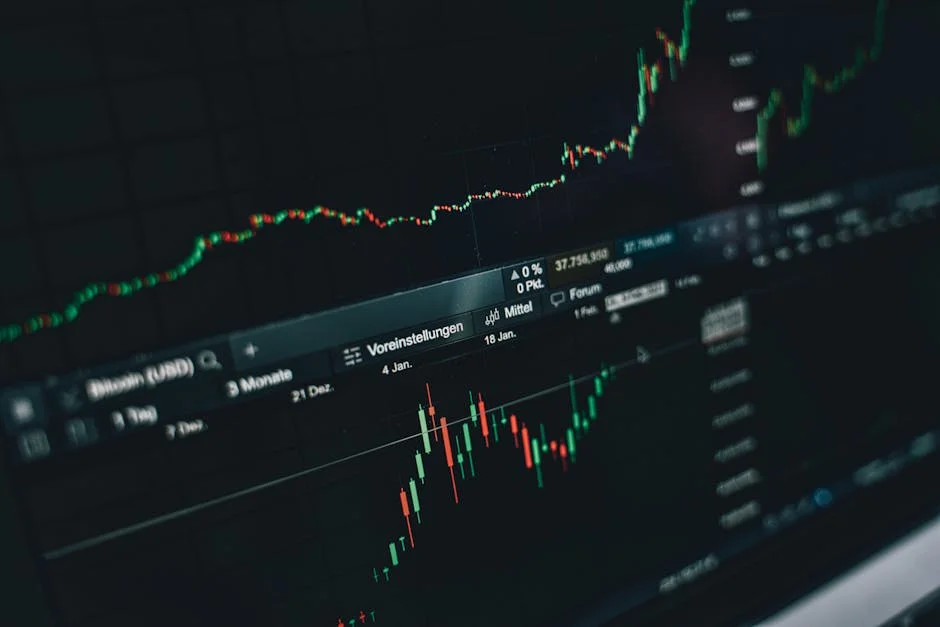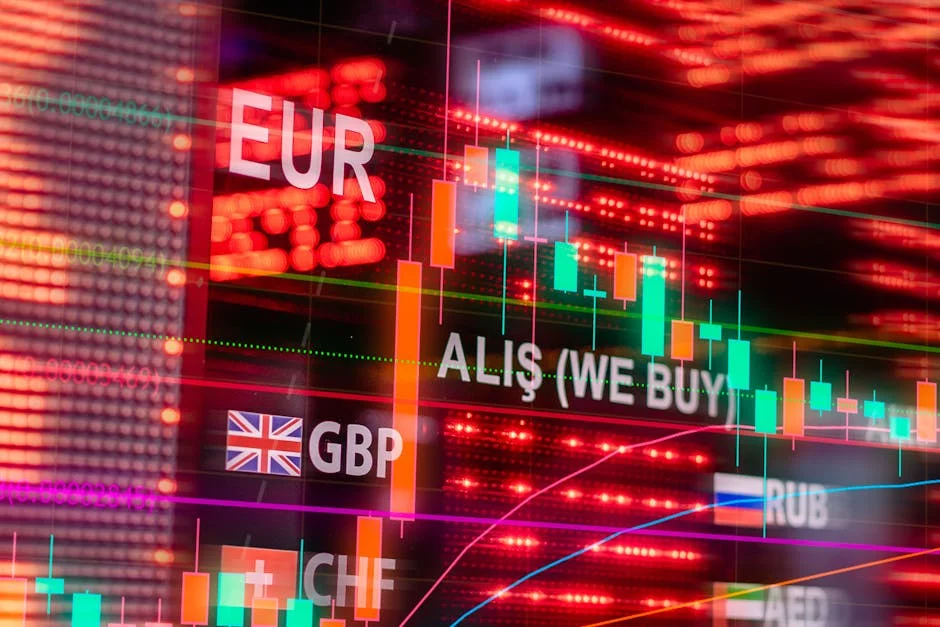
Choosing between stock options vs forex often comes down to how each market expresses risk, time, and pricing. Forex trading revolves around exchanging one currency for another, typically in pairs like EUR/USD or USD/JPY, where the price represents relative value between two economies. The market is decentralized, mostly over-the-counter, and driven by macroeconomic data, interest rate expectations, central bank policy, geopolitical risk, and cross-border capital flows. Stock options, by contrast, are derivative contracts whose value is tied to an underlying stock or index. An option gives the holder the right, but not the obligation, to buy or sell the underlying at a specified price (the strike) before or at a defined expiration. That single structural difference—spot exchange versus time-bound derivative—changes the entire experience: what you’re paying for, how you manage exposure, and how profits and losses unfold.
Table of Contents
- My Personal Experience
- Understanding the Core Difference Between Stock Options and Forex
- Market Structure, Trading Venues, and Liquidity Considerations
- Leverage, Margin, and Capital Efficiency
- Risk Profiles: Time Decay vs Continuous Price Exposure
- What Moves Prices: Macro Drivers vs Company and Volatility Drivers
- Trading Hours, Session Behavior, and Lifestyle Fit
- Costs, Spreads, Commissions, and Hidden Frictions
- Strategy Variety: Directional Trading, Hedging, and Income Approaches
- Expert Insight
- Regulation, Counterparty Risk, and Broker Considerations
- Comparison Table: Typical Attributes of Stock Options vs Forex for Retail Traders
- Learning Curve and Skill Transfer Between the Two Markets
- Who Tends to Prefer Stock Options vs Forex (Practical Trader Profiles)
- Building a Decision Framework: Choosing the Market That Matches Your Goals
- Common Mistakes and How to Avoid Them in Both Markets
- Final Takeaway: Choosing Between Stock Options vs Forex Without Forcing a One-Size-Fits-All Answer
- Watch the demonstration video
- Frequently Asked Questions
- Trusted External Sources
My Personal Experience
I started out trading forex because it felt accessible—low minimums, lots of pairs to watch, and the market moving almost 24/5—but I quickly learned how unforgiving leverage can be. A couple of “small” positions turned into outsized losses when spreads widened around news and my stop got slipped, and it was hard to tell whether I was losing to my strategy or just the noise. Later I switched to stock options, thinking they’d be even riskier, but the risk felt clearer: I could define my max loss by paying a premium and sizing smaller. I still got burned a few times holding contracts too close to expiration and watching theta eat them alive, yet I found it easier to plan trades around earnings, catalysts, and specific timeframes. For me, forex was faster and more emotional, while options forced me to slow down and think in probabilities and position sizing. If you’re looking for stock options vs forex, this is your best choice.
Understanding the Core Difference Between Stock Options and Forex
Choosing between stock options vs forex often comes down to how each market expresses risk, time, and pricing. Forex trading revolves around exchanging one currency for another, typically in pairs like EUR/USD or USD/JPY, where the price represents relative value between two economies. The market is decentralized, mostly over-the-counter, and driven by macroeconomic data, interest rate expectations, central bank policy, geopolitical risk, and cross-border capital flows. Stock options, by contrast, are derivative contracts whose value is tied to an underlying stock or index. An option gives the holder the right, but not the obligation, to buy or sell the underlying at a specified price (the strike) before or at a defined expiration. That single structural difference—spot exchange versus time-bound derivative—changes the entire experience: what you’re paying for, how you manage exposure, and how profits and losses unfold.
In stock options vs forex, pricing mechanics create different “sources of edge.” Forex prices move continuously and are quoted with tight spreads in liquid pairs, and traders often focus on trend, carry (interest rate differentials), macro catalysts, and technical levels. Options traders may focus on volatility, probability, and time decay. Options pricing bakes in implied volatility, time to expiration, interest rates, dividends, and the underlying’s price. That means an options position can be right on direction but still lose money if implied volatility collapses or if the move happens too slowly. Forex positions typically depend more directly on directional movement (or range behavior if using certain strategies), though swaps/rollover and leverage costs also matter. Understanding whether you want to trade direction alone or direction plus volatility and time is essential when comparing stock options vs forex.
Market Structure, Trading Venues, and Liquidity Considerations
Market structure is a major separator in stock options vs forex. Forex is primarily an OTC market where liquidity comes from a network of banks, non-bank liquidity providers, and electronic communication networks, and retail traders access it through brokers that provide pricing streams. This setup can lead to differences in execution quality depending on the broker model, liquidity conditions, and the pair traded. Major pairs can be extremely liquid with narrow spreads during active sessions, while exotic pairs can widen substantially, especially around news events. Because forex is global, it runs nearly 24 hours a day from Monday through Friday, which appeals to traders who want flexibility across time zones. That said, the “always on” feel can be a drawback for those who prefer defined sessions and more predictable liquidity windows.

Stock options are generally exchange-traded, with standardized contracts, centralized clearing, and a visible order book for many products. That structure can offer transparency about quoted prices and often reduces counterparty risk through clearinghouses. Liquidity can be excellent in popular names and index options, but it can be uneven in smaller stocks where bid-ask spreads are wider and slippage can be meaningful. Liquidity also varies by expiration and strike; at-the-money and near-term contracts often trade heavily, while deep out-of-the-money strikes may be thin. Comparing stock options vs forex in terms of liquidity is not simply “one is more liquid,” but rather “liquidity concentrates differently.” Forex concentrates liquidity by currency pair and session; options concentrate liquidity by underlying, strike, and expiration. Traders should match their strategy to where liquidity is deepest to reduce transaction costs and execution surprises.
Leverage, Margin, and Capital Efficiency
Leverage is frequently the headline topic in stock options vs forex because both can be capital-efficient, but they achieve it differently. In forex, leverage is explicit: brokers may allow traders to control a large notional position with a relatively small amount of margin. This can magnify gains and losses quickly, and it places a premium on position sizing and disciplined risk limits. Margin requirements and maximum leverage vary by jurisdiction and broker, and can change based on volatility or liquidity. Even when leverage is available, using the maximum is rarely prudent because normal market noise can trigger margin calls or stop-outs. Forex also has carrying costs, including the spread, potential commissions, and rollover/swap, which can either be a cost or a benefit depending on the interest rate differential of the currencies involved.
In stock options vs forex, options leverage is embedded in the contract’s payoff profile. Buying a call or put can control 100 shares per contract (in many markets) for a premium that is often far less than purchasing the shares outright. That can create large percentage returns on premium if the underlying moves favorably. However, the premium paid can be lost in full for long options, and the passage of time works against the buyer due to theta decay. Selling options can create a different kind of leverage: a trader collects premium up front but may face large losses if the underlying moves sharply, particularly for uncovered positions. Margin for options depends on whether positions are defined-risk (like spreads) or undefined-risk (like naked short options), and the broker’s risk model. Capital efficiency in stock options vs forex is therefore not only about leverage size but also about whether losses are bounded, how quickly risk can expand, and how predictable the worst-case scenario is.
Risk Profiles: Time Decay vs Continuous Price Exposure
The risk profile is where stock options vs forex diverge dramatically. Forex positions are typically linear: if you buy EUR/USD, your profit and loss generally move in a straight-line relationship with price changes, adjusted for position size and any financing. That makes the exposure intuitive, but it also means you are continuously exposed while the market is open, including to sudden gaps after weekends or during illiquid moments. Many forex traders rely on stop-loss orders, but stops are not guarantees; slippage can occur during fast markets. Risk management often becomes a process of limiting position size, avoiding overconcentration across correlated pairs, and being mindful of event risk such as central bank decisions, inflation releases, or unexpected geopolitical developments.
Stock options introduce non-linear exposure. In stock options vs forex, a long option has a defined maximum loss (the premium), which can be psychologically and mathematically appealing. But the probability of a full or partial loss can be higher than many beginners expect because time decay is relentless. Even if the underlying moves in the right direction, the move must be large enough and fast enough to overcome the premium and the implied volatility embedded in the price. Greeks—delta, gamma, theta, vega—become the language of risk. A trader might be directionally neutral but long volatility, or directionally bullish but short volatility, depending on the structure. Short option positions can look stable for long stretches while collecting premium, yet they can be exposed to tail risk when markets gap or volatility spikes. Evaluating stock options vs forex through the lens of “what can go wrong” is essential: forex risk is often about leverage and sudden price moves; options risk is about time, volatility regime shifts, and convexity that can help or hurt depending on position construction.
What Moves Prices: Macro Drivers vs Company and Volatility Drivers
Price drivers differ in stock options vs forex, shaping how traders build a thesis. Forex is macro-heavy. Interest rate differentials, yield curves, inflation expectations, employment data, trade balances, commodity linkages (for currencies like CAD or AUD), and central bank communication can all move currency pairs. Because currencies trade relative to each other, a “good” economic report in one country may not move the pair if the other country prints even better data. Correlations and risk sentiment also matter: in risk-off environments, safe-haven flows can dominate fundamentals. Many forex traders therefore track economic calendars and learn how markets tend to react to surprises versus expectations, not just the raw numbers.

In stock options vs forex, stock options are affected by the underlying stock’s movement, but also by implied volatility and event expectations. Earnings announcements, product launches, litigation outcomes, regulatory decisions, and sector rotation can shift both price and volatility. A stock might not move much, yet options can lose value if the market had priced in a big move that never arrives—classic “volatility crush” after earnings. Conversely, options can become expensive heading into events, which can make buying them less attractive unless the trader expects an outsized surprise. Index options can be driven by broader macro factors similar to forex—rates, inflation, risk sentiment—yet still trade with their own volatility dynamics. The key distinction is that options embed the market’s forecast of future volatility, so traders must consider not only where price might go, but also how uncertain the path will be. That’s a central theme when weighing stock options vs forex as a primary trading focus.
Trading Hours, Session Behavior, and Lifestyle Fit
Trading hours shape strategy selection in stock options vs forex. Forex’s near-24/5 schedule allows participation during Asian, European, and North American sessions, with distinct volatility patterns. Liquidity often peaks during the London session and the London-New York overlap, when spreads can tighten and price action can be more responsive. This flexibility helps traders with nontraditional schedules, but it can also tempt overtrading or lead to fatigue because the market is always offering another setup. Additionally, news can hit at any time, and even if the market is closed over the weekend, geopolitical events can cause gaps at the open. For some traders, the constant availability is a benefit; for others, it becomes a source of stress.
Stock options trading is generally tied to stock market hours, with some extended-hours activity in the underlying shares but more limited liquidity for options outside regular sessions. In stock options vs forex, that can be a lifestyle advantage: there’s a clear open and close, and many traders can plan around it. It can also be a constraint if a trader’s schedule doesn’t align with market hours. Another practical difference is that options strategies can be structured to express a view without watching every tick. A defined-risk spread can be placed with a planned max loss and a target, allowing the trader to step away. Forex can be managed similarly with stops and limits, but leverage and session-based volatility can make active monitoring more important for some approaches. The best “fit” depends on whether a trader wants constant access or prefers bounded trading windows, a decision that sits at the heart of stock options vs forex for many retail participants.
Costs, Spreads, Commissions, and Hidden Frictions
Transaction costs can decide profitability, especially for short-term strategies, making them a critical part of stock options vs forex. In forex, costs often appear as spreads, commissions (on certain account types), and financing/rollover. Spreads can be very low in major pairs during liquid periods, but they can widen sharply during news releases, illiquid session transitions, or market stress. Slippage and re-quotes (depending on broker execution) can also add friction. Rollover is frequently misunderstood: holding a position overnight can incur a swap cost or yield a credit, depending on the interest rate differential and the broker’s markup. For traders who hold positions for days or weeks, these financing effects can accumulate and materially affect returns.
Stock options have their own cost structure in stock options vs forex. Options typically have a bid-ask spread that can be wider than the underlying stock’s spread, especially in less liquid names or far-out strikes. Many brokers charge per-contract commissions or fees, though pricing varies widely by region and platform. Options also embed implied volatility, which is not a fee but acts like a “price of uncertainty.” Paying high implied volatility can be costly if realized volatility ends up lower. Assignment and exercise mechanics can also create costs or operational risk if a trader doesn’t manage positions around expiration or ex-dividend dates. Additionally, multi-leg strategies multiply contract fees and add spread costs across each leg. When comparing stock options vs forex, a trader should match the product to the intended holding period: ultra-short-term scalping can be cost-sensitive in both markets, while swing trading might tolerate higher spreads if the expected move is large enough.
Strategy Variety: Directional Trading, Hedging, and Income Approaches
Strategy variety is a major selling point in stock options vs forex, but it manifests differently. Forex strategies often focus on directional trades, breakouts, mean reversion, carry trades, and event-driven plays. Because currencies are relative, traders can express views like “higher US rates versus Japan” by trading USD/JPY, or “commodity strength” via AUD pairs, though correlations can change. Hedging in forex can be straightforward for businesses and investors with currency exposure, but for retail traders it can become complex if multiple pairs create unintended correlations. Some traders attempt income-like approaches via positive swaps in carry trades, but those strategies can unwind violently when risk sentiment shifts.

Expert Insight
If you’re choosing between stock options vs forex, start by matching the instrument to your goal and schedule: use stock options when you want defined-risk strategies tied to specific companies or indexes, and use forex when you need high liquidity and frequent opportunities driven by macro events. Before placing a trade, write down your maximum loss (premium paid for options, or stop-loss distance for forex) and size the position so that loss is a small, fixed percentage of your account.
Build a repeatable plan around volatility and catalysts: for stock options, avoid overpaying for implied volatility by checking IV rank and favoring spreads when premiums are expensive; for forex, trade around a clear session (London/NY overlap) and confirm the economic calendar so you’re not surprised by rate decisions or CPI releases. In both markets, track results by strategy (not by instrument) and review a small set of metrics weekly—win rate, average win/loss, and maximum drawdown—to refine what actually works. If you’re looking for stock options vs forex, this is your best choice.
Stock options can be engineered for highly specific payoffs, which is a defining advantage in stock options vs forex. Directional trades can be expressed with calls, puts, vertical spreads, or ratio spreads. Traders can hedge a stock portfolio with protective puts or collars, potentially limiting downside while sacrificing some upside. Income-focused approaches are common, such as covered calls or cash-secured puts, though they still carry risk—covered calls cap upside and can underperform in strong rallies, while short puts can suffer in sharp selloffs. Volatility strategies like straddles, strangles, iron condors, and calendars allow traders to express views on whether the market will move a lot, a little, or at a particular time horizon. Forex can replicate some non-linear payoffs using options on currencies, but that’s a separate market many retail traders don’t access. For many individuals comparing stock options vs forex, the ability to tailor risk with defined spreads and probability-based setups is a decisive factor.
Regulation, Counterparty Risk, and Broker Considerations
Regulation and counterparty risk are practical realities in stock options vs forex. Exchange-traded options are generally cleared through central counterparties, which reduces the risk that the other side of your trade defaults. Brokers still matter—platform stability, order routing, margin policies, and customer protection rules vary—but the market plumbing is designed to mitigate counterparty exposure. Regulatory frameworks often require disclosures about options risks, and in many jurisdictions options approval levels restrict complex or leveraged strategies for inexperienced accounts. These hurdles can be frustrating, yet they exist because option leverage and tail risk can be severe.
| Aspect | Stock Options | Forex |
|---|---|---|
| Underlying & Market Structure | Derivatives on individual stocks or indices; standardized contracts typically traded on regulated exchanges. | Currency pairs (e.g., EUR/USD); largely decentralized over-the-counter (OTC) market via brokers/liquidity providers. |
| Leverage, Risk & Payoff | Defined contract terms (strike/expiry); can have limited risk for buyers (premium paid) and complex payoff profiles (spreads, hedges). | Often high leverage; profit/loss moves linearly with price changes; risk can escalate quickly without strict position sizing and stop management. |
| Trading Hours, Liquidity & Costs | Usually tied to stock market hours; liquidity varies by ticker/expiry; costs include premium, bid-ask spreads, and commissions/fees. | 24/5 trading; generally deep liquidity in major pairs; costs commonly via spreads and/or commissions plus potential rollover (swap) fees. |
Forex regulation depends heavily on jurisdiction, and the OTC nature of the market makes broker selection especially important in stock options vs forex. Retail traders should evaluate whether a broker is properly regulated, how funds are segregated, what investor protections exist, and how execution is handled (market maker versus agency/ECN models). Some brokers offer negative balance protection; others do not. Pricing quality, slippage statistics, and the transparency of commissions and swaps can differ significantly. Because forex is decentralized, there is no single “official” exchange price; feeds can vary slightly across providers, which can impact stop placement and fills during volatile moments. Comparing stock options vs forex without considering broker and regulatory context misses a key layer of risk: the product may be sound, yet the trading environment can change the outcomes through execution, leverage limits, and operational safeguards.
Comparison Table: Typical Attributes of Stock Options vs Forex for Retail Traders
Practical decision-making in stock options vs forex improves when the comparison is anchored to attributes that affect day-to-day trading: costs, flexibility, risk boundaries, and learning curve. The table below summarizes common characteristics seen by retail traders using mainstream brokers. Actual conditions depend on jurisdiction, broker, and the specific instrument traded, but the categories reflect what most traders experience when choosing between stock options and spot forex. Ratings are generalized perceptions among retail users, not a guarantee of performance or safety, and “Price” reflects typical cost framing rather than a single fixed fee.
Using a structured comparison helps avoid choosing a market purely based on anecdotes. A trader who values defined-risk setups might lean toward options spreads, while a trader who wants near-24/5 access and tight spreads in major pairs might prefer forex. The most suitable choice in stock options vs forex is the one that matches capital size, time availability, tolerance for complexity, and the ability to manage risk consistently. Reviewing the attributes side by side can also reveal a hybrid approach: some traders use forex for macro themes and options for hedging equity exposure, or they specialize in one while learning the other slowly.
| Name | Features | Ratings (Retail Fit) | Price (Typical Cost Framing) |
|---|---|---|---|
| Stock Options (Equity/Index) | Exchange-traded, standardized contracts; defined-risk spreads; volatility-based strategies; Greeks and expiration | 4.4/5 for flexibility; 3.7/5 for beginner simplicity | Premium paid/received + bid-ask spread + per-contract fees (varies) |
| Forex (Spot) | OTC market; near-24/5 trading; macro-driven; leverage via margin; swap/rollover | 4.2/5 for access; 3.5/5 for risk control with leverage | Spread and/or commission + rollover/swap + slippage during volatility |
| Forex (Currency Options, where available) | Non-linear payoffs; hedging; volatility exposure similar to equity options | 3.9/5 for precision; 3.2/5 for platform availability | Option premium + spread/markup (often wider than spot) |
| Single-Stock CFDs (where permitted) | Linear exposure to stocks with leverage; no expiration; broker-dependent execution | 3.6/5 for convenience; 3.1/5 for transparency | Spread + financing/overnight fees |
Learning Curve and Skill Transfer Between the Two Markets
The learning curve is a real differentiator in stock options vs forex because each market rewards different competencies. Forex traders often begin with chart reading, support/resistance, trend identification, and the habit of following an economic calendar. Over time, successful forex trading usually requires an understanding of how rates expectations are priced, what central banks prioritize, and how positioning and risk sentiment influence moves. While technical analysis can work, the macro backdrop can quickly overwhelm purely chart-based assumptions, especially around major data releases. Risk control becomes a foundational skill because leverage can turn a small price move into a large account swing. Many traders also need to learn correlation management: being long USD across multiple pairs can create hidden concentration that behaves like one oversized bet.
Stock options demand additional layers of knowledge in stock options vs forex. Beyond direction, traders must understand expiration cycles, implied versus realized volatility, and the Greeks. The same underlying forecast can be expressed with many different structures—buying a call, selling a put, running a debit spread, or using a calendar—each with different probabilities and risk/reward. That flexibility is powerful but can overwhelm beginners who treat options like lottery tickets. Skill transfer does exist: risk management, position sizing, and discipline matter in both. Technical analysis can help in both. But options require comfort with probabilistic thinking and scenario analysis. Traders who enjoy systems, statistics, and designing payoffs often find options engaging, while those who prefer a simpler, more direct exposure might prefer forex. When evaluating stock options vs forex, it helps to ask which type of complexity you’d rather master: macro and leverage dynamics, or volatility and time decay dynamics.
Who Tends to Prefer Stock Options vs Forex (Practical Trader Profiles)
Different trader profiles gravitate toward different products, and stock options vs forex is often a question of personality and constraints rather than which market is “better.” Traders who already follow equities, understand business models, and track earnings and sector news often find stock options intuitive because the underlying stories feel familiar. Investors with long-term stock holdings may also use options as overlays—covered calls for potential income, protective puts for downside hedging, or collars to define a range. These participants may not want to trade frequently; they want to shape outcomes around known events and time frames. Options can also appeal to traders who want predefined worst-case risk through spreads, especially when they prefer to avoid the open-ended exposure that can come with high leverage products.
Forex tends to attract traders who enjoy macroeconomics, global news, and the rhythm of international sessions, which is a distinct appeal in stock options vs forex. People with schedules that don’t align with stock market hours may prefer forex’s flexibility. Some traders like the clean, linear exposure: buy or sell a pair, manage stops, and let the market move without worrying about expiration. Others are drawn by the perceived simplicity of major pairs and the availability of leverage, though that same leverage is also the reason many accounts struggle. Ultimately, the most sustainable path is usually the one that fits the trader’s life: time available for monitoring, ability to handle overnight risk, comfort with complexity, and willingness to keep position sizes modest. Comparing stock options vs forex through the lens of “what will I consistently execute well for years?” is more useful than focusing on the most exciting potential returns.
Building a Decision Framework: Choosing the Market That Matches Your Goals
A practical framework for stock options vs forex starts with clarifying your primary objective: speculation, hedging, income generation, or diversification. If the goal is hedging equity exposure, stock options often provide a direct toolset because the hedge can be tightly linked to the portfolio’s holdings or to an index benchmark. If the goal is expressing a macro view—such as diverging central bank policy paths—forex may be the most direct instrument, especially for traders who can monitor key data releases and understand how expectations are priced. If the goal is shorter-term trading, both markets can work, but costs and execution quality become decisive: major forex pairs can be cost-efficient; highly liquid index options can also be efficient, but less liquid stock options may not be.

Risk tolerance and account size matter when weighing stock options vs forex. A smaller account might be tempted by forex leverage, yet that can create fragile risk profiles if position sizing is not conservative. Options can be used with defined risk by buying premium or using spreads, but frequent trading can rack up fees and spread costs. Time horizon is another key: options decay makes them naturally time-sensitive; forex positions can be held longer, but financing and macro regime changes can alter the thesis. A helpful approach is to paper trade both with realistic assumptions about spreads and slippage, then compare not only returns but also the smoothness of the equity curve and the emotional load. The best choice in stock options vs forex is typically the one where the trader can keep risk small, stay consistent, and avoid strategies that rely on rare, high-stress outcomes to succeed.
Common Mistakes and How to Avoid Them in Both Markets
Many losses in stock options vs forex come from predictable mistakes rather than bad luck. In forex, a frequent error is overleveraging: using large position sizes relative to account equity and placing stops too tight, causing repeated stop-outs that erode confidence and capital. Another common issue is trading every news event without understanding how expectations are already priced in, leading to whipsaw. Traders also underestimate correlation; holding multiple trades that are effectively the same USD bet can create sudden drawdowns when the dollar reverses. A practical safeguard is to cap risk per trade (for example, a small percentage of equity), limit total exposure across correlated positions, and avoid widening stops to “give the trade room” after entering too large.
In options, the classic mistake in stock options vs forex is buying cheap out-of-the-money contracts repeatedly because the premium looks small, without recognizing that probability is also small and time decay is working against the position. Another mistake is selling premium without respecting tail risk, especially with naked calls or short puts in volatile names, where a gap can overwhelm margin and force liquidation. Traders also misread implied volatility: buying options when implied volatility is elevated can mean paying a high price for uncertainty, while selling options into low volatility can leave little cushion if volatility expands. Avoiding these pitfalls often involves choosing liquid underlyings, understanding the Greeks, preferring defined-risk spreads when selling premium, and planning exits before entry. Across stock options vs forex, the shared discipline is risk-first thinking: define risk, size conservatively, and assume that rare events do happen.
Final Takeaway: Choosing Between Stock Options vs Forex Without Forcing a One-Size-Fits-All Answer
The most useful conclusion about stock options vs forex is that each market rewards a different kind of preparation. Forex offers broad access, deep liquidity in major pairs, and a macro-driven environment with near-24/5 trading, but it demands respect for leverage, event risk, and broker execution quality. Stock options offer structural flexibility, the ability to define risk with certain strategies, and ways to trade volatility and time, but they require an understanding of expiration, implied volatility, and how the Greeks reshape profit and loss. The better choice is the one that aligns with your objectives, schedule, and temperament, and that you can execute with consistent risk controls. For many traders, the smartest path is to master one arena first, then add the other only when the edge and workflow are clear, because the real advantage in stock options vs forex comes from disciplined repetition rather than constant switching.
Watch the demonstration video
In this video, you’ll learn how stock options and forex trading compare in risk, leverage, liquidity, and market hours. We’ll break down how each market works, what moves prices, typical costs and spreads, and which strategies fit different goals—so you can decide which approach better matches your experience, time commitment, and risk tolerance. If you’re looking for stock options vs forex, this is your best choice.
Summary
In summary, “stock options vs forex” is a crucial topic that deserves thoughtful consideration. We hope this article has provided you with a comprehensive understanding to help you make better decisions.
Frequently Asked Questions
What’s the main difference between stock options and forex trading?
Stock options are contracts tied to a specific stock giving the right (not obligation) to buy/sell at a set price by a date; forex trading involves exchanging currency pairs where price moves are based on relative currency values. If you’re looking for stock options vs forex, this is your best choice.
Which market is typically more liquid: stock options or forex?
Major forex pairs tend to be highly liquid and trade almost around the clock, five days a week. By contrast, when comparing **stock options vs forex**, options liquidity can vary widely depending on the underlying stock, strike price, and expiration date—and trading is typically confined to normal exchange hours.
How does leverage work in stock options vs forex?
Options build in leverage because a relatively small premium can control a much larger underlying position, and the payoff can be highly nonlinear. In **stock options vs forex**, forex trading typically relies on broker-provided margin with more linear price exposure—so even modest currency moves can translate into outsized gains or losses in your account.
How is risk defined and managed in each?
When you buy long options, your downside is typically capped at the premium you pay. In contrast, with spot or margin forex trading, losses can go beyond your initial margin unless you use solid risk controls like stop-loss orders and disciplined position sizing—one of the key differences to understand in the **stock options vs forex** debate.
What costs should traders compare between options and forex?
When comparing **stock options vs forex**, it’s important to understand how trading costs add up. With options, you’ll typically pay the bid-ask spread and any commissions or platform fees, and you also face time decay (theta), which can steadily erode an option’s value. In forex, costs usually come from the spread, possible commissions depending on your broker, and overnight financing or swap charges if you hold positions past the daily rollover.
Which is better for hedging: stock options or forex?
Options are widely used to hedge equity positions and event risk with defined structures (puts, collars); forex is commonly used to hedge currency exposure for international holdings or cash flows. If you’re looking for stock options vs forex, this is your best choice.
? Looking for more info about stock options vs forex? Follow Our Site for updates and tips!

Trusted External Sources
- why do you like forex over stock options : r/Daytrading – Reddit
As of Oct 13, 2026, many traders weighing **stock options vs forex** find that forex stands out for its straightforward setup and deep liquidity, making it easy to enter and exit positions quickly. Stock options, on the other hand, appeal to those who want more flexibility—using strategies that can define risk, hedge existing holdings, or tailor trades to specific market views—so the best choice comes down to your goals, experience level, and how you prefer to manage risk.
- Forex vs Options Compared and Examined – SoFi
As of Nov 17, 2026, traders are still weighing **stock options vs forex** and noticing some clear differences. Forex trading focuses on buying and selling currency pairs like EUR/USD, with prices moving based on global economic and political events. Stock options, on the other hand, involve contracts tied to individual stocks, giving you the right (but not the obligation) to buy or sell shares at a set price before a specific expiration date.
- Forex/futures/options..which one? : r/Trading – Reddit
Jul 13, 2026 … Forex would be the best option. Stocks is the best but you will be limited how many trades you can open and close because of PDT, which is … If you’re looking for stock options vs forex, this is your best choice.
- Pros and Cons: Forex vs Options – SmartAsset
As of Aug 7, 2026, a solid rule of thumb is to treat options as a step more speculative than buying or selling individual stocks, while forex trading often carries even higher risk due to leverage and fast-moving currency markets—especially when weighing **stock options vs forex** for your strategy.
- What do you prefer Forex / Stocks or Options trading? – Reddit
As of June 8, 2026, I’ve come to prefer forex over stocks and options—when it comes to **stock options vs forex**, the fast-paced action and truly global reach of the currency markets feel more exciting and, for me, more rewarding.