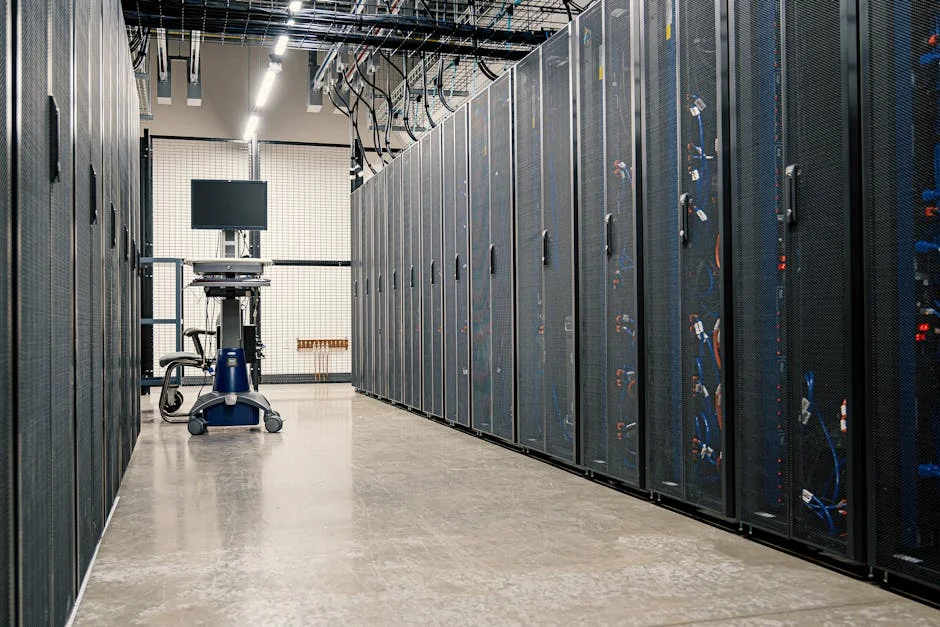
Data center REITs have become a defining feature of modern real estate investing because the “property” they own sits at the crossroads of physical infrastructure and the digital economy. A traditional office building earns rent by providing desks, elevators, and a location; a data center earns rent by providing power, cooling, security, and connectivity that allow servers to run around the clock. That difference changes how investors think about tenants, lease structures, operating costs, and long-term demand. Instead of asking how many employees will commute to a building, investors look at cloud adoption, artificial intelligence training workloads, enterprise IT outsourcing, streaming traffic, and the reliability requirements of industries like finance and healthcare. A data center landlord is effectively selling uptime and capacity, and the quality of that service can be as important as the zip code.
Table of Contents
- My Personal Experience
- Understanding Data Center REITs and Why They Matter
- How Data Centers Create Value: Power, Cooling, and Connectivity
- Types of Data Center REITs: Wholesale, Retail Colocation, and Hyperscale Mix
- Key Demand Drivers: Cloud, AI, Edge Computing, and Enterprise Migration
- Supply Constraints and the Importance of Power Availability
- How Data Center REITs Make Money: Lease Structures and Revenue Components
- Evaluating Financial Metrics: FFO, AFFO, Leverage, and Development Yields
- Risks Specific to Data Center REITs: Technology Shifts, Concentration, and Regulation
- Expert Insight
- Geography and Market Selection: Why Location Still Matters
- Sustainability, Energy Procurement, and the Path to Lower Carbon Operations
- Dividend Potential and Total Return: What Income Investors Should Know
- How to Compare Leading Data Center REITs: A Practical Checklist
- Future Outlook: What Could Shape the Next Decade of Data Center Investing
- Conclusion: Positioning a Portfolio Around Digital Infrastructure
- Watch the demonstration video
- Frequently Asked Questions
- Trusted External Sources
My Personal Experience
I first looked into data center REITs after my old dividend portfolio got hammered by rising rates and I realized I was overexposed to traditional office and retail. I liked the idea of owning the “picks and shovels” behind cloud computing, but the financials were different than what I was used to—power costs, lease terms, and how quickly tenants can scale up or down mattered as much as occupancy. I started small with a couple of the bigger names and forced myself to read the quarterly calls, especially the parts about capacity additions and pre-leasing. What surprised me was how volatile the stocks could be even when the businesses seemed steady; a single update on hyperscaler demand or new supply in a key market would move everything. Over time I treated them less like a safe bond substitute and more like a growth-tilted real estate sleeve, and that mindset helped me hold through the swings.
Understanding Data Center REITs and Why They Matter
Data center REITs have become a defining feature of modern real estate investing because the “property” they own sits at the crossroads of physical infrastructure and the digital economy. A traditional office building earns rent by providing desks, elevators, and a location; a data center earns rent by providing power, cooling, security, and connectivity that allow servers to run around the clock. That difference changes how investors think about tenants, lease structures, operating costs, and long-term demand. Instead of asking how many employees will commute to a building, investors look at cloud adoption, artificial intelligence training workloads, enterprise IT outsourcing, streaming traffic, and the reliability requirements of industries like finance and healthcare. A data center landlord is effectively selling uptime and capacity, and the quality of that service can be as important as the zip code.

At a practical level, data center REITs are publicly traded real estate investment trusts that own, develop, or operate data centers and distribute most taxable income to shareholders as dividends. Many investors like the clarity of the REIT structure, the liquidity of public markets, and the potential inflation protection that can come from leases that renew at higher rates when demand is strong. At the same time, these companies are more operationally intensive than many real estate categories because electricity procurement, cooling efficiency, and network interconnection directly affect profitability. Their campuses can resemble industrial plants more than “buildings,” with redundant substations, backup generators, and complex mechanical systems. The result is a sector where real estate fundamentals blend with infrastructure management, and where the competitive moat often comes from scale, balance sheet strength, and the ability to build quickly in constrained power markets.
How Data Centers Create Value: Power, Cooling, and Connectivity
To understand why data center REITs can command premium valuations, it helps to break down what customers are buying. The first input is power. Servers consume electricity, and modern AI clusters can draw enormous loads per rack. Data centers must secure utility capacity, often years in advance, and design electrical distribution that can handle high-density deployments safely. For many operators, power availability has become the primary bottleneck to new supply, especially in mature hubs where the grid is constrained. Data center landlords that can obtain power allocations, build substations, and negotiate competitive electricity rates can monetize that advantage through higher occupancy, faster leasing, and better pricing. Power is also central to sustainability commitments; tenants increasingly want proof of renewable energy sourcing, carbon reporting, and efficiency metrics.
Cooling and connectivity are the other pillars. Cooling systems remove heat from IT equipment, and the costs of chillers, cooling towers, and airflow engineering can be substantial. Efficient designs can reduce energy overhead, often measured by PUE (power usage effectiveness), and that efficiency can translate into competitive pricing or improved margins. Connectivity refers to the network ecosystem: proximity to fiber routes, carrier hotels, cloud on-ramps, and dense interconnection markets where many networks meet. In those environments, a facility becomes more valuable because tenants can connect to partners and customers with lower latency and fewer hops. That creates a “network effect” that is hard to replicate, which is why certain campuses become sticky over time. Investors evaluating data center REITs often focus on how well each platform combines power procurement, efficient mechanical design, and connectivity density to create durable pricing power.
Types of Data Center REITs: Wholesale, Retail Colocation, and Hyperscale Mix
Data center REITs are not all the same, and the business model mix matters for risk and return. Wholesale data centers typically lease large blocks of capacity—sometimes entire halls or buildings—to a single customer, often a cloud provider or large enterprise. These leases can be long-term and provide predictable cash flow, but they may concentrate revenue among a small number of tenants. Retail colocation, by contrast, leases smaller footprints such as cages or racks to many customers and often includes rich interconnection services. Retail can generate higher revenue per megawatt and strong cross-connect fees, but it can require more sales effort, customer support, and continual upgrades to meet diverse needs.
Many public platforms operate a blended strategy, combining hyperscale build-to-suit projects with colocation campuses in major metros. The mix influences churn, margin profile, and capital intensity. Hyperscale customers may demand rapid delivery and large expansions, which can keep development pipelines active but also require significant upfront capital. Colocation customers may grow more gradually, but their ecosystem can be sticky and less sensitive to a single renewal event. When comparing data center REITs, it helps to look beyond labels and examine leasing spreads, tenant concentration, average contract length, renewal rates, and the proportion of revenue tied to power pass-through versus higher-margin services. A diversified approach can reduce dependence on any one demand driver, but it also demands operational excellence across multiple go-to-market motions.
Key Demand Drivers: Cloud, AI, Edge Computing, and Enterprise Migration
The demand story for data center REITs is rooted in the continued expansion of digital workloads. Cloud computing remains a major force as companies move applications and storage from on-premises server rooms to scalable infrastructure. Even when organizations keep certain workloads in private environments for compliance or performance reasons, they often need colocation space to house private cloud hardware near major network hubs. AI has added a new layer of intensity: training and inference workloads can require dense GPU deployments and high power per rack, pushing facilities to support higher megawatt loads and advanced cooling methods. As AI adoption spreads, demand may shift toward both large training clusters and distributed inference nodes closer to users.
Edge computing is another driver, though it is sometimes misunderstood. Not every “edge” site is a small box on a cell tower; much of the edge strategy involves placing compute in regional data centers closer to population centers to reduce latency and improve user experience. Streaming media, online gaming, financial trading, and real-time collaboration tools all benefit from low latency. Meanwhile, enterprise migration continues as companies modernize legacy applications, adopt hybrid cloud architectures, and use colocation as a bridge between private systems and public cloud. These forces interact with broader economic conditions, but they are not purely cyclical in the way some property types are. For investors, the key is recognizing that demand can be strong while still being uneven across markets, depending on power availability, fiber density, and the presence of cloud regions. That unevenness is why market selection and development execution are central to how data center REITs outperform.
Supply Constraints and the Importance of Power Availability
Supply is often the swing factor in pricing for data center REITs, and today the most critical constraint is power. In several major hubs, utilities have slowed new connections or extended timelines due to grid upgrades, transformer shortages, and competing demands from electrification trends. When a landlord controls land with secured power rights, that site can become far more valuable than an otherwise similar parcel. This dynamic shapes development strategy: companies may acquire powered shells, negotiate long-term utility agreements, invest in on-site substations, or pursue markets where power is more plentiful. It also influences the pace of new supply, which can support pricing when demand remains firm.

Construction capacity and equipment lead times add another layer. Data centers use specialized gear such as switchgear, generators, UPS systems, and advanced cooling components. Delays in these supply chains can extend delivery schedules and affect the timing of revenue. Labor availability, permitting complexity, and community concerns about water use or diesel generators can also slow projects. Some operators explore alternative cooling approaches and renewable integration, but these solutions can require additional engineering and capital. For investors assessing data center REITs, it is useful to track not only announced development pipelines, but also the proportion of that pipeline with secured power, the visibility into delivery dates, and the pre-leasing level. In a constrained environment, execution becomes a competitive advantage: the ability to deliver capacity when customers need it can translate into stronger leasing spreads and higher returns on invested capital.
How Data Center REITs Make Money: Lease Structures and Revenue Components
The revenue model for data center REITs typically includes base rent for space and recurring charges related to power and services. Many contracts include power as a pass-through expense, where tenants pay for the electricity they consume plus a markup or management fee. This structure can reduce commodity price risk for the landlord, but it also means reported revenue may rise with electricity costs even if margins do not. Investors therefore pay close attention to measures like net operating income, adjusted funds from operations, and cash flow after maintenance capital expenditures. Additional revenue can come from interconnection fees, cross-connects, remote hands services, and managed offerings, particularly in retail colocation facilities where customers value network density and operational support.
Lease terms can range from a few years in colocation to a decade or more in hyperscale deals. Escalators may be fixed annual increases or tied to inflation indices, and renewals can reset pricing depending on market conditions and the cost to move equipment. Switching costs are meaningful: migrating critical IT infrastructure is complex, risky, and time-consuming, which can support retention. However, large customers with significant scale may have negotiating power, especially if they can build their own facilities. A nuanced view of data center REITs includes understanding customer mix, the share of revenue from the top tenants, and how pricing is set for incremental megawatts. The best platforms often combine long-term contracted cash flows with the ability to capture growth through expansions, new developments, and value-added services that deepen customer relationships.
Evaluating Financial Metrics: FFO, AFFO, Leverage, and Development Yields
Investors often start with FFO (funds from operations) and AFFO (adjusted funds from operations) when comparing data center REITs, but the details matter. FFO adds back depreciation and adjusts for certain gains, which can better reflect the cash-generating nature of real estate. AFFO goes further by subtracting recurring capital expenditures and other normalization items to approximate distributable cash flow. Because data centers require ongoing investments in electrical and mechanical systems, as well as tenant improvements, a careful look at maintenance versus growth capex helps avoid overstating free cash flow. Dividend coverage is important too; some companies retain cash to fund development, while others rely more heavily on debt and equity markets.
Leverage and interest rate exposure can materially affect returns. Development is capital intensive, and many operators carry significant debt to fund land, shells, and powered capacity. The ability to refinance at reasonable rates and maintain investment-grade metrics can influence growth opportunities, especially when equity valuations are volatile. Another key metric is development yield: the stabilized return on cost for new projects relative to market cap rates and the company’s cost of capital. If a REIT can build at attractive yields and lease quickly, development becomes a powerful engine of value creation. Conversely, if leasing slows or construction costs rise, returns can compress. When analyzing data center REITs, it is helpful to look at pre-leasing percentages, the proportion of projects that are build-to-suit versus speculative, and historical performance in meeting budgets and delivery timelines. These factors often explain why some platforms trade at premiums and others lag despite operating in the same broad sector.
Risks Specific to Data Center REITs: Technology Shifts, Concentration, and Regulation
Data center REITs benefit from secular growth, but they carry sector-specific risks that deserve attention. Technology changes can alter facility requirements. Higher-density racks may require liquid cooling or different airflow designs, and older buildings may need retrofits to remain competitive. Connectivity standards evolve, and customers may demand new security certifications or compliance features. Although data centers are long-lived assets, the pace of IT change can force continuous modernization. Operators that underinvest in upgrades can face leasing challenges, while those that overbuild ahead of demand can suffer from underutilized capacity.
| REIT type | What you’re investing in | Typical revenue drivers | Key risks to watch |
|---|---|---|---|
| Hyperscale-focused data center REITs | Large, high-capacity campuses leased to major cloud providers | Longer leases, high utilization, expansion phases, power availability | Tenant concentration, pricing pressure from large customers, power constraints |
| Colocation/interconnection data center REITs | Multi-tenant facilities supporting enterprise IT and network-heavy workloads | Recurring colocation fees, cross-connects/interconnection, churn management | Competition in key metros, higher operating complexity, customer churn |
| Edge/regional data center REITs | Smaller facilities closer to end users for latency-sensitive applications | Distributed footprint demand, local enterprise/ISP contracts, incremental upgrades | Fragmented markets, slower scale benefits, technology and demand uncertainty |
Expert Insight
Prioritize data center REITs with long weighted-average lease terms, high renewal rates, and investment-grade tenant exposure; these factors can stabilize cash flow through rate cycles. Review the debt ladder and interest-rate hedging to confirm near-term maturities won’t pressure dividends or force dilutive equity raises.
Track power availability and pricing in core markets, since power constraints can cap growth even when demand is strong. Favor operators with contracted power pipelines, proven development execution, and disciplined capital allocation—measured by pre-leasing levels and targeted stabilized yields on new builds. If you’re looking for data center reits, this is your best choice.
Tenant concentration is another risk, particularly in wholesale portfolios where a few large cloud customers can represent a meaningful share of revenue. While those tenants are often creditworthy, they can have significant bargaining power and may pursue self-build strategies in certain markets. Power and regulatory issues also loom large. Local governments may impose restrictions related to energy usage, emissions from backup generators, noise, or water consumption. Grid reliability concerns can lead to curtailment programs or higher demand charges. Cybersecurity and physical security are critical operational priorities; a major outage or breach can damage reputation and lead to customer losses. Finally, the sector is sensitive to capital markets because development requires funding; higher interest rates can raise the cost of capital and pressure valuations. A balanced view of data center REITs weighs these risks against the durability of demand, the stickiness of customer relationships, and the operator’s track record in adapting facilities to new workloads.
Geography and Market Selection: Why Location Still Matters
Even though digital traffic moves at the speed of light, location remains a core determinant of success for data center REITs. Major hubs often form around dense populations, enterprise headquarters, cloud regions, and fiber intersections. Northern Virginia is a frequently cited example because of its concentration of network routes and cloud infrastructure, but other hubs emerge for different reasons: proximity to financial markets, submarine cable landings, or regional enterprise demand. The best locations combine reliable power, supportive permitting, and strong connectivity options. Being in the “right” market can reduce time to lease, raise achievable pricing, and create opportunities for campus expansion.

However, market selection is not just about entering popular hubs; it is about timing and constraints. When a market becomes power constrained, the value shifts to operators with existing land banks and utility relationships. Secondary markets can also offer attractive opportunities when they benefit from new fiber builds, growing cloud presence, or regional edge demand. International diversification introduces different regulatory environments, currency considerations, and energy market structures, but it can also broaden the customer base and reduce reliance on any single geography. For investors comparing data center REITs, it is useful to examine the share of capacity in top hubs, the exposure to constrained versus unconstrained power markets, and the company’s strategy for expanding into new regions. Location, in this sector, is less about foot traffic and more about latency, network ecosystems, and the practical ability to deliver megawatts when customers need them.
Sustainability, Energy Procurement, and the Path to Lower Carbon Operations
Sustainability has moved from a marketing topic to a leasing requirement for many customers of data center REITs. Large cloud providers and enterprises increasingly set emissions targets that extend to their supply chain, including colocation and hyperscale partners. As a result, data center landlords are under pressure to provide renewable energy options, transparent reporting, and efficiency improvements. Renewable procurement can take several forms: utility green tariffs, power purchase agreements, renewable energy certificates, or on-site generation where feasible. Each approach has trade-offs in cost, additionality, and complexity. Efficiency improvements may include better airflow management, higher temperature setpoints, advanced controls, and the adoption of liquid cooling for high-density deployments. These measures can reduce energy overhead and improve competitiveness.
Water usage is another focal point, especially in regions where evaporative cooling can be controversial. Some operators pursue waterless cooling or closed-loop systems, while others invest in reclaimed water programs. Backup power also draws scrutiny because diesel generators can create local air quality concerns; alternatives like renewable diesel, battery storage, and fuel cells are being explored, though economics and reliability requirements vary. Sustainability initiatives can require significant capital, but they can also support leasing and reduce long-term regulatory risk. Investors evaluating data center REITs increasingly consider environmental disclosures, science-based targets, and the resilience of energy strategies under different policy scenarios. A platform that can deliver low-carbon capacity at scale may enjoy stronger demand from premium tenants, especially as corporate reporting standards tighten and customers seek partners that help them meet compliance obligations.
Dividend Potential and Total Return: What Income Investors Should Know
Many investors approach data center REITs for income, but the dividend profile can differ from slower-growing property types. Because the sector often reinvests heavily in development, payout ratios may be lower, and dividend growth may track the pace of earnings expansion and the cost of capital. The most attractive income stories tend to come from platforms that balance growth spending with steady AFFO generation, maintain prudent leverage, and have a visible pipeline of pre-leased projects. Dividend safety is influenced by tenant diversification, lease duration, and the stability of operating margins amid changing electricity costs and maintenance needs.
Total return in this category often depends as much on growth as on yield. When demand is strong and supply is constrained, data center landlords can raise pricing, expand campuses, and deliver new capacity at favorable yields, which can drive share price appreciation. Conversely, if capital markets tighten or leasing slows, valuations can compress, even if the underlying long-term demand story remains intact. Investors should also recognize that reported revenue can be affected by power pass-throughs; understanding margin and cash flow is more informative than headline revenue growth. A disciplined approach to data center REITs considers dividend sustainability, expected development returns, and the company’s ability to fund expansion without excessive dilution. For those seeking a blend of income and growth tied to digital infrastructure, the sector can be compelling, but it rewards careful selection rather than broad assumptions that all operators will perform the same.
How to Compare Leading Data Center REITs: A Practical Checklist
Comparing data center REITs effectively requires a checklist that captures both real estate and infrastructure characteristics. Start with portfolio quality: the age of facilities, the proportion of capacity in top interconnection hubs, and the ability to support high-density deployments. Then look at customer mix and concentration: how much revenue comes from the top five tenants, the share of hyperscale versus colocation, and the industries represented. Lease structure matters as well: average remaining lease term, renewal history, and whether escalators are fixed or inflation-linked. These factors influence cash flow visibility and pricing power.

Next, evaluate the development engine. The most important questions include how much land and power are secured, how much of the pipeline is pre-leased, and what stabilized yields management expects. Review historical execution: have projects delivered on time and on budget, and how quickly have they leased? Financial flexibility is also critical; compare leverage metrics, interest coverage, debt maturities, and access to multiple funding sources. Finally, assess operational excellence: uptime track record, security certifications, sustainability progress, and customer satisfaction indicators where available. Because data centers are mission-critical environments, reputation can be a real asset. A thoughtful comparison avoids relying on a single metric like dividend yield or FFO multiple and instead builds a composite view of quality, growth capacity, and resilience. This framework helps investors separate platforms with durable advantages from those that may be more exposed to power constraints, customer concentration, or execution risk. If you’re looking for data center reits, this is your best choice.
Future Outlook: What Could Shape the Next Decade of Data Center Investing
The next decade for data center REITs is likely to be shaped by a mix of accelerating compute demand and evolving constraints. AI is pushing the frontier on power density, networking, and cooling, which may favor operators that can deliver advanced designs and secure large power blocks. At the same time, grid interconnection queues and transmission upgrades may limit how quickly new capacity can be added, potentially supporting pricing for existing powered campuses. Regulatory scrutiny could increase as communities weigh the economic benefits of data centers against concerns about energy use, land consumption, and local emissions from backup systems. Operators that build strong relationships with utilities and municipalities may be better positioned to expand.
Technological shifts could also reshape facility design. Liquid cooling, heat reuse, and modular power architectures may become more common, and the line between data centers and energy infrastructure could blur as battery storage and demand response programs expand. The competitive landscape may evolve as private capital, infrastructure funds, and hyperscalers continue to invest heavily, potentially increasing competition in certain markets while leaving others underserved. For public investors, the question is less about whether digital demand will grow and more about which platforms can convert that demand into profitable, sustainable capacity additions. Data center REITs that combine disciplined development, strong balance sheets, and operational expertise are better positioned to navigate these changes. For those building a long-term portfolio, the sector can offer exposure to a foundational layer of the digital economy, but outcomes will depend on execution, power strategy, and the ability to adapt as workloads and regulations evolve.
Conclusion: Positioning a Portfolio Around Digital Infrastructure
Data center REITs sit in a unique place within public real estate because they provide the physical backbone for cloud services, AI workloads, enterprise systems, and the networks that connect them. Their performance is influenced by factors that go beyond traditional property investing, including power procurement, cooling efficiency, interconnection ecosystems, and the pace of technological change. Investors who treat the sector as a simple “growth theme” can miss the operational and financial nuances that separate strong platforms from weaker ones. Market selection, tenant mix, development discipline, and balance sheet flexibility often determine whether growth translates into shareholder value.
For investors seeking a blend of income potential and long-term growth tied to the expanding digital economy, data center REITs can play a meaningful role when chosen carefully and monitored with the right metrics. Paying attention to power availability, pre-leasing, development yields, and customer concentration can clarify which companies are positioned to deliver sustainable cash flow and resilient dividends. The sector will likely continue to evolve as AI increases compute intensity and as energy constraints shape where and how new facilities are built. With a realistic view of risks and a focus on execution quality, data center REITs can be a practical way to gain diversified exposure to digital infrastructure while still participating in the familiar framework of publicly traded real estate.
Watch the demonstration video
Learn what data center REITs are and why they’ve become essential to the digital economy. This video explains how these real estate companies make money, what drives demand from cloud and AI growth, key risks like power constraints and tenant concentration, and the main metrics investors use to evaluate performance and dividends.
Summary
In summary, “data center reits” is a crucial topic that deserves thoughtful consideration. We hope this article has provided you with a comprehensive understanding to help you make better decisions.
Frequently Asked Questions
What is a data center REIT?
A data center REIT is a real estate investment trust that owns, operates, or leases facilities designed to house servers, networking equipment, and related infrastructure, earning revenue primarily from tenant leases and services. If you’re looking for data center reits, this is your best choice.
How do data center REITs make money?
They generate income from colocation and wholesale leases (rent for space and power), interconnection fees, and sometimes managed services, with cash flow often linked to occupancy, pricing per kilowatt, and contract renewals. If you’re looking for data center reits, this is your best choice.
What are the main risks of investing in data center REITs?
Key risks for **data center reits** include rising power and cooling expenses, challenges in locking in enough electricity capacity, overreliance on a small number of major customers, and fast-moving technology shifts that can make facilities obsolete. They also face intensifying competition and new supply coming online, sensitivity to interest-rate changes, and the ever-present threat of downtime or cybersecurity incidents that can disrupt operations and damage trust.
What metrics matter most when evaluating a data center REIT?
Key metrics to watch for **data center reits** include AFFO/FFO, leverage and interest-coverage ratios, occupancy levels, and leasing spreads, along with MW/kW capacity, backlog, and exposure to power costs. It’s also important to track customer concentration, development-pipeline yields, and the dividend payout ratio to gauge both growth potential and income sustainability.
How do hyperscale and colocation exposure differ for REITs?
Hyperscale typically involves large, single-tenant or few-tenant deployments with lower margins but long contracts, while colocation serves many smaller customers with higher interconnection value and stickier revenue but more churn management. If you’re looking for data center reits, this is your best choice.
How do interest rates affect data center REIT performance?
Higher rates can pressure valuations and increase borrowing costs for development, while lower rates can support multiples; however, strong demand and rent growth can offset rate headwinds depending on balance sheet and lease structure. If you’re looking for data center reits, this is your best choice.
? Looking for more info about data center reits? Follow Our Site for updates and tips!

Trusted External Sources
- 2 Data Center REITs to Consider in 2026 | The Motley Fool
Dec 17, 2026 … Data center REITs offer a lower-cost option for investing in commercial real estate that houses computing equipment.
- 7 Best Data Center Stocks, ETFs and REITs to Buy | Investing
Jan 15, 2026 … 7 Best Data Center Stocks, ETFs and REITs to Buy · Equinix Inc. (EQIX) · Vertiv Holdings Co. (VRT) · Iron Mountain Inc. (IRM) · Arista Networks … If you’re looking for data center reits, this is your best choice.
- Discover Data Center REITs | Investing Tips, Data and More REITs
Data center REITs offer a range of products and services to help keep servers and data safe. Learn how best to invest in this type of REIT and more today.
- Thoughts on data centers : r/reits – Reddit
As of Feb 23, 2026, the outlook is mixed. On the plus side, there are clear tailwinds supporting growth, but the drawbacks are hard to ignore—especially for **data center reits**. These projects are extremely capital intensive, and the lower going-in development yields (relative to other types of commercial real estate) can become a real challenge if we remain stuck in a higher-rate or slower-growth environment.
- Publicly Traded Data Center REITs – InvestSnips
The companies on this list are real estate investment trusts (REITs) that own, develop, operate and/or manage data centers.